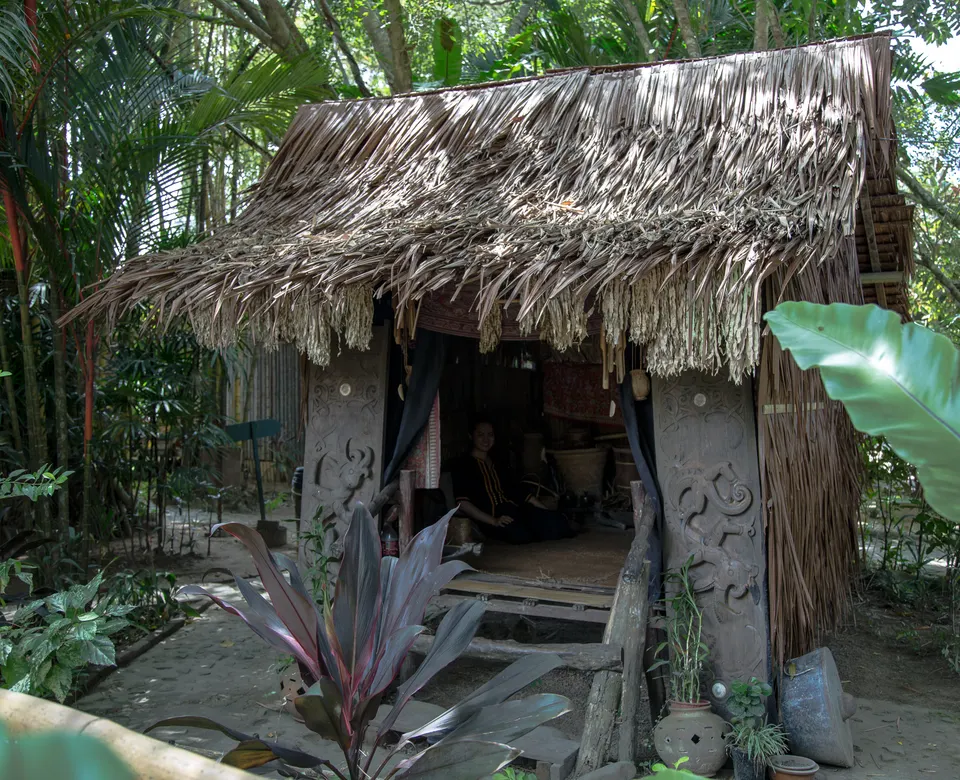
A place with a particular story
Monsopiad Heritage Village offers a closer look at one strand of Sabah’s cultural history: the stories associated with Monsopiad and the Kadazan community of Penampang. Its appeal lies in the relationship between a named figure, his descendants and the objects used to interpret their past. Visit with curiosity about how that history is remembered today. This is a different experience from a broad introduction to several ethnic communities at a larger cultural attraction, and it works particularly well for travellers who enjoy listening, asking questions and examining the meaning of everyday objects.
What to look for
The Sabah Tourism Board describes the Tangkob granary, where rice is stored, and Kotos Di Monsopiad, a house devoted to Monsopiad and his descendants. Displays include ceramic jars, rice grinders, bamboo objects and clothing associated with the senior priestess Bobohizan Inai Bianti. These offer useful starting points for questions about agriculture, domestic life and spiritual traditions. A large monolith and the House of Skulls are also part of the village’s interpretation. Approach the human remains respectfully; their presence deserves historical context rather than sensational photographs or a collection of dramatic anecdotes.
Arrange the visit with the hosts
Contact the village before travelling to confirm opening, guided interpretation, language and the programme available on your date. A published description of the site does not mean every demonstration or performance happens whenever visitors arrive. If a tour includes lunch or transport, check those inclusions separately. There is no need to invent a fixed visit length: allow time for the guide’s explanation and ask the host how the current programme fits your day. Tell the organiser about mobility needs, dietary requirements or children’s interests before choosing a package.
Etiquette and practical preparation
Ask before photographing people, private areas, sacred material or the collection of remains. Follow the host’s guidance about which objects may be handled and which areas are open to visitors. Comfortable footwear and clothing suitable for a warm day will help, while an umbrella or light rain protection makes sense when moving between buildings. Bring water and keep the visit centred on the explanations offered by the community. Avoid presenting staged demonstrations as a complete picture of modern Kadazan life: cultural interpretation is an introduction, not permission to generalise about everyone who belongs to that community.
Build it into a Kota Kinabalu stay
Kota Kinabalu provides the practical accommodation base; the village is in the Penampang area rather than on the city’s central waterfront walking circuit. Arrange the return journey as well as the outward trip. Sabah Museum can add a wider historical perspective on another part of your stay, while Mari Mari provides a different, multi-community introduction. Choose the combination that suits your interests instead of rushing through several cultural stops. Where a booking option is available, compare the actual guiding, meeting point and inclusions, then check current price and availability directly with the provider.