Start with the collections
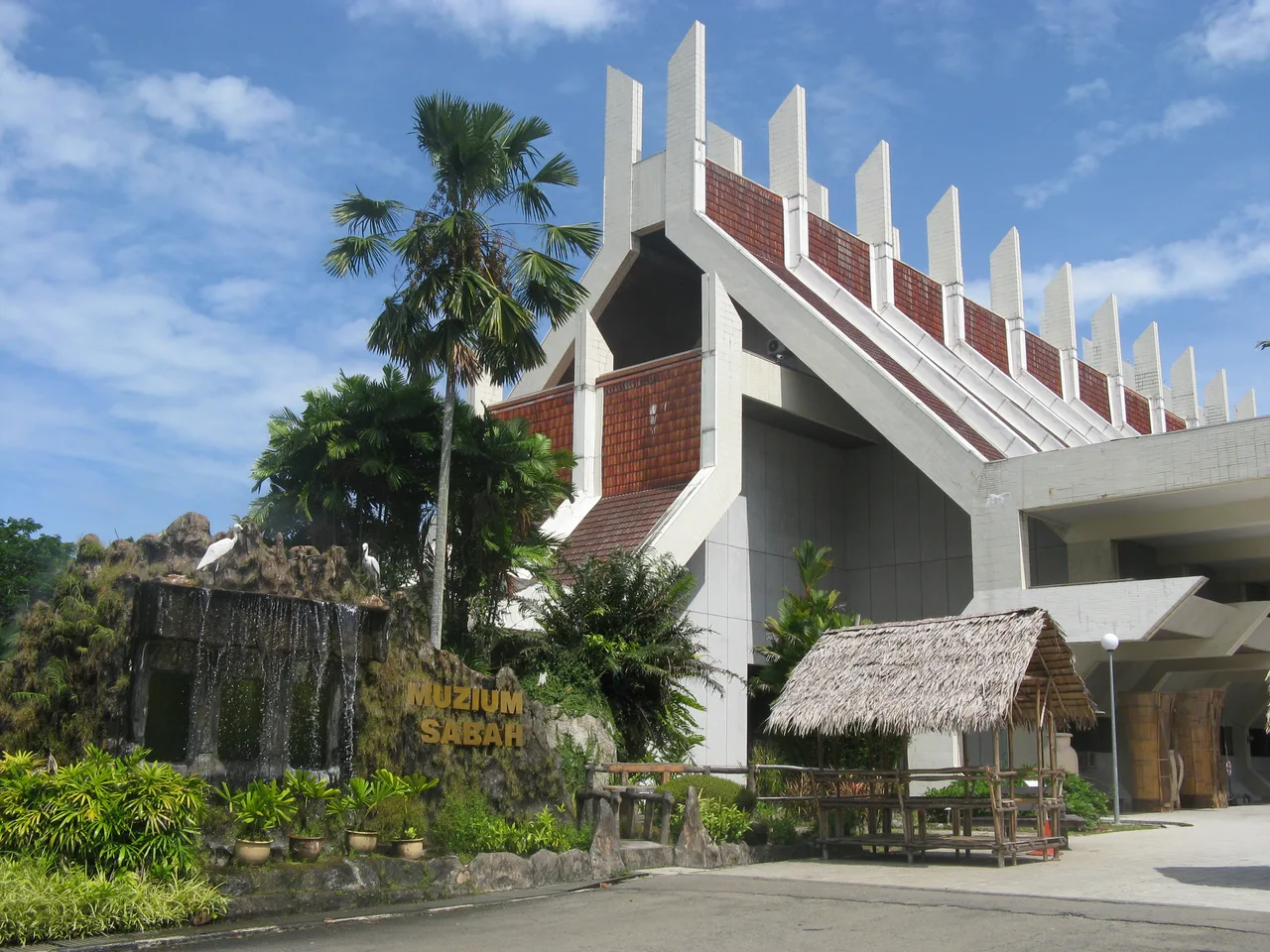
Sabah Museum is a useful early stop in a Borneo journey because it introduces subjects that recur elsewhere: communities, plants, material culture and the region’s changing history. The main building takes inspiration from a Rungus longhouse. Inside, the published collections cover ethnography, natural history, ceramics, archaeology and history. Follow your interests rather than treating every display as a checklist. A close look at one group of objects can be more rewarding than a hurried circuit, especially if you later visit a community or landscape connected with what you have seen.
Continue beyond the main building
The complex also includes a Science and Technology Centre, Heritage Village, Ethnobotanical Garden and Islamic Civilization Museum. The railway displays are one way to connect museum history with the transport networks still shaping journeys through Sabah. In the Heritage Village, reconstructed houses introduce different building traditions; the surrounding garden adds another way to think about plants and daily life. These are interpretive spaces, not an invitation to assume that contemporary communities all live as the exhibits show. Cultural activities may take place occasionally, but do not plan around a workshop or performance without confirmation.
Shape a manageable visit
The museum’s published opening hours are daily from 09:00 to 17:00, which should be rechecked before travelling. Confirm which buildings and outdoor sections are accessible, particularly if one collection is the main reason for your visit. You can plan an independent museum visit, or ask a tour provider exactly how much time their city itinerary allows here. A brief photo stop outside is a different product from time spent exploring the collections, so inspect the itinerary rather than relying on a tour title.
Practical details and respectful photography
Wear comfortable shoes for a visit combining indoor displays and outdoor paths. Carry water and rain protection, and take breaks if the heat makes the garden section less comfortable. Ask staff about step-free access and any facilities needed by your group instead of assuming every building has the same arrangements. Photography rules can vary between exhibits; check signs and ask before photographing sensitive objects or people. Do not touch collections unless an activity specifically invites it. Read labels with an open mind, recognising that a museum presents selected interpretations rather than every perspective on the past.
Fit it into a city stay
Stay in Kota Kinabalu and arrange transport to the museum complex rather than assuming it lies on the central waterfront heritage walk. It pairs well with a separate market visit, where contemporary food trading supplies a different view of everyday life. A later visit to Monsopiad can offer more focused Kadazan interpretation. Leave enough room between activities to absorb their differences. If booking through a marketplace, confirm admission, guiding, transport and the return point; otherwise use the museum’s own visitor information. Check current admission before you arrive and choose the collections you most want to explore.