Start with the local organising team
The Murug Turug Eco-Tourism committee, commonly called MTET, organises waterfall outings from Minangkob village in the Tamparuli area. Sabah Tourism describes a community-run programme of forest walking rather than a single roadside waterfall stop. Contact the team or a tour organiser that clearly identifies this programme, and agree on the route before travelling. The village meeting point, guide, meals and transport need to fit together. A general booking for a waterfall near Kota Kinabalu does not establish that you are joining Murug Turug or that your preferred route is included.
Compare the three route choices
The published programme offers a shortest route of about four kilometres return to the main Murug Turug Waterfall. A second option is around five kilometres return and visits three waterfalls. The full circuit is described as twelve kilometres, taking in seven waterfalls and requiring approximately eight hours of trekking. These are variants of the same destination, with very different demands. Ask which routes are open and how the guide assesses their suitability for your group. More waterfalls are not automatically a better choice if the extra walking leaves little time to enjoy each place.
Understand the terrain before choosing
Keep the chosen route name or package letter in your confirmation so everyone knows which itinerary was agreed. If different members of your party want different distances, ask whether separate guidance can be arranged rather than expecting one guide to divide attention between departing groups.
Sabah Tourism describes repeated uphill and downhill sections, uneven ground and slippery rocky streams. The distance therefore does not tell the whole story. A four-kilometre forest outing can feel different from four kilometres on a paved path, particularly after rain. Discuss walking experience, pace and any relevant mobility concerns with the organiser. Ask about the present route, water crossings and conditions rather than relying on photographs taken in another season. Leave the final route decisions to the local team, and be prepared to shorten or change the outing when conditions call for it.
Give the guide's briefing time
The community programme includes a safety briefing before trekking. Listen to the route explanation and ask about anything that affects your comfort, including rest points, water sections and the return. Stay with the agreed group and follow instructions at difficult surfaces instead of copying another visitor's shortcut. Bring footwear and carried items appropriate to the confirmed route, using the organiser's advice. Keep belongings protected from rain and carry out everything you bring in. A guided outing is still an active walk; the presence of a guide does not remove the need to choose a manageable route.
Enjoy the main waterfall as a pause
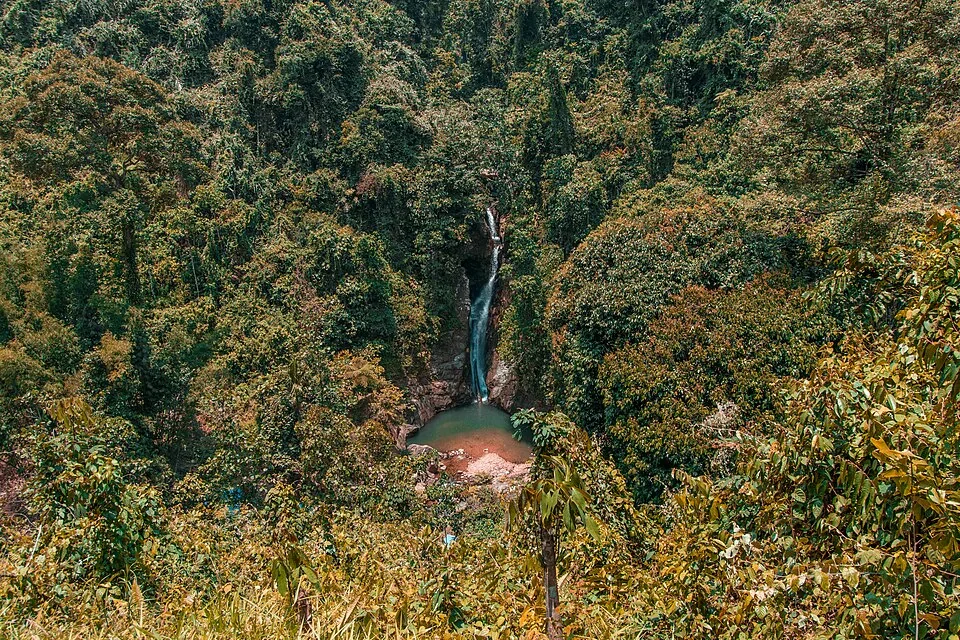
The main Murug Turug Waterfall has small resting huts and toilet facilities according to the tourism authority. These facilities should not be assumed at every waterfall on the longer routes. Give yourself time to sit, look and listen rather than moving immediately to the next viewpoint. The published description also identifies a hill viewpoint looking towards the falls, but ask whether it is part of your chosen route. Photography is most enjoyable when it does not require leaving the permitted path or delaying the group at an awkward crossing. Protect the setting by keeping food wrappers and other litter with you.
Treat water access as a current decision
Older visitor information describes swimming opportunities at the waterfalls. That does not establish suitable conditions on your particular day. Ask the guide where, whether and for how long water entry is appropriate, and accept a decision to remain on land. A scenic pool or another visitor entering the water is not an assessment of current flow or footing. If swimming is an important part of your expectations, discuss it before booking while keeping it conditional. There is still value in the forest approach, waterfall views and community-hosted walk when water entry is not possible.
Arrange food and the road journey
MTET can pre-arrange breakfast and a packed lunch according to Sabah Tourism's programme description. Confirm the meal arrangement and dietary needs in advance, especially for a longer day. Plan the road journey to the exact meeting point and the return after walking; an estimated drive from Kota Kinabalu should not replace the operator's departure instructions. The full circuit needs an early start and enough daylight for its complete schedule. Keep onward commitments flexible, and choose an accommodation base that makes the agreed reporting time realistic. The best plan gives the forest route, rests and return journey adequate time together.