A place of remembrance at the former camp
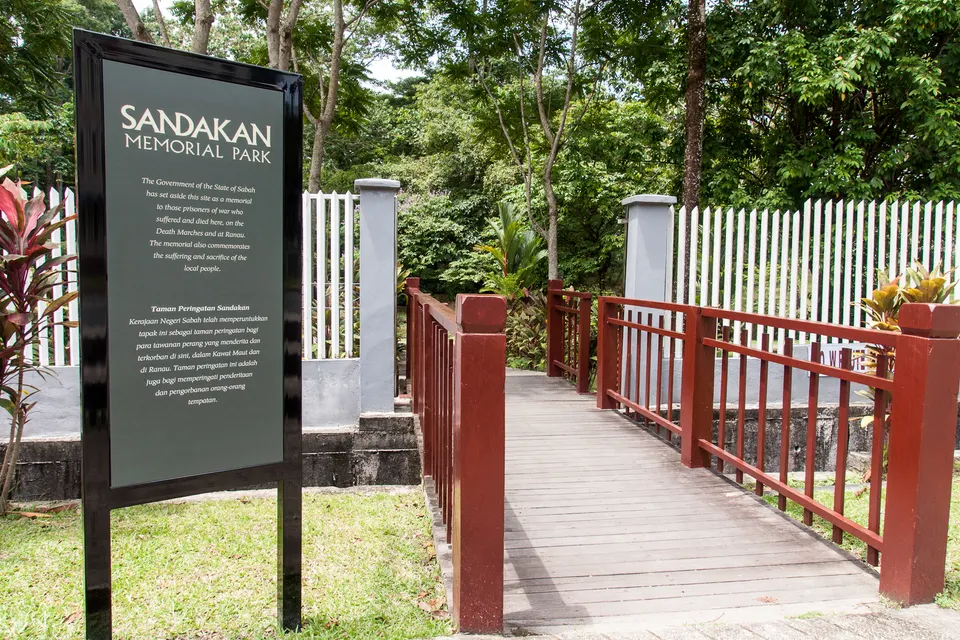
Sandakan Memorial Park occupies the site of the former prisoner-of-war camp near Sandakan. It commemorates Australian and British prisoners who died during captivity and the death marches towards Ranau, and recognises local people who helped prisoners at great personal risk. The Australian Department of Veterans’ Affairs manages the memorial park. Its purpose is remembrance and historical understanding, not a dramatic recreation of suffering. Approach the grounds with enough time to read, listen and consider the people behind the events.
The pavilion, memorial and paths
The visitor experience includes an interpretive pavilion, memorial obelisk and paths passing surviving wartime remnants and explanation points. An official audio guide and transcript provide a way to explore the historical material at your own pace. The pavilion was rebuilt and rededicated in 2025; an older notice about refurbishment should not be mistaken for a current closure. Follow the interpretation rather than expecting every visible feature to explain itself. With children, introduce the subject in age-appropriate language and allow pauses if the material feels difficult.
Plan an unhurried Sandakan visit
The memorial is reached by road in the Jalan Labuk area. Arrange a taxi or suitable local transport and check current visitor hours and event notices through the managing authority. Ordinary visits are distinct from commemorative services, which may have separate arrival or registration arrangements. Allow around one to two hours as an editorial planning suggestion, longer if you wish to use the full audio material. Ask about paths and access needs beforehand; a landscaped memorial does not automatically mean that every part is suitable for every mobility requirement.
Respect the site and distinguish related memorials
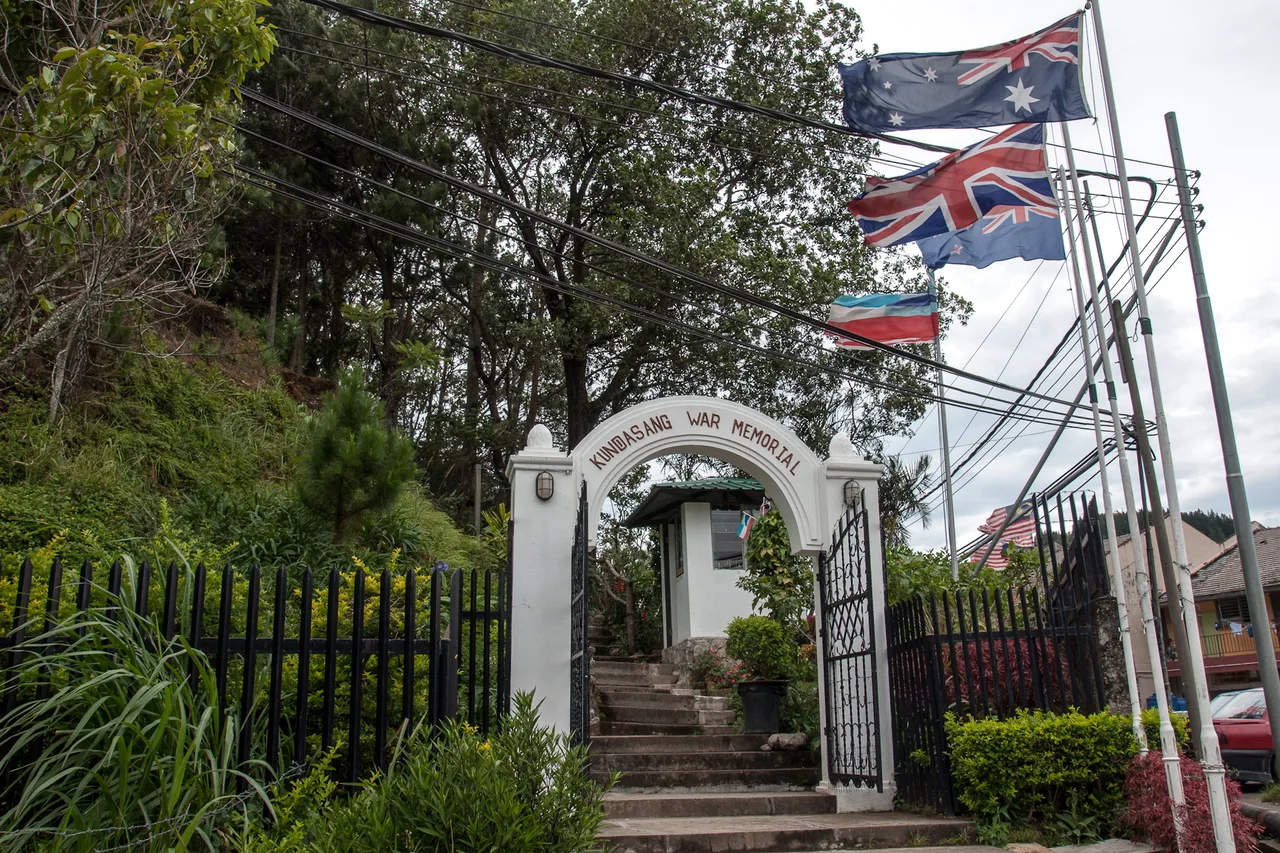
Keep voices low, give other visitors space and be considerate when taking photographs, especially around ceremonies or personal acts of remembrance. The Kundasang War Memorial provides related historical context elsewhere in Sabah, but it is a separate site rather than a neighbouring stop. The historical Sandakan–Ranau connection is not a suggested walking itinerary. Combine this visit with time in Sandakan and leave room afterwards for reflection. The most meaningful experience comes from attention to the interpretation and respect for those commemorated, rather than collecting images of a wartime location.