Borneo range and identity
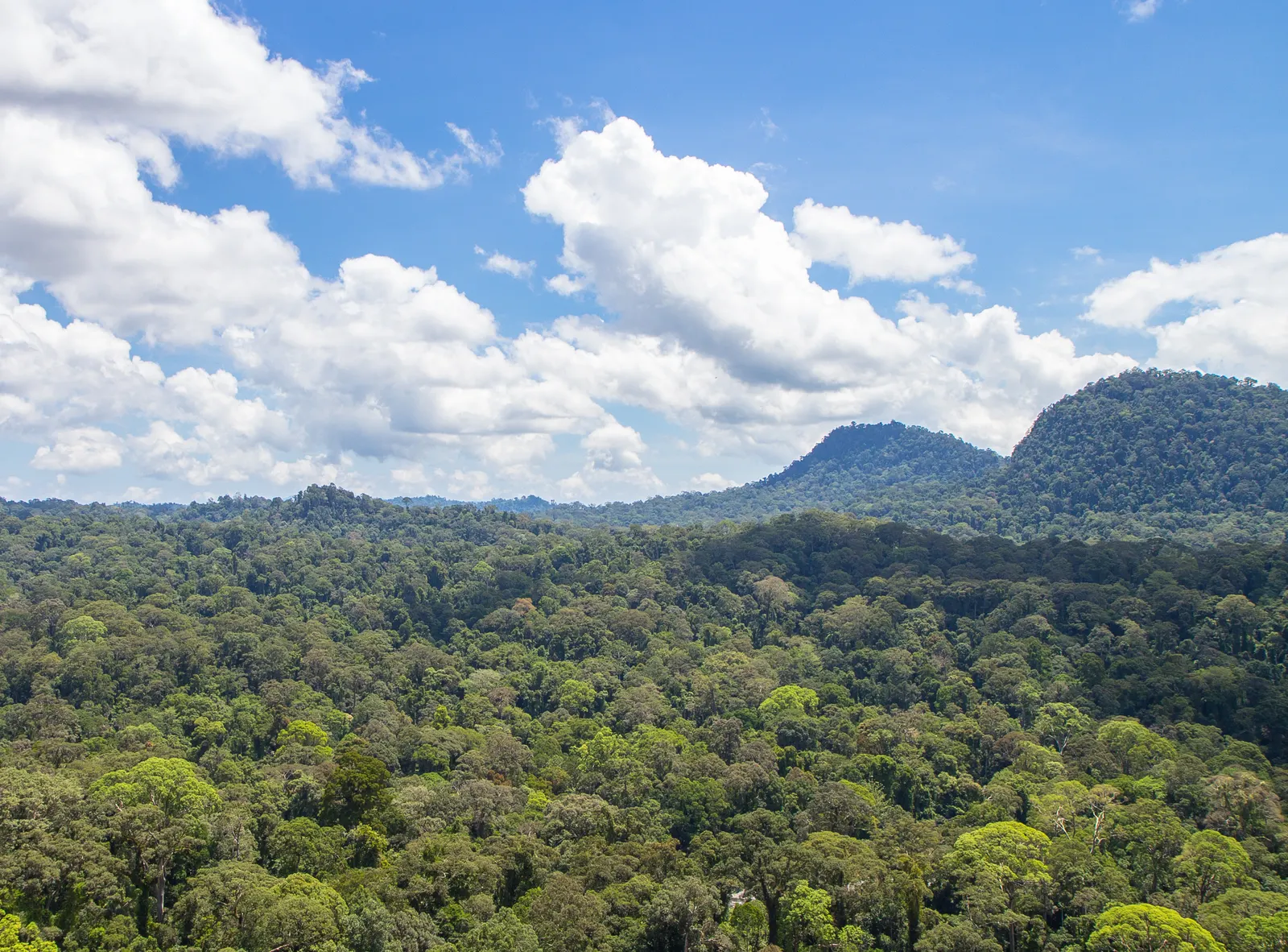
The plantain squirrel lives on Borneo and in neighbouring Southeast Asian regions. It uses rainforest, secondary woodland, mangroves, gardens and plantations, often moving in lower and middle tree levels. The Borneo black-banded squirrel, Callosciurus orestes, is a separate species.
Sources & references · 3
American Society of Mammalogists, MDD v2.5 · Callosciurus notatus: taxonomy and linked categoryUniversity of Michigan, Animal Diversity Web · Callosciurus notatus: natural historyHandbook of the Mammals of the World / Lynx Edicions · Callosciurus notatusFeeding and activity
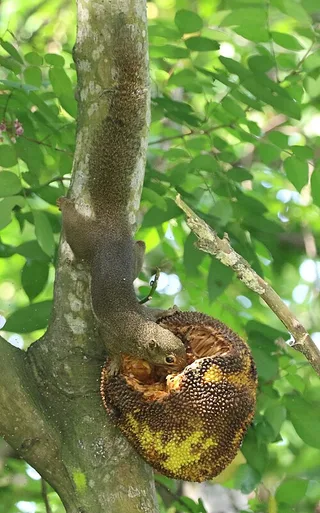
It is active by day and eats fruit, seeds, leafy shoots, flowers and insects. Bark gnawing can give access to plant fluids. Individuals are often seen alone or in small groups. Feeding reflects the resources available in each habitat.
Sources & references · 3
American Society of Mammalogists, MDD v2.5 · Callosciurus notatus: taxonomy and linked categoryUniversity of Michigan, Animal Diversity Web · Callosciurus notatus: natural historyHandbook of the Mammals of the World / Lynx Edicions · Callosciurus notatusEcological role and observation
The plantain squirrel is globally Least Concern. Seeds are both food and objects it can move, so its effect on plants depends on whether seeds are eaten or survive. Daytime watching of lower branches fits its habits, while identification requires care where several squirrel species share the forest.
Sources & references · 3
American Society of Mammalogists, MDD v2.5 · Callosciurus notatus: taxonomy and linked categoryUniversity of Michigan, Animal Diversity Web · Callosciurus notatus: natural historyHandbook of the Mammals of the World / Lynx Edicions · Callosciurus notatusStripes along the flanks
A brown back, reddish belly and paired flank stripes distinguish this squirrel: a pale stripe sits above a dark one on either side. Borneo animals can have a deep chestnut or maroon underside. The long tail helps balance movement between branches. Tall, closed dipterocarp forest often supports fewer of these squirrels than edges and disturbed woodland.
Sources & references · 1
Handbook of the Mammals of the World / Lynx Edicions · Callosciurus notatusLeaf nests and alarm calls
The nest is a rounded structure of twigs and leaves, lined with softer plant fibres and entered from the side. It is often placed high in a bush or small tree. A repeated barking alarm accompanied by tail flicking can warn of a ground predator, prompting nearby squirrels to climb and become still.