
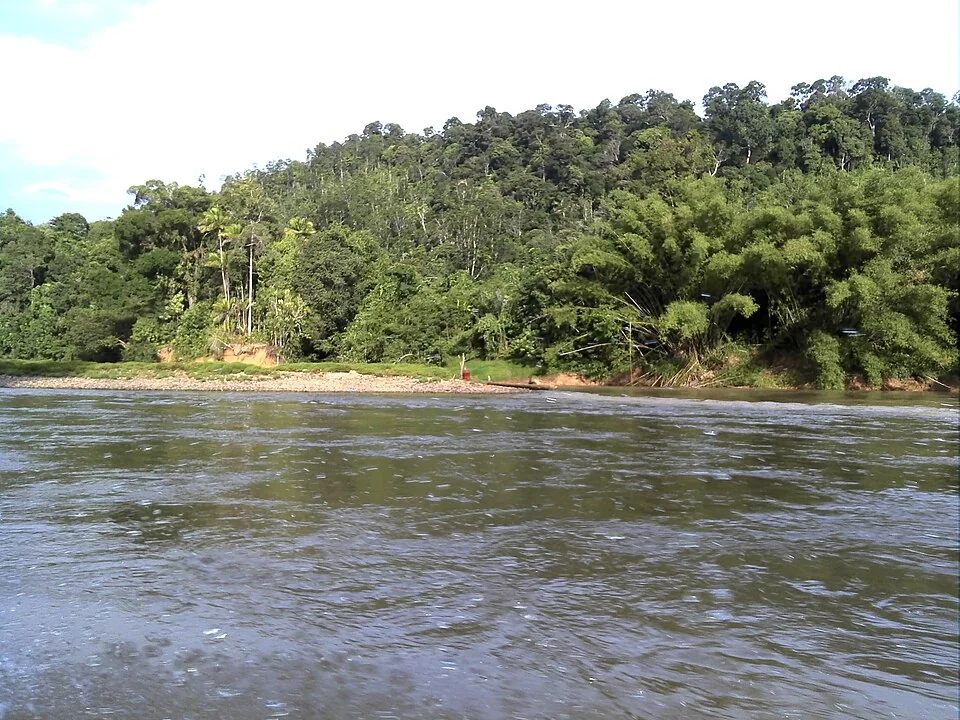
A river route into the forest
The Embaloh approach to Betung Kerihun is a journey built around river travel and simple nights in the forest. Putussibau is the organising gateway, Sadap the community connection, and Tekelan a named camping area within the national park landscape. A four-day programme gives this route enough shape to plan as a distinct trip, while leaving the guide room to adapt to the river.
Expect much of the experience to come from moving through the landscape: watching the river narrow, changing between boat and bank, and spending time near camp. This is a good choice for travellers who enjoy the practical rhythms of an expedition. Comfortable beds, constant connectivity and tightly timed sightseeing are poor priorities for choosing it.
From Putussibau to Sadap and upstream
A published four-day itinerary begins with a road transfer from Putussibau to Sadap, followed by a wooden longboat up the Embaloh. The first night is at a riverbank camp; the following day continues upstream towards Tekelan. This staged approach avoids treating the whole journey as a single transfer before the holiday starts. The boat travel is one of its central experiences.
An experienced local boat crew is essential to the arrangement. The operator describes current and small rapids along the approach, while the wider park programmes emphasise skilled motorists. Wear the supplied life jacket and follow the crew’s instructions when boarding, landing and positioning luggage. Travel times quoted in an itinerary are examples: water conditions can change the pace and the decision to continue.
Time around Tekelan
The four-day route leaves a day for the forest around Tekelan before the return journey through Sadap. Walks can introduce the riverbank environment and the larger rainforest setting without making every hour a march to another camp. The park describes extensive lowland dipterocarp forest, and its conservation reporting places Tekelan and Riak Tapang in the Embaloh catchment.
Ask your guide to interpret what is actually encountered: forest structure, tracks, bird calls or evidence of how water shapes the banks. Wildlife does not appear to order. An excursion should remain worthwhile even when animals stay hidden. Some advertised programmes include night walks or water activities; decide on these separately with the team rather than treating them as compulsory parts of the expedition.
The community connection at Sadap
Sadap is more than a departure point for boats. Community tourism studies describe Iban longhouse visits, homestays, weaving and the role of local tourism groups in organising forest and river experiences. The four-day operator route places a longhouse visit on the return journey. Treat that stop as time with hosts whose daily lives continue around the visit.
Ask permission before entering family spaces or photographing people, and let the guide explain where visitors are welcome. If weaving is being demonstrated, take time to understand the work before deciding whether to buy. A performance, household meal or overnight longhouse stay should be agreed specifically; none follows automatically from the words “village visit”. Local guiding and transport are meaningful ways for the journey to support its hosts.
Camping and physical demands
The published expedition uses simple tents at riverside camps. Other Betung Kerihun programmes combine hotels, traditional houses and forest tents, so ask for a night-by-night accommodation plan. Find out who supplies tents, sleeping mats, bedding, meals and treated drinking water, and how washing and toilets are handled. Pack with the expectation that belongings need protection during boat transfers and damp forest conditions.
One operator grades its Betung Kerihun programme moderate and describes wet trekking with river crossings and climbs on banks. That label cannot replace a discussion of your particular route. Explain your experience with uneven ground, longboat transfers and camping. Agree the walking lengths and whether any crossing is proposed. Swimming or body rafting requires a separate assessment of current, supervision and equipment; choosing to stay on land is a reasonable preference.
Organising access and the return
Use a locally connected organiser who can coordinate the boat crew, forest team, camps and park arrangements together. Before paying, obtain confirmation of the permitted route and overnight sites, the required visitor documents, and which entry charges are included. Commercial provider licensing and a traveller’s admission arrangements are different matters; your organiser should explain the practical steps you need to take.
Current river conditions and park instructions decide whether the planned route can operate. Agree what happens if the team must shorten or reroute it, including the effect on accommodation and cost. Leave space around the expedition in your Putussibau schedule, particularly before onward travel. On the final day, the return longboat and road transfer are still part of the journey, not a guaranteed connection to a departure at a fixed hour.
