
section-0
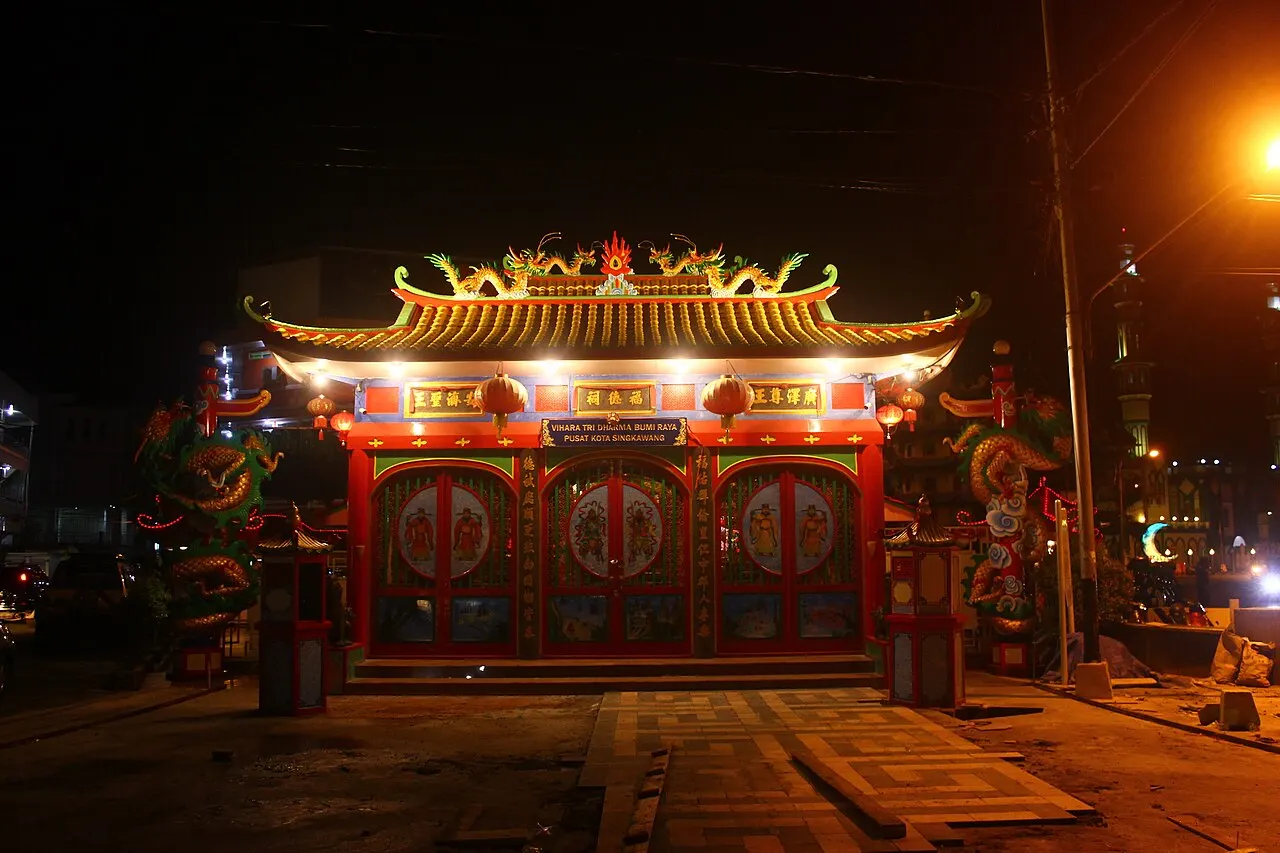
Singkawang's municipal tourism inventory places the temple in Singkawang Barat. The city's planning documents note its proximity to Masjid Raya as part of a shared urban setting. Approach it as one place within a diverse neighbourhood rather than as a detached monument. Begin outside, look at the entrance and ask which areas visitors may enter on that day.
section-1
A photograph cannot show the full purpose of a temple. People may be praying, preparing offerings or carrying out duties that have nothing to do with tourism. Keep a respectful distance from altars and worshippers, follow the custodian's directions and do not rearrange objects for a better view. Ask before photographing inside or including people in a close image.
section-2
The municipal media centre documented the dragon eye-opening ritual here before the 2025 Cap Go Meh celebrations. That provides a specific example of the temple's continuing ceremonial role. It does not mean a performance is available whenever visitors arrive. If an event is important to your trip, consult the current programme and leave space for crowds and changed access.
section-3
Rumah Marga Tjhia provides a useful second stop for understanding another aspect of Chinese Indonesian heritage in Singkawang. Combine the places as a short city outing, checking the route and crossings on the day. Avoid treating all religious and family spaces as freely accessible. A guide who can explain local practice adds more than a rapid sequence of photographs.
section-4
Choose a flexible visiting window rather than promising an exact duration. Dress respectfully, speak quietly and keep doorways clear. Ask about steps and the available visitor route if mobility is a concern. Opening arrangements, access to interior spaces and photography rules should be confirmed locally. Even when entry is limited, an attentive exterior visit can still help you read the city's everyday cultural landscape.
