A small wetland within the city
Kota Kinabalu Wetlands is a 24-hectare mangrove conservation area in Likas, within Kota Kinabalu. Sabah Wetlands Conservation Society manages the site, which is recognised as a Ramsar wetland. Its scale is part of its story: this is a surviving urban habitat with an education and recreation role, not a vast remote mangrove wilderness. It offers an opportunity to look more closely at the natural systems still present beside a growing city, without requiring a boat expedition or a journey to a distant reserve.
Read the mangrove from the boardwalk
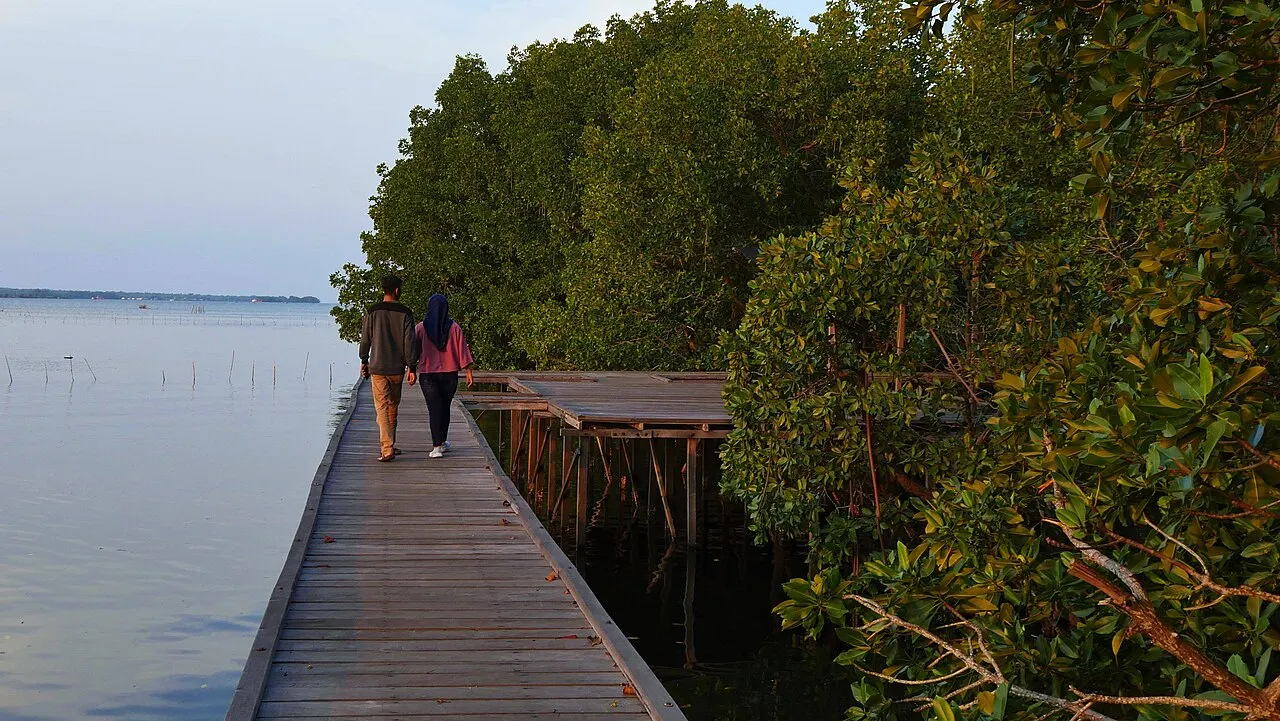
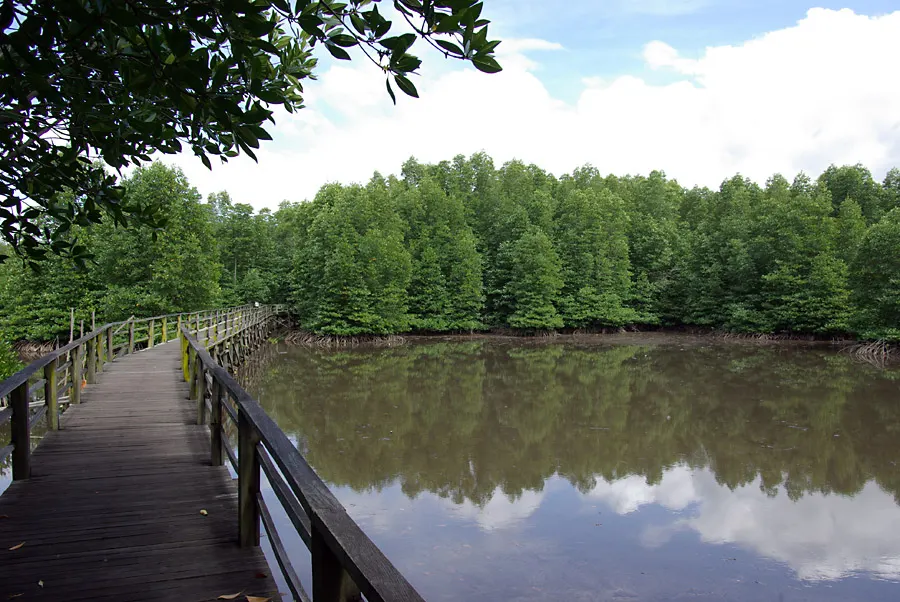
The boardwalk brings visitors into the mangrove habitat, where roots, tidal water and muddy ground reveal how this coastal forest works. Notice the difference between looking at vegetation from a road and moving slowly through it at walking pace. The manager lists resting huts, a bird hide, an observation tower and an exhibition space among the facilities. The tower is not essential to appreciating the wetland, and its existence should not be taken as proof that every part of the route is suitable for every visitor.
Birdwatching is a matter of patience
The centre is a birdwatching and environmental-education site, with birds and other mangrove animals forming part of the experience. Bring binoculars if you have them, pause at suitable places and let quieter observation take priority over getting close. The manager suggests early morning for birds, but tides, weather and the animals themselves affect what appears. A species list does not guarantee a particular sighting. Even when birds remain distant, the water level, roots and small movements around the mud can make a short walk absorbing.
Use the visitor centre and check the boardwalk
Reach the Likas visitor centre by road from the city and confirm the current entrance and any temporary route restrictions with the society. The manager publishes Tuesday-to-Sunday visiting hours and a Monday closure, with public-holiday closures also listed on its facilities page. Check again before travelling, particularly if arranging a specialist programme. Ask directly about steps, surfaces and usable sections if mobility is a concern. A raised boardwalk does not automatically mean uninterrupted wheelchair access, and this guide does not promise that every facility is available on every day.
A simple walk or a booked learning programme
The centre’s FAQ suggests about an hour for general sightseeing; allowing one to two hours gives room for pauses and interpretation. That is a planning suggestion rather than a compulsory route time. Self-guided walks differ from organised guided walks, environmental education and volunteer programmes, which require advance notice. If travelling with a school or group, explain your needs before booking rather than expecting an unscheduled session at reception. Confirm any equipment arrangements directly and plan a return taxi or other city transport suitable for the group.
Keep the urban scale and conservation purpose in view
This wetland can fit into a city stay without pretending to replace a larger forest expedition. The most useful approach is to slow down, look closely and understand why a small mangrove remnant matters within an urban setting. Stay on permitted visitor routes, do not feed or disturb wildlife and follow staff instructions around education or restoration areas. Sources give different boardwalk lengths, so a precise circuit distance is deliberately not used here. Current route condition, available time and your interest in the habitat are better guides to planning than an unverified measurement.