Recognition
The golden hindwings have broad dark edges. Females show a row of conspicuous dark spots within the yellow area; males have fewer, smaller spots. The combination of wing pattern and sex is useful when comparing birdwings, because several related species live on Borneo. A yellow-and-black butterfly is not automatically Troides helena.
Sources & references · 1
NParks Singapore · Troides helena cerberus: identification and ecologyHabitat and Borneo range
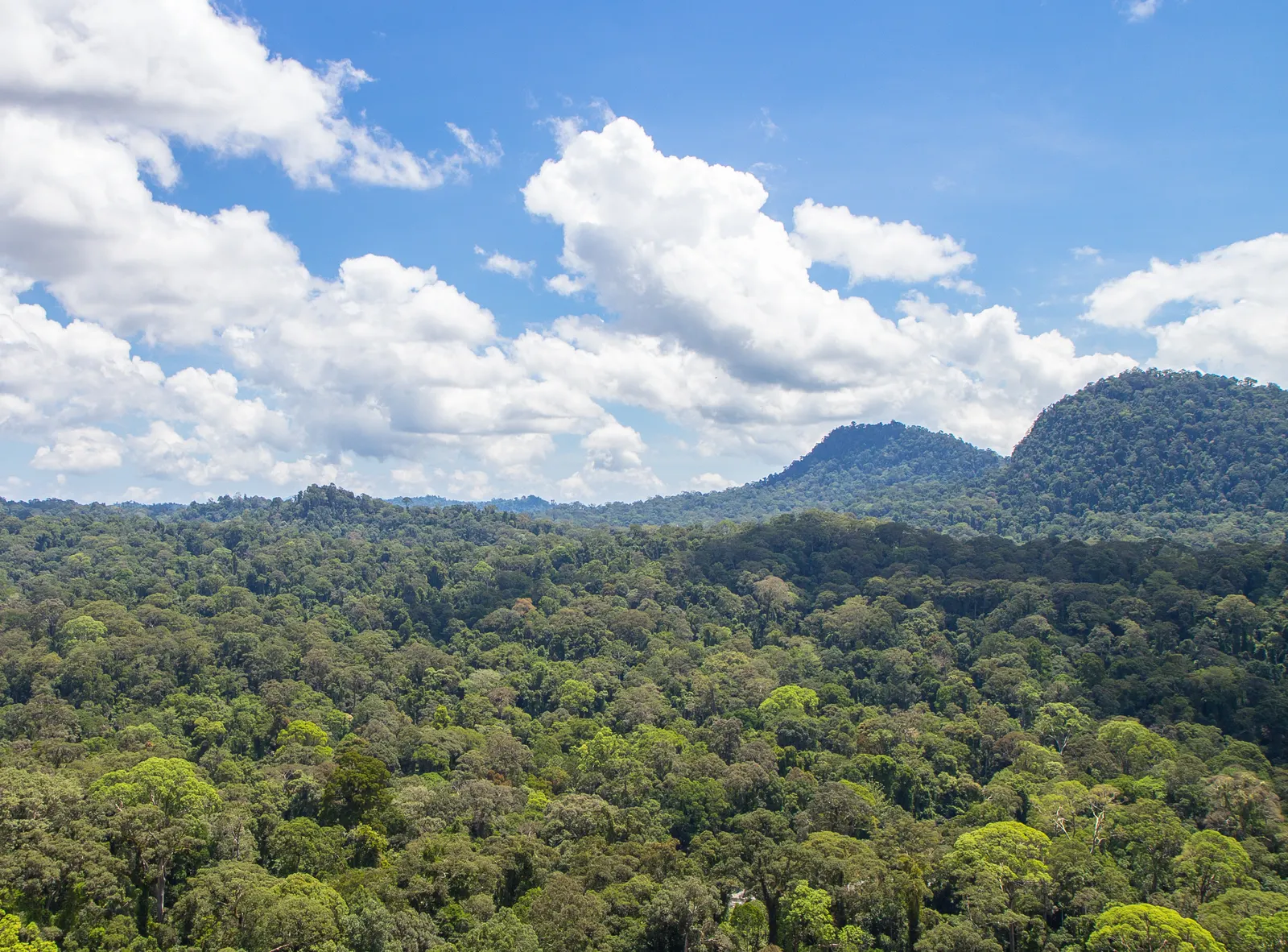
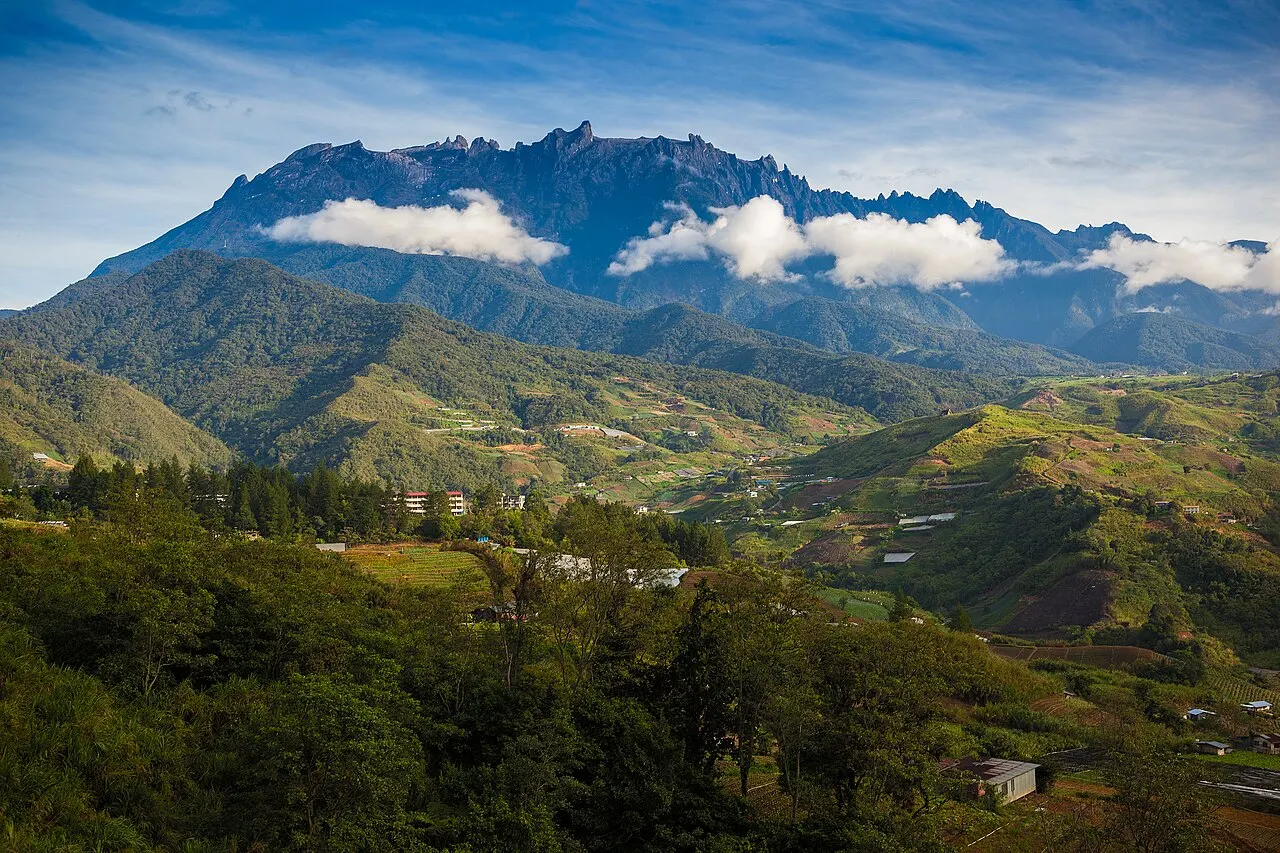
Museum specimens document the species at Keningau and Poring in Sabah. These are physical collection records, complementing its wider Southeast Asian distribution. Adults often fly around treetops and descend to flowering plants. Forest and cultivated surroundings can both be used where the caterpillar food plants persist; nectar alone cannot sustain the whole life cycle.
Sources & references · 3
University Museum, University of Tokyo · Igarashi collection: Troides helena, Keningau, Sabah specimenKagawa University birdwing collection · Troides helena mosychlus, specimen from Poring, SabahNParks Singapore · Troides helena cerberus: identification and ecologyReproduction
Botanic Garden observations in Singapore recorded females laying single eggs near Aristolochia vines, sometimes on the support carrying the vine rather than directly on a leaf. Caterpillars then depend on suitable leaves nearby. The brownish caterpillar has a paler oblique band. These observations explain the plant dependence without assuming that every Bornean population uses exactly the same cultivated host.