Recognition
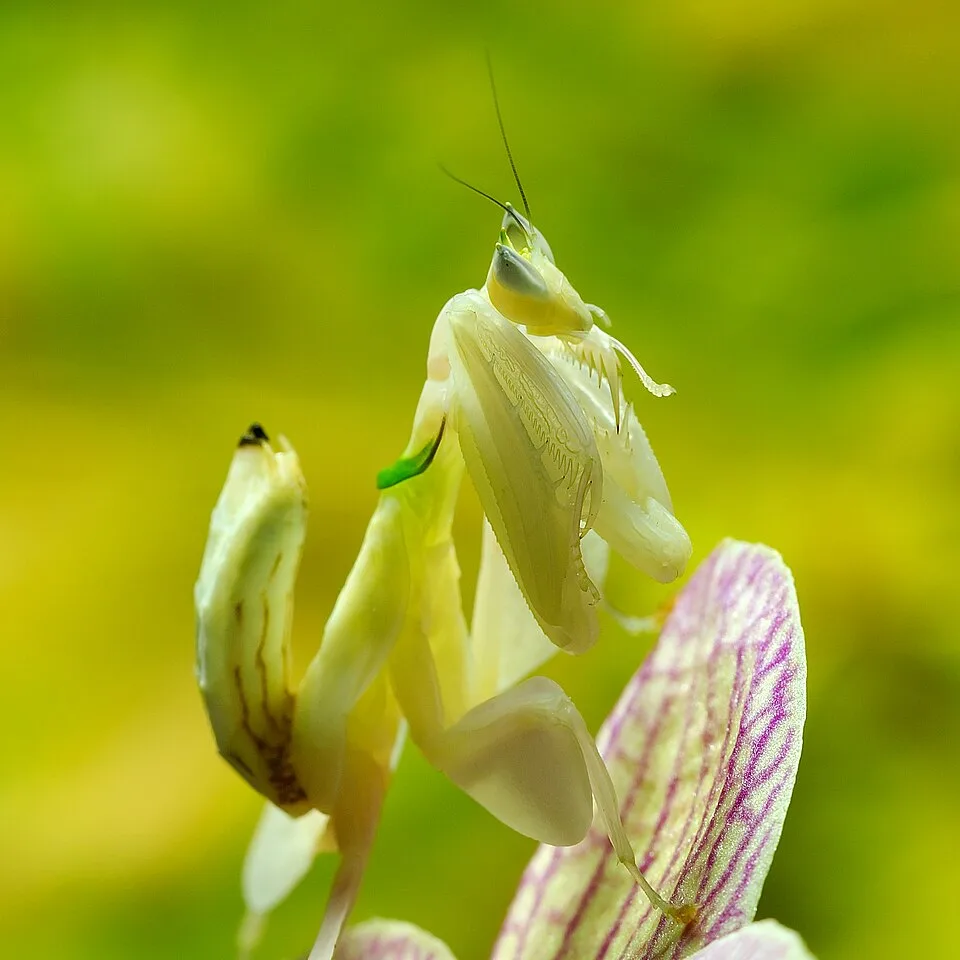
Expanded lobes on the middle and hind legs resemble petals, and pale white or pinkish colours contribute to the flowerlike outline. Males and females differ strongly in size and adult appearance. The broad, conspicuous female should not be treated as the only form of the species. Development also matters: a young mantis and an adult male need not match a photograph of an adult female.
Sources & references · 2
Journal of Orthoptera Research · O Hanlon et al. (2013): coloration and morphology of Hymenopus coronatusScientific Reports · Svenson et al. (2016): predation and sexual size dimorphismFood and ecological role
Experiments show that flowerlike appearance can deceive visiting pollinators into approaching the mantis. It then catches nearby insects with its grasping forelegs. The resemblance functions as a hunting signal, rather than merely hiding an animal among matching petals. The studies test attraction and predation; they do not establish that the mantis specializes on one named Bornean pollinator.
Sources & references · 1
American Naturalist · O Hanlon et al. (2014): pollinator deception in the orchid mantisHabitat and Borneo range
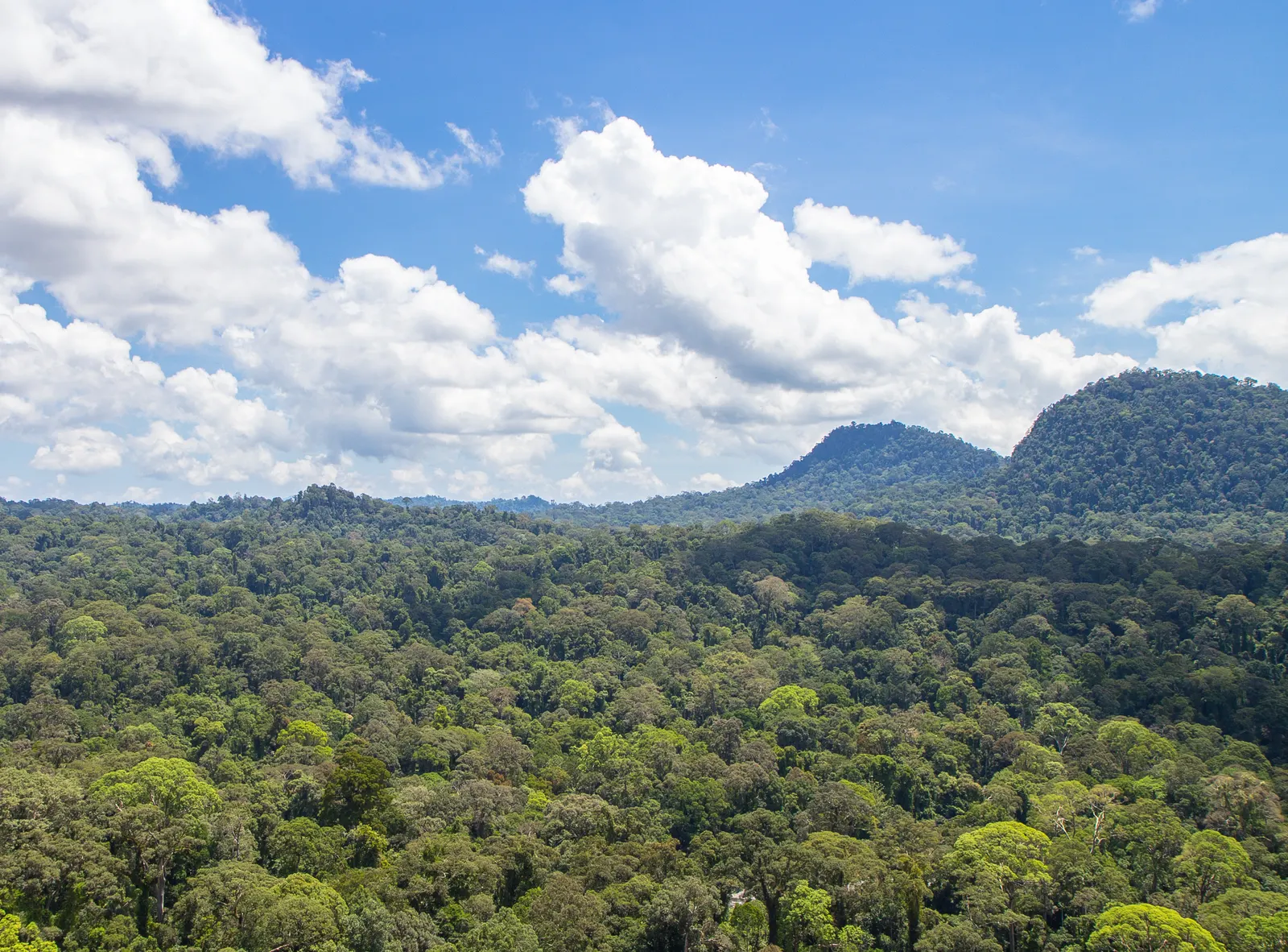
The species belongs to Southeast Asian tropical forest fauna and is included in the Borneo mantis literature. Research on habitat choice examines the balance between flower-rich patches, insect traffic and the effectiveness of the deceptive signal. Nearby flowers may change the context in which prey encounters the mantis. The relevant habitat is vegetation and the insect community around it, not a compulsory orchid host.
Sources & references · 2
Stuttgarter Beitrage zur Naturkunde A · Schwarz and Konopik (2014): annotated checklist of Borneo praying mantisesBehavioral Ecology · Habitat selection in a deceptive predator (2014)Behaviour
Comparative research links the large female body and floral features to predatory opportunities. Small adult males remain more mobile, which assists mate finding. This proposed evolutionary explanation is different from assuming that female size only reflects egg production. The paper also distinguishes the floral simulation of nymphs from adult ecology, for which field evidence remains more limited.