Appearance & recognition
The flower is the conspicuous reproductive structure of an otherwise concealed parasite. Male and female flowers have been studied at Gunung Gading; assigning the species requires botanical identification, not flower size alone.
Sources & references · 1
New Phytologist / Patiño et al. · Is Rafflesia an endothermic flower?Growth & ecology
Field collections established that the parasite can infect both Tetrastigma rafflesiae and T. diepenhorstii. The host relationship is essential: the visible bud and flower cannot be understood separately from the living vine.
Sources & references · 1
Journal of Botany / Wan Zakaria et al. · Tetrastigma diepenhorstii, a New Host of Rafflesia tuan-mudae in BorneoProtecting the plant and its habitat
Forest loss can remove the parasite and its hosts together. Conservation therefore requires attention to the whole host-bearing habitat. Broader Rafflesia research stresses the importance of habitat protection and coordinated action for surviving populations.
Sources & references · 1
Plants, People, Planet / Malabrigo et al. · Most of the world’s largest flowers (genus Rafflesia) are now on the brink of extinctionHow the plant grows
A living vine is essential to this parasite: field collections confirm Tetrastigma rafflesiae and Tetrastigma diepenhorstii as hosts. The parasite remains largely concealed until buds and flowers emerge. Unlike an epiphyte, it depends on the host for resources rather than merely support. Protecting a single blossom while clearing the vine and surrounding forest would therefore miss the plant’s actual life system.
Sources & references · 1
Journal of Botany / Wan Zakaria et al. · Tetrastigma diepenhorstii, a New Host of Rafflesia tuan-mudae in BorneoRange & habitat
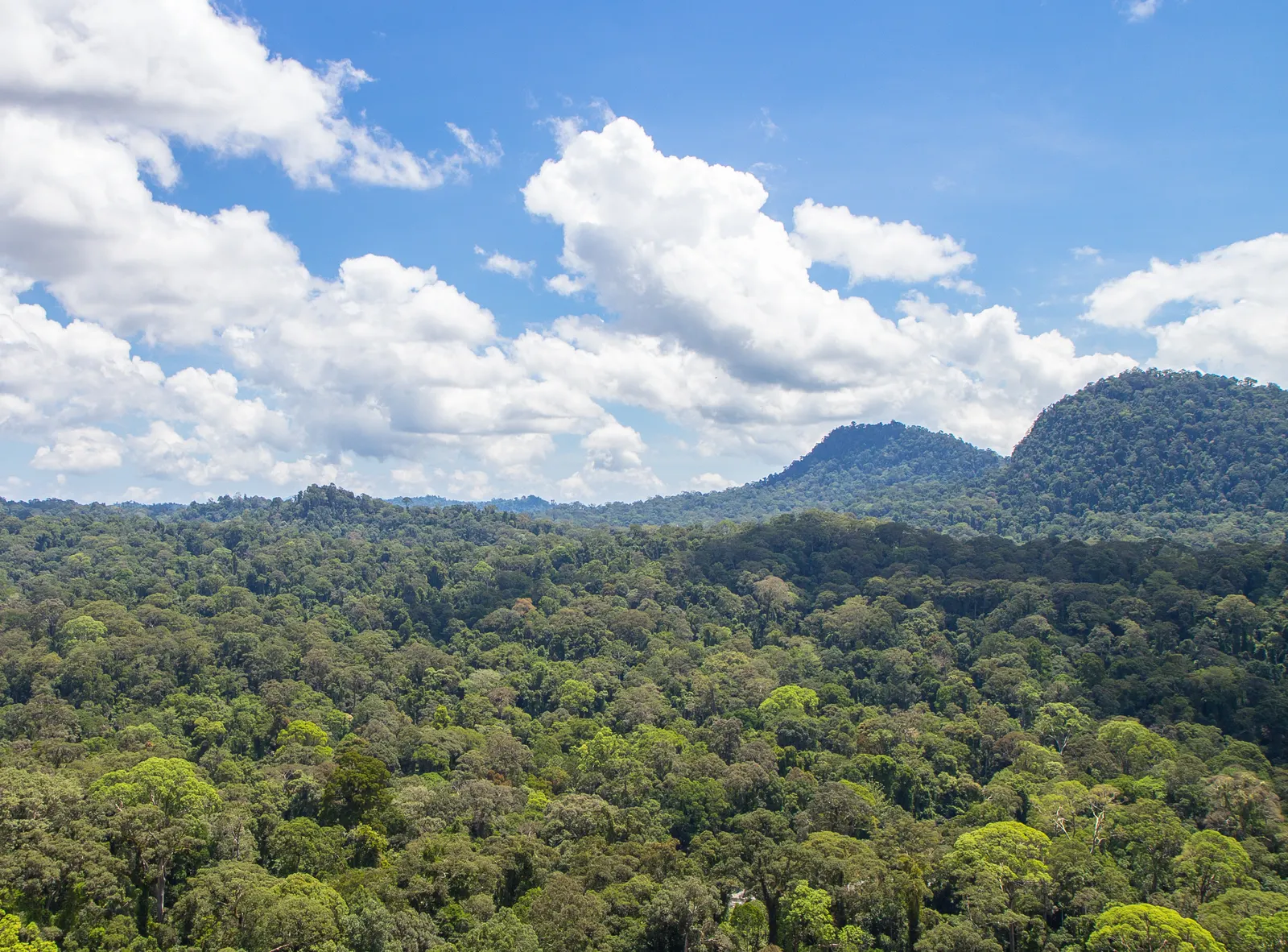
Gunung Gading in Sarawak provides well-documented populations and research on male and female flowers. Other published field reports include West Kalimantan, while Kew’s summary emphasises Sarawak; the guide therefore does not describe the plant as exclusive to that state. Humid lowland and hill forest with suitable host vines is the key setting. Visitors can help by remaining on designated paths and leaving buds and hosts untouched.
Sources & references · 4
Journal of Botany / Wan Zakaria et al. · Tetrastigma diepenhorstii, a New Host of Rafflesia tuan-mudae in BorneoNew Phytologist / Patiño et al. · Is Rafflesia an endothermic flower?Universitas Tanjungpura / Erlinda, Iskandar and Widiastuti · Karakteristik habitat Rafflesia tuan-mudae di Gunung Poteng Cagar Alam Raya Pasi Kalimantan BaratRoyal Botanic Gardens, Kew · Rafflesia tuan-mudae Becc.Ecological relationships
The flowers produce heat. Researchers interpret this thermogenesis as part of carrion mimicry that may help attract blowflies. The study does not identify a particular fly species as a proven pollinator.