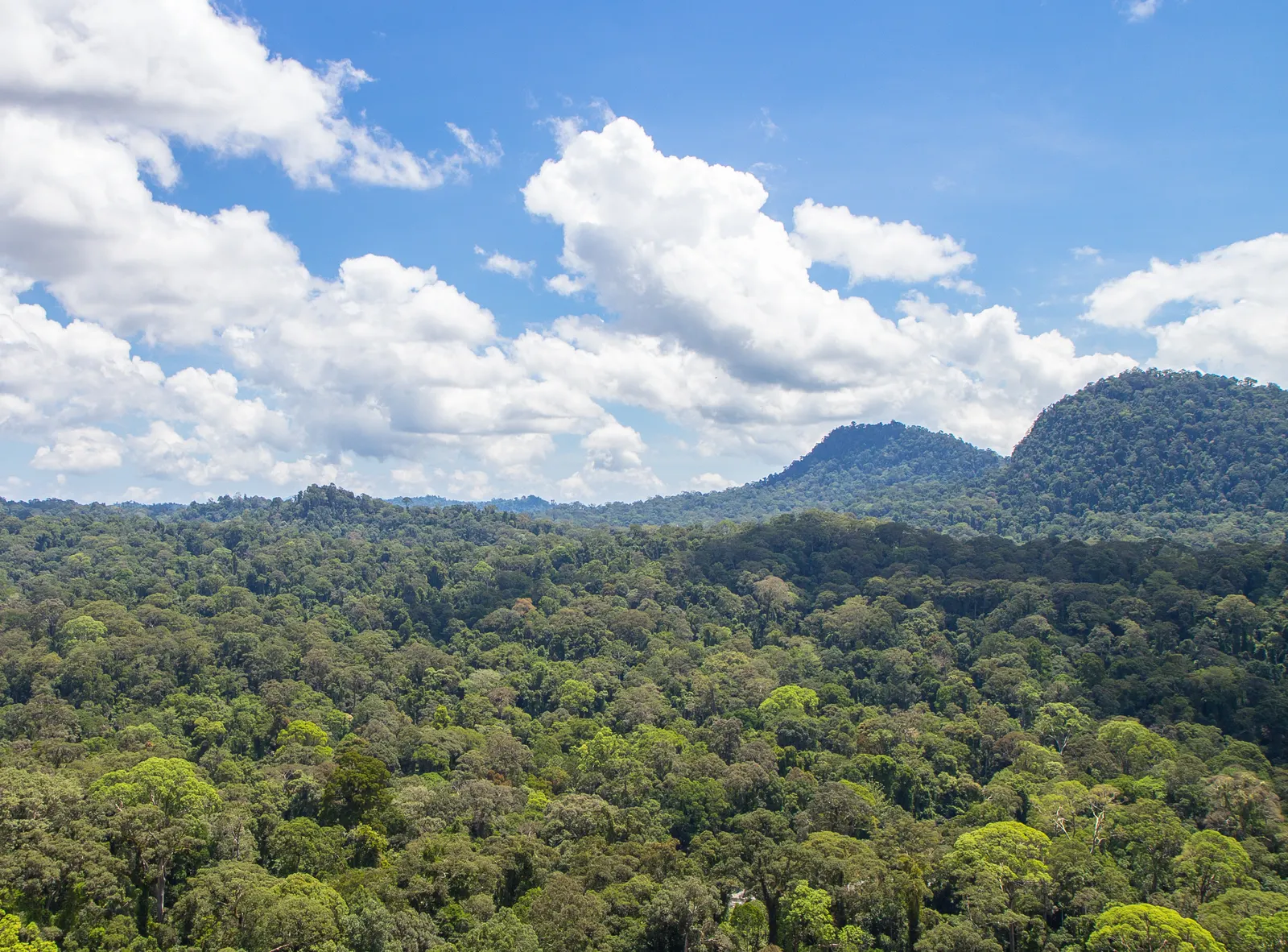
Borneo in its range
The reticulated python occurs on Borneo, including Kalimantan, Brunei and East Malaysia. Malayopython is the accepted genus; Python reticulatus is the older combination familiar in many field records.
Sources & references · 1
Reptile Database · Malayopython reticulatusAn adaptable snake
The Malaysian government account describes rainforest, swamps and riverine habitats, with use of modified landscapes too. A genetic study sampled Borneo and discusses the skin trade; broad distribution alone does not demonstrate sustainable local harvest.
Sources & references · 2
Department of Wildlife and National Parks Malaysia · Reticulated python accountPLOS ONE · Murray-Dickson et al. 2017 reticulated python phylogeographyA concealed riverbank predator
Night surveys along the Kinabatangan between 2016 and 2021 illustrate how elusive this large snake remains. Researchers found 83 pythons during 527 standardized riverbank surveys. Detection declined with increasing moon illumination. Dense cover and long periods without movement conceal animals even where they occur; a boat trip offers no reliable encounter.
Sources & references · 1
Burger et al. / Scientific Reports 16:26081 · Efficacy of field-based surveys for detecting and assessing demographics of giant snakes in MalaysiaExceptional prey in Kalimantan
East Kalimantan fieldwork documented two attacks on sun bears in lowland dipterocarp forest, including one successful predation by an approximately seven-metre python. These nighttime observations demonstrate the capacities of exceptionally large individuals. They do not make bears ordinary prey, nor establish that every python in the forest hunts such large mammals.
Sources & references · 1
Fredriksson / Raffles Bulletin of Zoology 53:165–168 · Predation on sun bears by reticulated python in East Kalimantan, Indonesian BorneoEggs and female size
A historical study of 784 harvested pythons in northern Sumatra found females larger than males. Mean clutch size was about twenty-four eggs, and females reproduced only once every two to four years. These measurements reveal an egg-laying life history, while their Sumatran origin prevents treating them as a precise Bornean breeding calendar.