Appearance & recognition
Sangal belongs to Hopea, a genus within the dipterocarp family. Its fruiting calyx forms the wings around a single seed, connecting it botanically with keruing and kapur trees while retaining a distinct species identity. The accepted name is Hopea sangal; it should not be substituted with Hopea odorata simply because both are sold or planted as dipterocarp trees.
Sources & references · 1
National Parks Board Singapore · Hopea sangal — Flora & Fauna WebRange & habitat
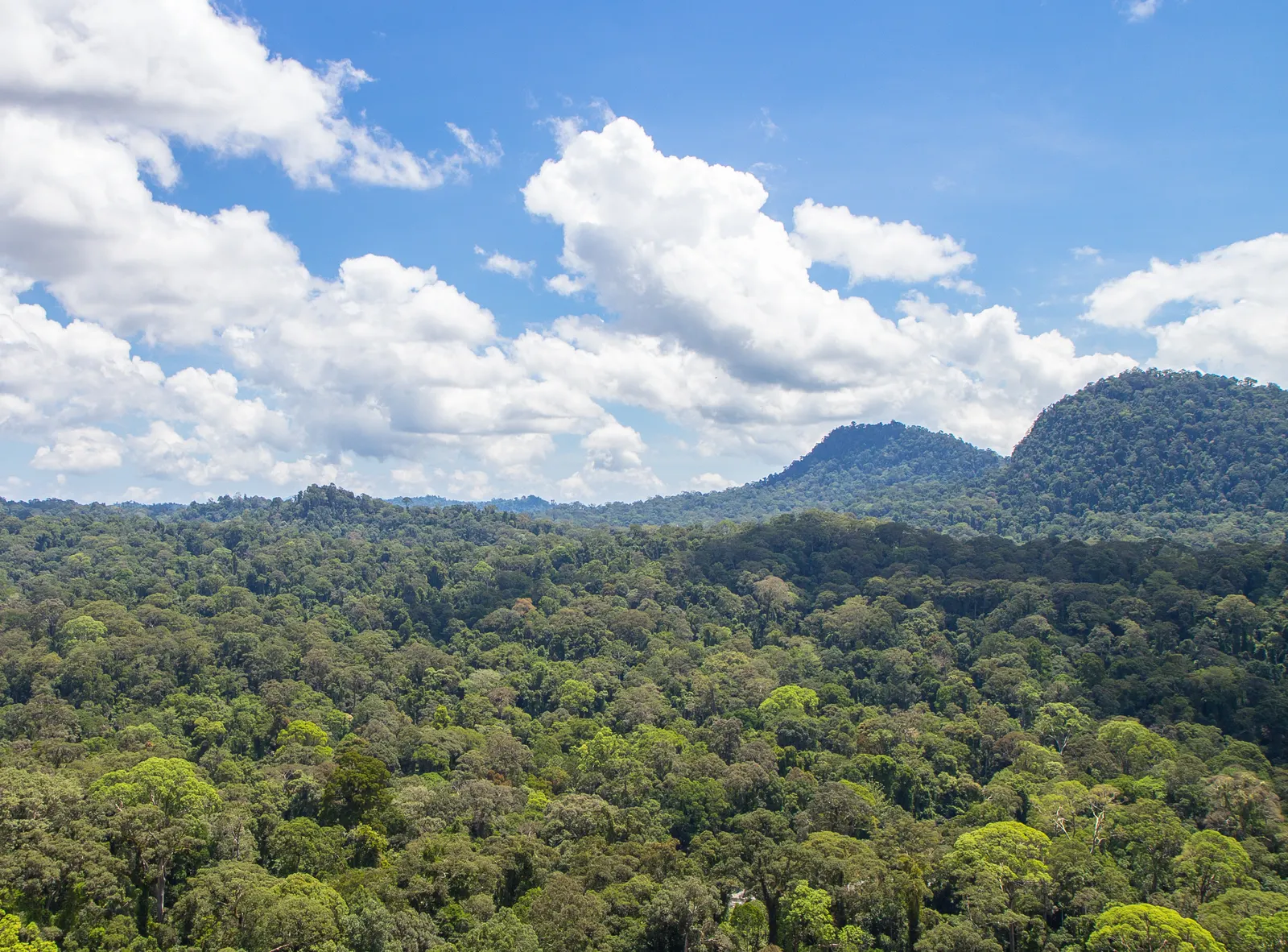
This is a forest tree of the western Malesian flora, including Borneo. Its habitat and botanical identity deserve attention beyond a generic timber label. Comparing it with Vatica rassak and large-flowered keruing shows the diversity hidden inside one tree family: different genera, leaf characters and fruit structures share the dipterocarp name.
Sources & references · 1
National Parks Board Singapore · Hopea sangal — Flora & Fauna WebMaterials & other uses
A mature sangal may reach about 40 metres, with buttresses and dark scaly bark. Small cream flowers produce dry nuts with two long calyx wings and three short ones. The wood is used as merawan for beams, frames and other construction. Creamy dammar resin has varnish, torch and boat-sealing uses. Riverbanks and hillsides form part of its rainforest habitat, linking a useful tree with specific forest conditions.