
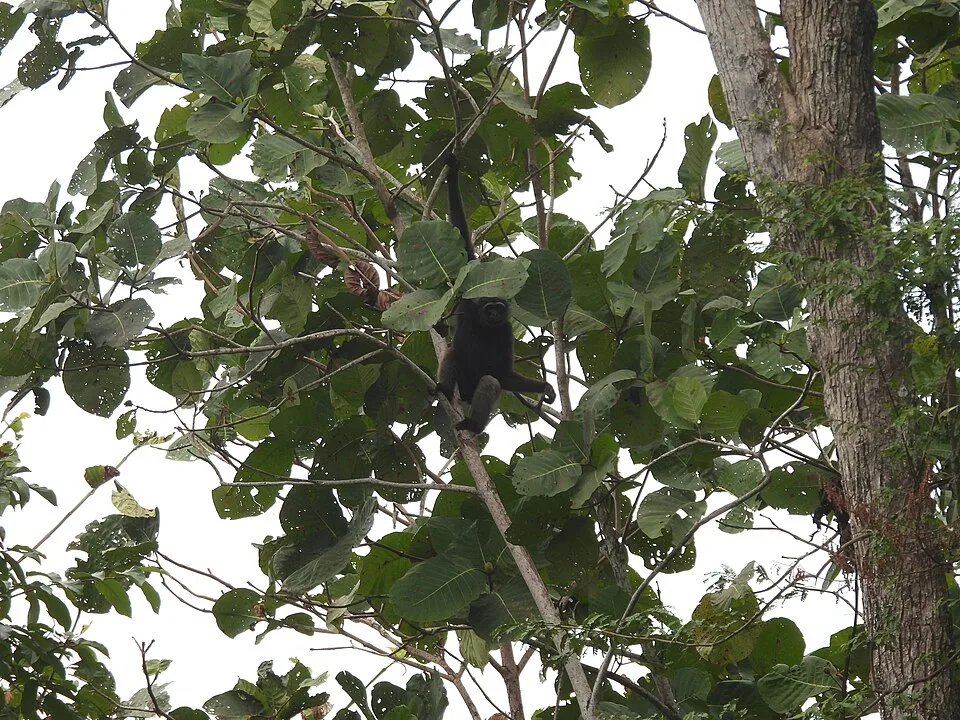
Range and habitat
The southern grey gibbon lives in southeastern Indonesian Borneo, including the Kutai forest landscape. The western grey gibbon and northern grey gibbon are separate relatives in other parts of the island. It is therefore a Borneo endemic with a regional range rather than an island-wide species.
Sources & references · 2
American Society of Mammalogists, MDD v2.5 · Hylobates muelleri: taxonomyJapanese Ministry of Environment, Biodiversity Center · Hylobates muelleri: ecology with Kutai referencesThreats and conservation
The southern grey gibbon is globally Endangered. Forest conversion, fragmentation and damaging logging reduce connected canopy. Dawn and morning offer opportunities to listen for forest gibbons, while visual encounters depend on where the animals are travelling and feeding.
Sources & references · 2
American Society of Mammalogists, MDD v2.5 · Hylobates muelleri: taxonomyJapanese Ministry of Environment, Biodiversity Center · Hylobates muelleri: ecology with Kutai referencesForests and observation
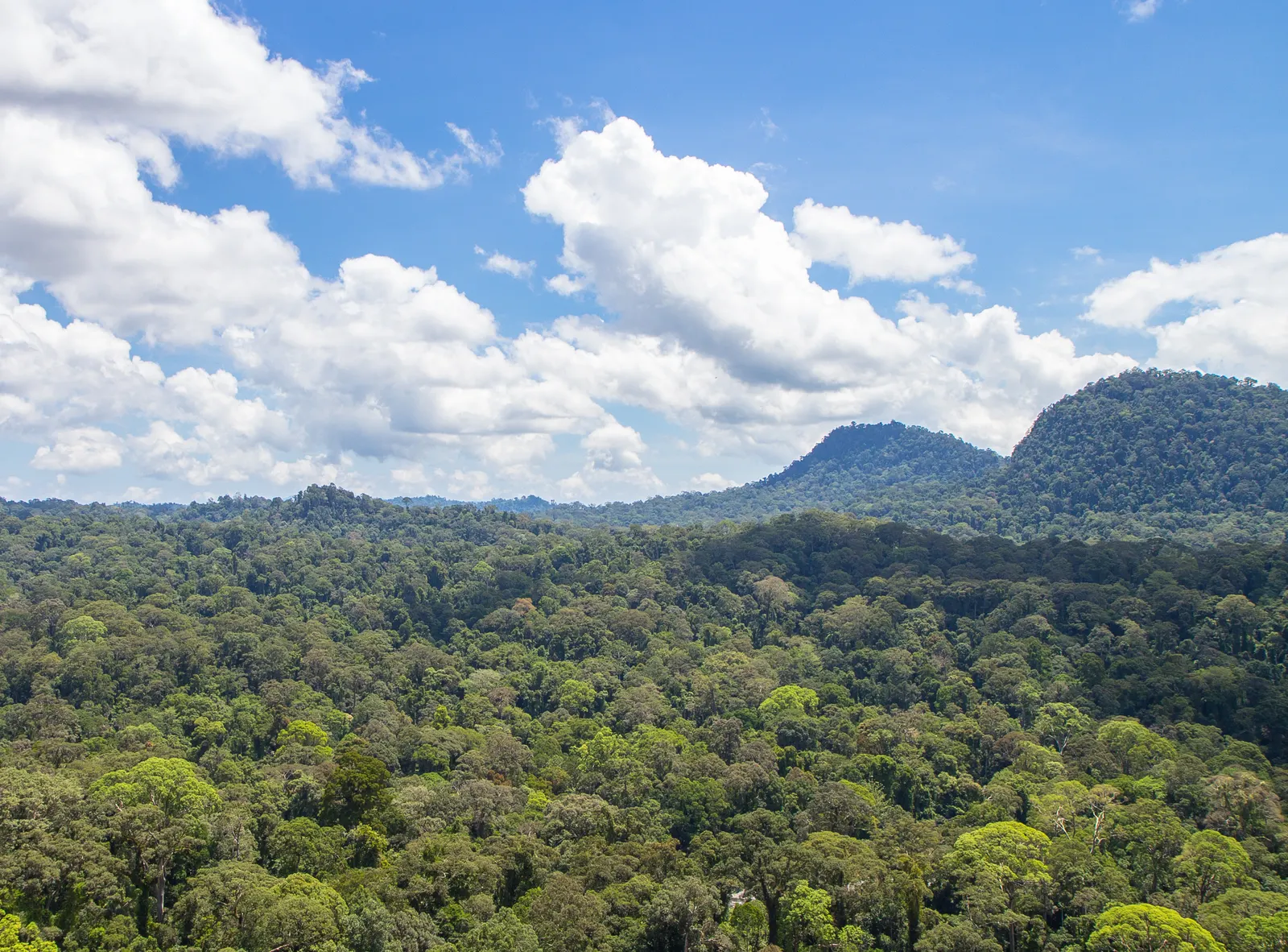
In Kutai, gibbons use forest ranges that contain feeding and sleeping trees. They favour sweet fruit but also eat young leaves and insects. Their day is spent in trees, so the arrangement of crowns matters alongside the quantity of food. Selectively logged forest can retain habitat, although removing important trees and breaking canopy connections reduces its value.
Sources & references · 1
Japanese Ministry of Environment, Biodiversity Center · Hylobates muelleri: ecology with Kutai referencesWhere gibbon ranges meet
At Rekut in the Barito Ulu landscape, southern grey gibbons meet Bornean white-bearded gibbons, and hybrids have been studied. This contact zone shows that the boundaries between forest primates can be biologically active. Conservation needs to preserve the landscape and its natural connections, including populations that do not fit a simple visual label.
Pairs and territorial song
Adult pairs occupy forest ranges and exchange coordinated duets. In Kutai playback experiments, approaches and vocal responses varied with the location of the simulated caller: intrusions near the centre provoked stronger responses than calls at the boundary or beyond it. Male songs also help neighbouring groups maintain spacing in the forest.
Sources & references · 2
American Journal of Primatology · My life among the apesZeitschrift für Tierpsychologie · Location-specific responses of gibbons (Hylobates muelleri) to male songs