Borneo range and habitat
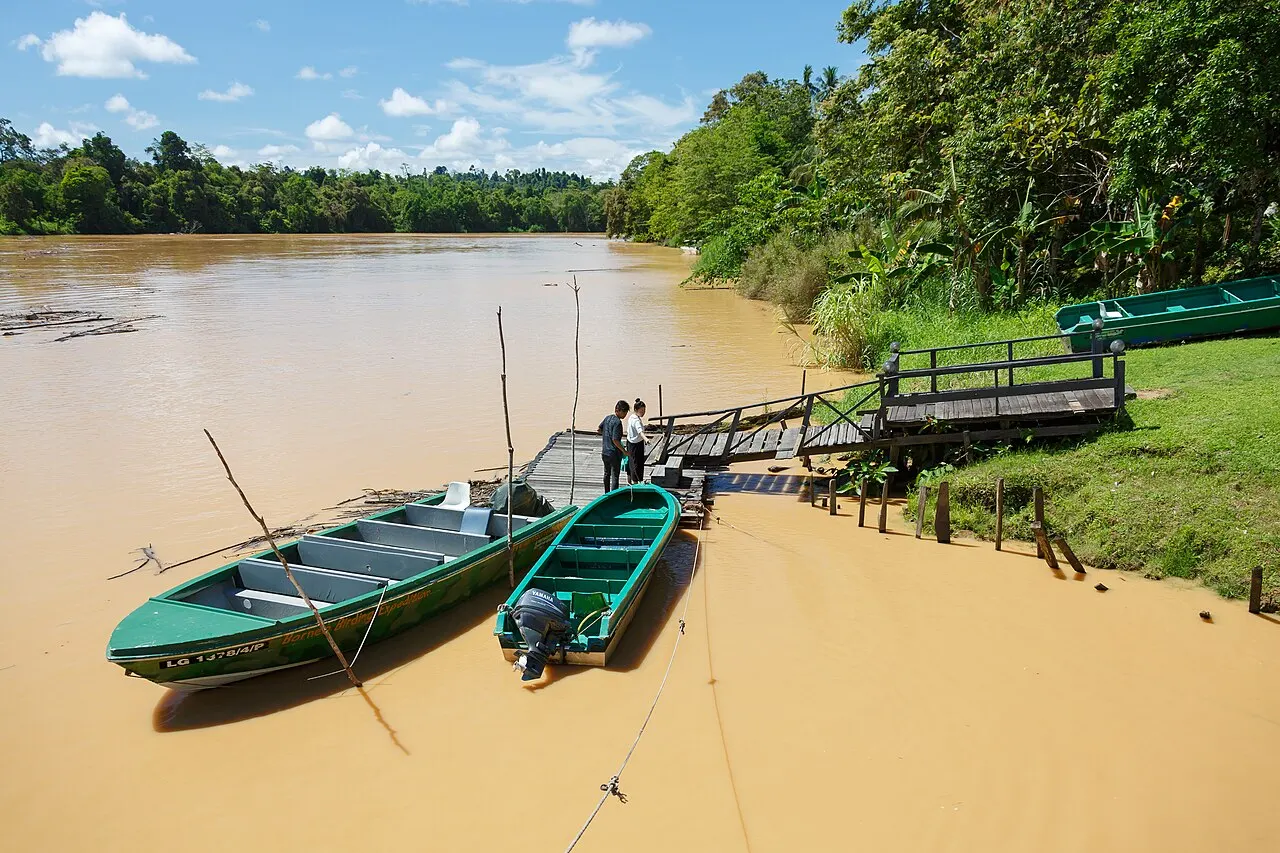
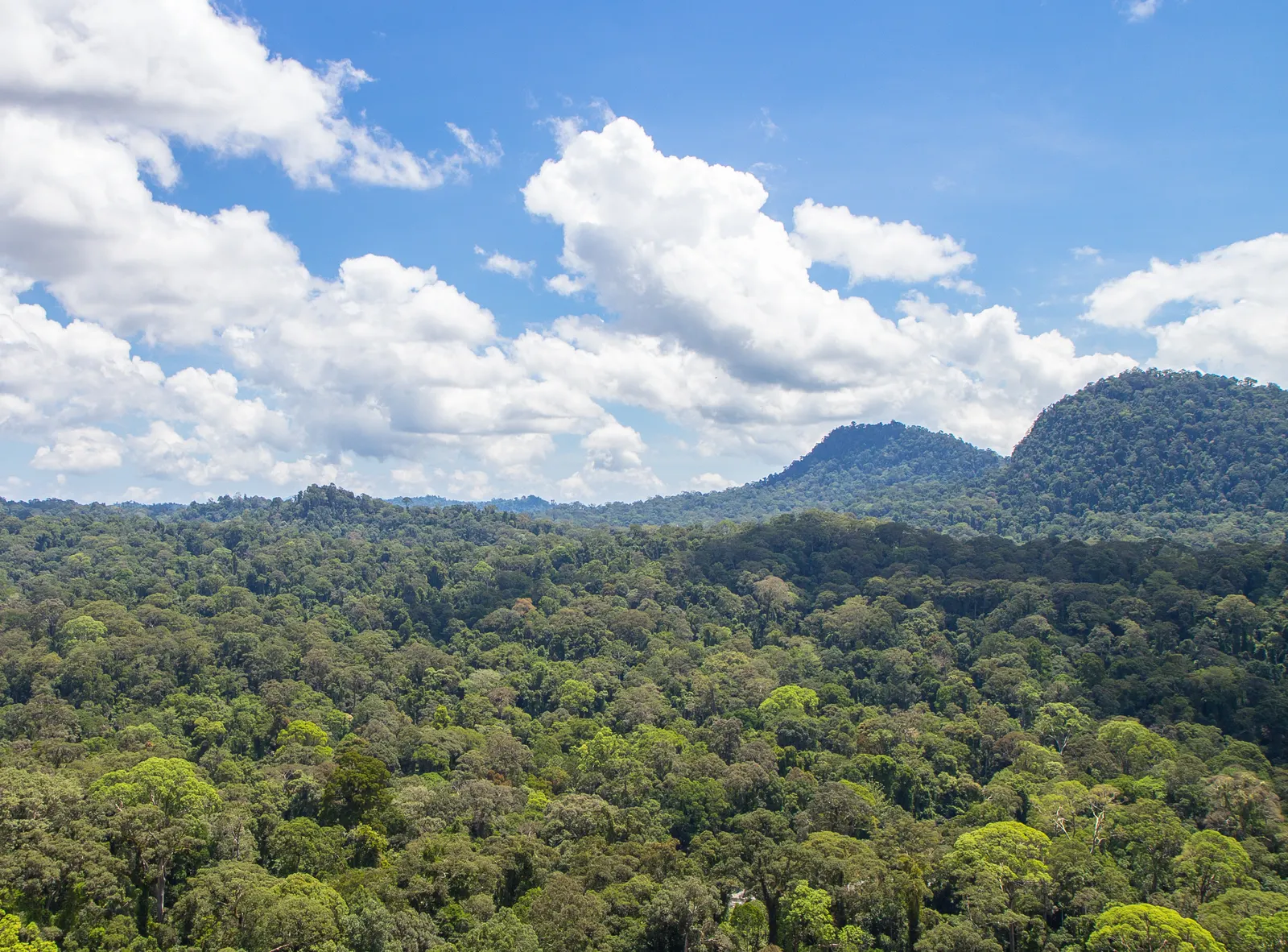
This forest macaque occurs on Borneo and elsewhere in Sundaland. The short, curved tail separates it from the long-tailed macaque. Lower Kinabatangan supports both species, so tail shape and overall build matter when identifying an animal.
Sources & references · 4
American Society of Mammalogists, Mammal Diversity Database v2.5 · Macaca nemestrina: taxonomy and linked conservation categoryUniversity of Michigan, Animal Diversity Web · Macaca nemestrina: natural historyEcology and Evolution · Molecular characterization of nodule worm in a community of Bornean primatesSabah Biodiversity Centre · Wildlife Atlas of Sabah: pig-tailed macaqueFeeding and ecological role
Fruit is important, alongside leaves, seeds and animal food. Foraging takes the animals through trees and onto the ground. Their flexible diet reflects the food available in each forest and season.
Sources & references · 4
American Society of Mammalogists, Mammal Diversity Database v2.5 · Macaca nemestrina: taxonomy and linked conservation categoryUniversity of Michigan, Animal Diversity Web · Macaca nemestrina: natural historyEcology and Evolution · Molecular characterization of nodule worm in a community of Bornean primatesSabah Biodiversity Centre · Wildlife Atlas of Sabah: pig-tailed macaqueActivity and social life
These are daytime, social monkeys living in groups with several adult males and females. Females commonly remain in their birth group, while males disperse. Mothers nurse and carry their young. Contact calls help members stay connected while feeding.
Sources & references · 4
American Society of Mammalogists, Mammal Diversity Database v2.5 · Macaca nemestrina: taxonomy and linked conservation categoryUniversity of Michigan, Animal Diversity Web · Macaca nemestrina: natural historyEcology and Evolution · Molecular characterization of nodule worm in a community of Bornean primatesSabah Biodiversity Centre · Wildlife Atlas of Sabah: pig-tailed macaqueConservation and observation
The southern pig-tailed macaque is globally Endangered. Forest loss, hunting and conflict around crops threaten its populations. Daylight forest visits fit its activity pattern, including in Lower Kinabatangan. Groups may move out of sight into dense vegetation, and their presence does not guarantee an encounter.
Sources & references · 4
American Society of Mammalogists, Mammal Diversity Database v2.5 · Macaca nemestrina: taxonomy and linked conservation categoryUniversity of Michigan, Animal Diversity Web · Macaca nemestrina: natural historyEcology and Evolution · Molecular characterization of nodule worm in a community of Bornean primatesSabah Biodiversity Centre · Wildlife Atlas of Sabah: pig-tailed macaqueRecognising the animal
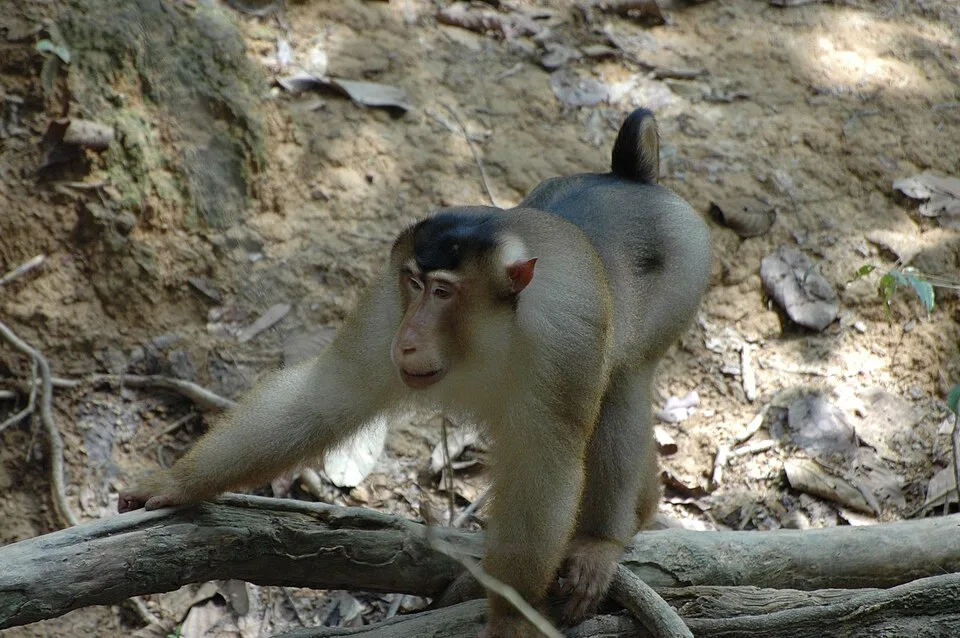
The fur is brown above and paler underneath, with a dark cap on the head. Adult males are larger and more heavily built than females. The short tail is often held partly upright. This combination distinguishes a beruk from a long-tailed macaque even when the animal is sitting among branches.
Sources & references · 1
University of Michigan, Animal Diversity Web · Macaca nemestrina: natural historyYoung and daily life
A mother normally raises one infant at a time, nursing, carrying and protecting it. Infants start life with a dark coat that changes as they grow. Females' lasting relationships with relatives can provide social support beyond infancy. Group life also includes competition: access to food and mates is affected by rank.