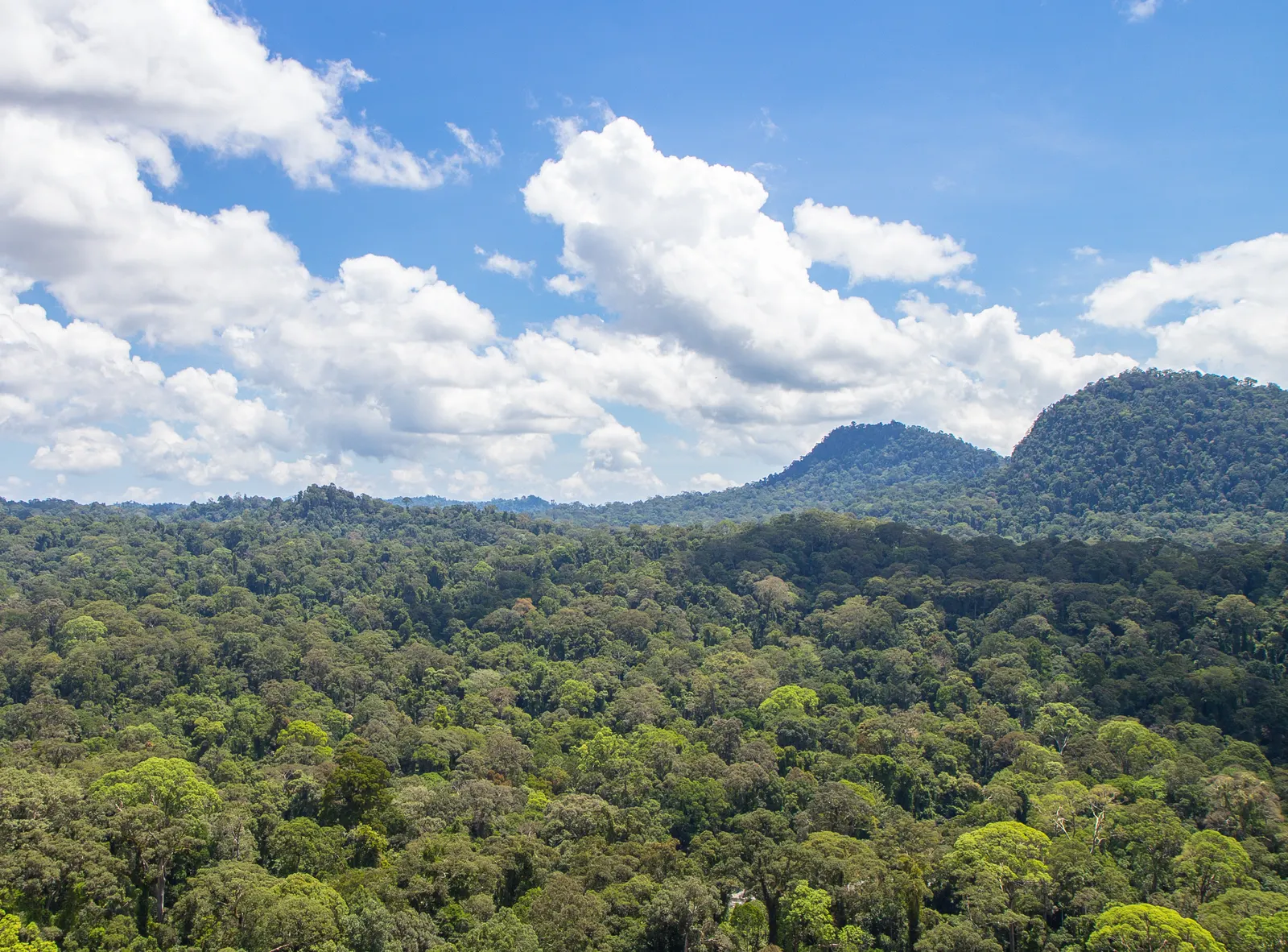
Range and habitat
This gliding mammal lives in Borneo's forests and elsewhere in Southeast Asia, with documented localities in Sabah and Sarawak. Considerable genetic diversity occurs within the Sunda colugo, although it is currently recognised as one species.
Sources & references · 3
American Society of Mammalogists, MDD v2.5 · Galeopterus variegatus: taxonomyTropical Life Sciences Research, Nasir and Abdullah · Distribution of the Sunda Colugo in Malaysia (Peninsular, Sabah, Sarawak)Evolution · Expression and Evolution of Short Wavelength Sensitive Opsins in ColugosFood and daily life
A broad skin membrane enables glides between trees. Colugos are nocturnal plant eaters; by day they can rest pressed against tree trunks. Their camouflage makes an animal easy to overlook. Movement depends on trees that offer feeding and landing surfaces rather than open ground.
Sources & references · 3
American Society of Mammalogists, MDD v2.5 · Galeopterus variegatus: taxonomyTropical Life Sciences Research, Nasir and Abdullah · Distribution of the Sunda Colugo in Malaysia (Peninsular, Sabah, Sarawak)Evolution · Expression and Evolution of Short Wavelength Sensitive Opsins in ColugosProtection and observation
The Sunda colugo is globally Least Concern, but connected tree cover remains important for its movements. A resting animal may be visible by day; gliding activity is more likely around dusk and at night. Its camouflage and quiet habits can make it inconspicuous even in occupied forest.
Sources & references · 3
American Society of Mammalogists, MDD v2.5 · Galeopterus variegatus: taxonomyTropical Life Sciences Research, Nasir and Abdullah · Distribution of the Sunda Colugo in Malaysia (Peninsular, Sabah, Sarawak)Evolution · Expression and Evolution of Short Wavelength Sensitive Opsins in ColugosA membrane from neck to tail
The gliding membrane joins the neck, limbs and tail, giving the animal a broad surface in flight. Hooked claws grip bark when it climbs or rests vertically. Mottled grey or brown fur blends with tree trunks; large eyes face forward. On the ground, the colugo moves awkwardly.
Sources & references · 1
Handbook of the Mammals of the World / Lynx Edicions · Sunda colugo: Handbook of the Mammals of the WorldCarrying young through the canopy
Leaves, buds and fruit provide food in the canopy. A mother usually has one young, which clings across her abdomen and accompanies her when she glides. The membrane can surround the dependent youngster while she rests. Trees therefore provide feeding sites, shelter and routes for a mother carrying her offspring.