Food and foraging
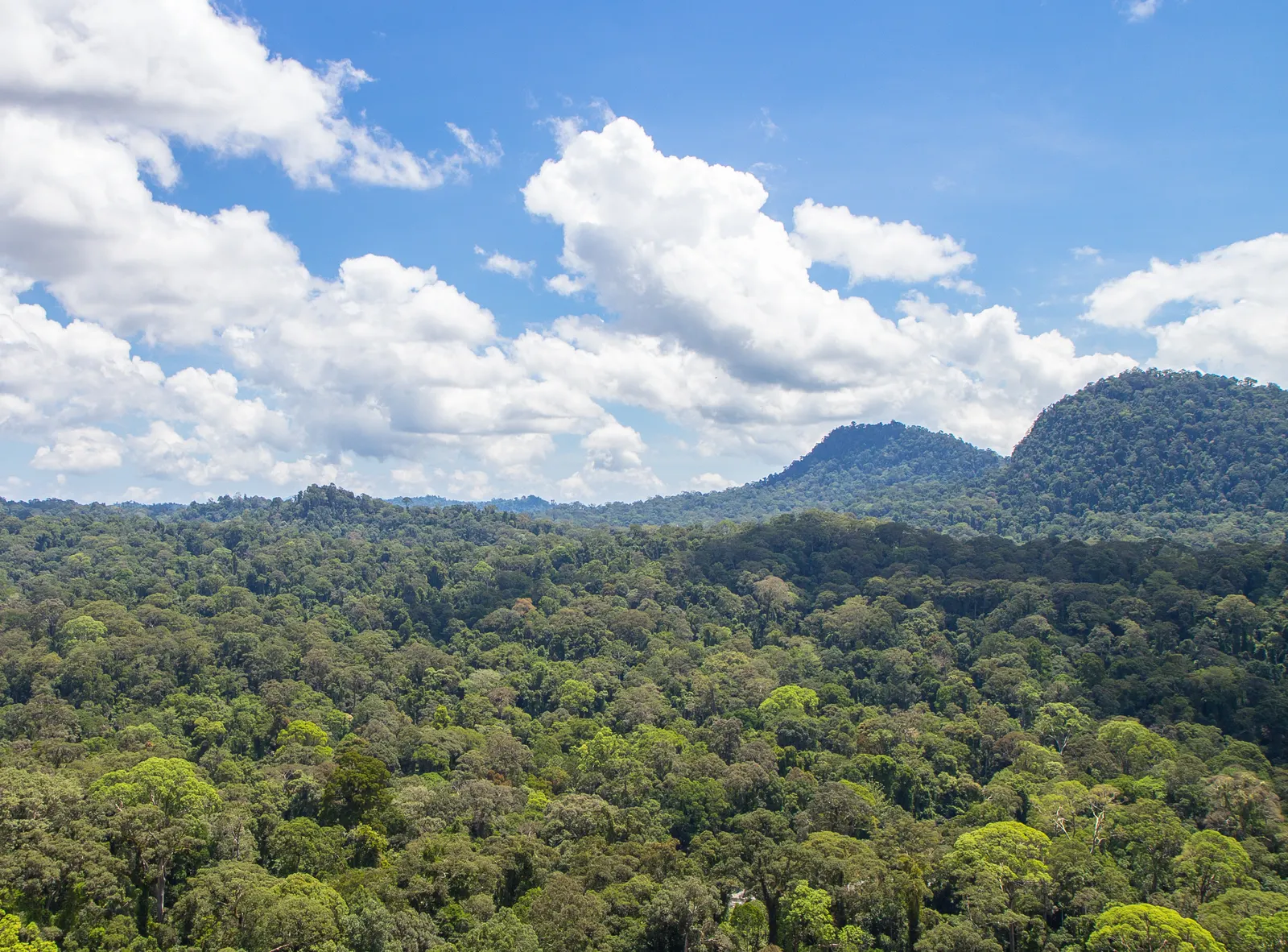
Insects and other small invertebrates form its food. Its arboreal life places this predator within the forest food web. A green colour or webbed feet alone cannot identify the species; related treefrogs require careful comparison.
Sources & references · 2
Animal Diversity Web, University of Michigan · Rhacophorus nigropalmatusAmphibian Species of the World, American Museum of Natural History · Rhacophorus nigropalmatusBreeding
Eggs develop in a foam nest positioned over water; tadpoles subsequently enter the water. Reproduction therefore links vegetation and aquatic habitat. Moving a nest or handling the frogs can disturb that connection and should be avoided.
Sources & references · 2
Animal Diversity Web, University of Michigan · Rhacophorus nigropalmatusAmphibian Species of the World, American Museum of Natural History · Rhacophorus nigropalmatusA canopy frog heard near breeding water
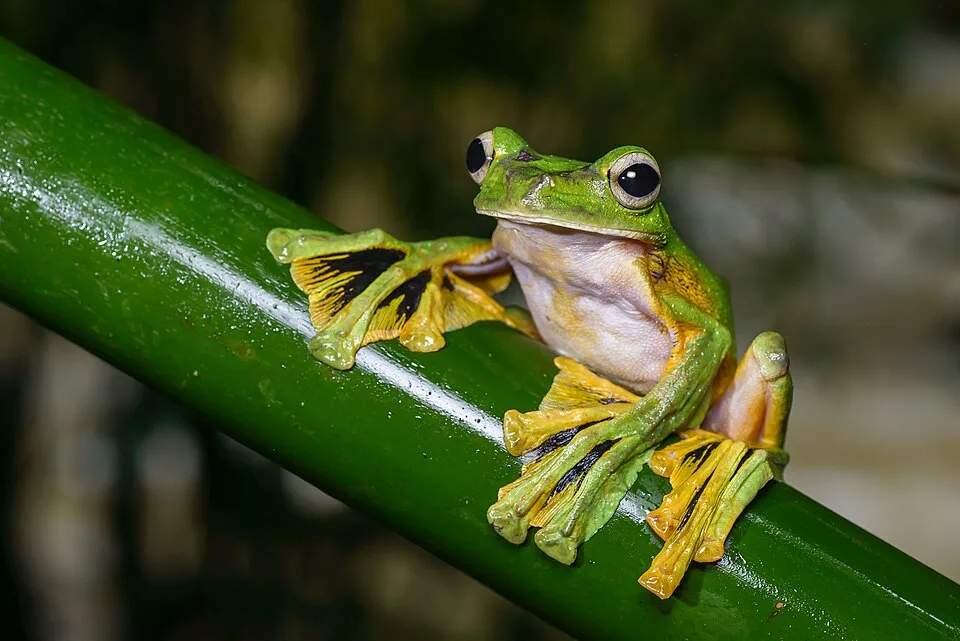
Emerald skin, black webbing and yellow limb markings form a striking combination. Most daily activity remains poorly known because adults stay high in the canopy. They descend to temporary pools for breeding. Males give a prolonged, unexpectedly low trill; ponds and muddy wallows provide more realistic encounter settings than a guaranteed treetop sighting.
Sources & references · 1
Frogs of Borneo · Rhacophorus nigropalmatusA different life below the water
The larvae inhabit still water, including turbid pools associated with mammal wallows. By day they remain near the bottom and may bury into superficial mud. At night they enter the water column to filter-feed and gulp air. Newly transformed froglets look brownish and rough-skinned, rather than miniature green adults.