Recognition
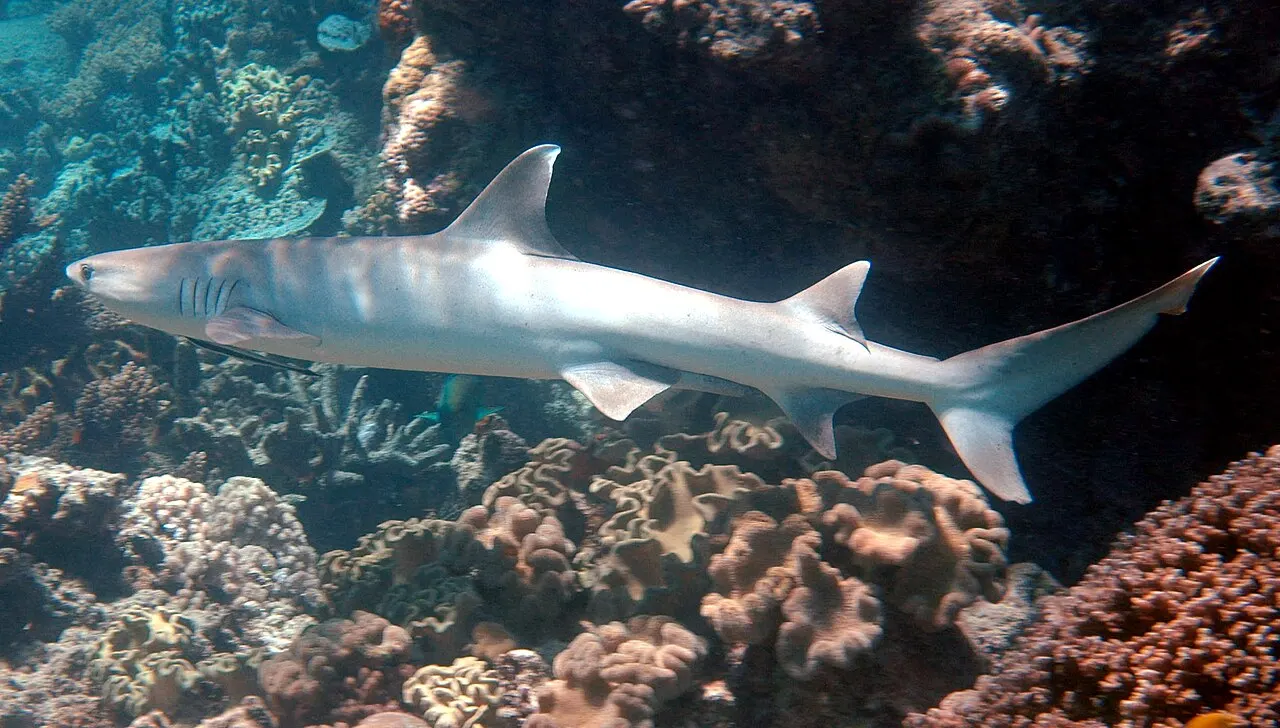
The body is grey above and paler below. White marks are clearest on the first dorsal fin and upper tail lobe; the second dorsal fin is nearly as large as the first. Despite the similar name, it is a different species from the oceanic whitetip shark. Individuals commonly remain below about 1.6 metres, although larger maximum lengths are reported.
Sources & references · 1
Species account or primary research · Bray, Fishes of Australia: Triaenodon obesusBehaviour
Much of the day is spent resting in caves, beneath ledges or on sandy patches. At dusk the shark becomes more active, entering reef crevices for fish, octopuses, lobsters and crabs. Its slender body helps it investigate confined shelter used by prey. A resting animal is therefore not an inactive part of the ecosystem: resting and nocturnal hunting are complementary parts of its day.
Sources & references · 1
Species account or primary research · Bray, Fishes of Australia: Triaenodon obesusHabitat and Borneo range
Sipadan in Sabah is a recognised Important Shark and Ray Area for this species. Shallow rubble ledges provide resting places beside steep reef walls. Researchers and dive observers record groups resting on rubble as well as swimming in current, with both behaviours sometimes occurring together. The island’s reef structure offers particular combinations of shelter, current and nearby deeper water.
Sources & references · 1
Species account or primary research · IUCN Shark Specialist Group: Sipadan Important Shark and Ray AreaReproduction
Females give birth to live pups, with small litters reported in species accounts. At Sipadan, courtship and mating have been observed seasonally from November to April: several males may follow one female, and a male grips her near the gills or pectoral fin. These local observations make the reef a reproductive setting as well as an important resting area.