
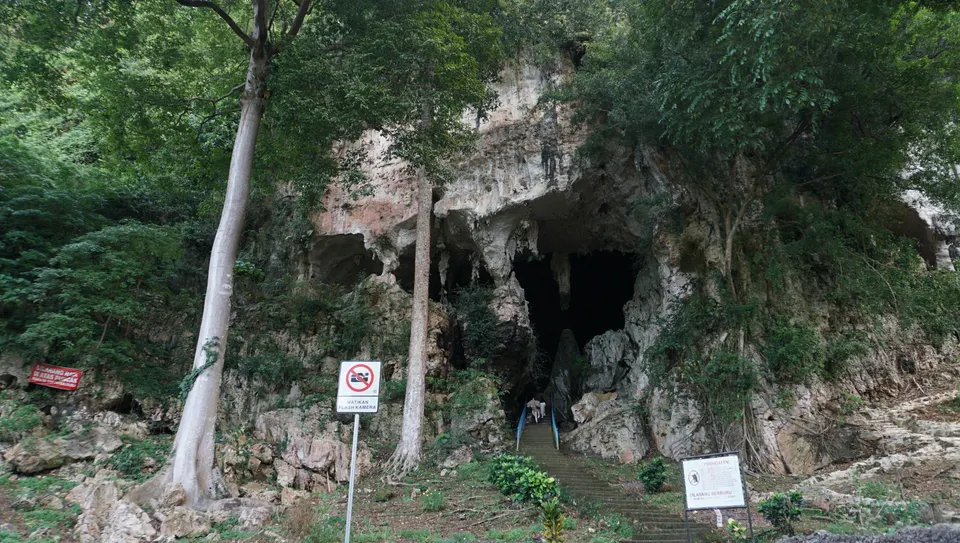
A limestone cave with its own visitor value
Batu Hapu Cave, also written Goa or Gua Batu Hapu, lies in Batu Hapu village, Hatungun, in South Kalimantan. Its large opening and interior chamber provide a clear focus for a visit. The Meratus Geopark authority identifies limestone of the Berai Formation and cave features including stalactites and stalagmites. This geological context distinguishes the place from a generic roadside stop. It belongs to the wider Meratus geopark story; the geopark’s UNESCO recognition should not be confused with a separate UNESCO designation for this individual cave.
Look closely without treating the cave as a playground
The attraction is the shape of the chamber, the formations and the contrast between the entrance and the interior. Let a local guide explain what can be visited under current conditions, and stay on the authorised route. Do not touch formations, remove rock or approach wildlife. Light, moisture and uneven surfaces can make walking different from an ordinary outdoor path. A local legend associated with Nini Kudampi is part of the cultural account of the cave, but it is not a scientific explanation for limestone formation or the cave’s development.
Confirm the road approach and local guide
The visitor site is reached by road in Tapin, with Batu Hapu village as the final destination. Rantau and Binuang are useful broader orientation points depending on the route, rather than interchangeable names for the cave entrance. Provincial information lists guide hire, toilets and a prayer room; confirm what is actually available during your visit. Current regional tourism promotion supports its continuing visitor role, but does not establish a daily opening schedule or guarantee road condition. Arrange return transport and ask local tourism staff about admission, guiding and the usable visitor section.
Plan a contained visit rather than a caving expedition
Allow around one to two hours at the site as an editorial estimate, with road travel additional. Ask about lighting, steps and equipment before entering, especially when visiting with children or someone with limited mobility. This is not a guide to deep caving, climbing or unmarked passages. Stay away from closed areas and do not publish locations of cave fauna. If conditions make the intended route unsuitable, follow local instructions and shorten the visit. Understanding a small number of formations carefully is more valuable than exploring beyond the agreed visitor boundaries.
