A protected landscape above Sintang
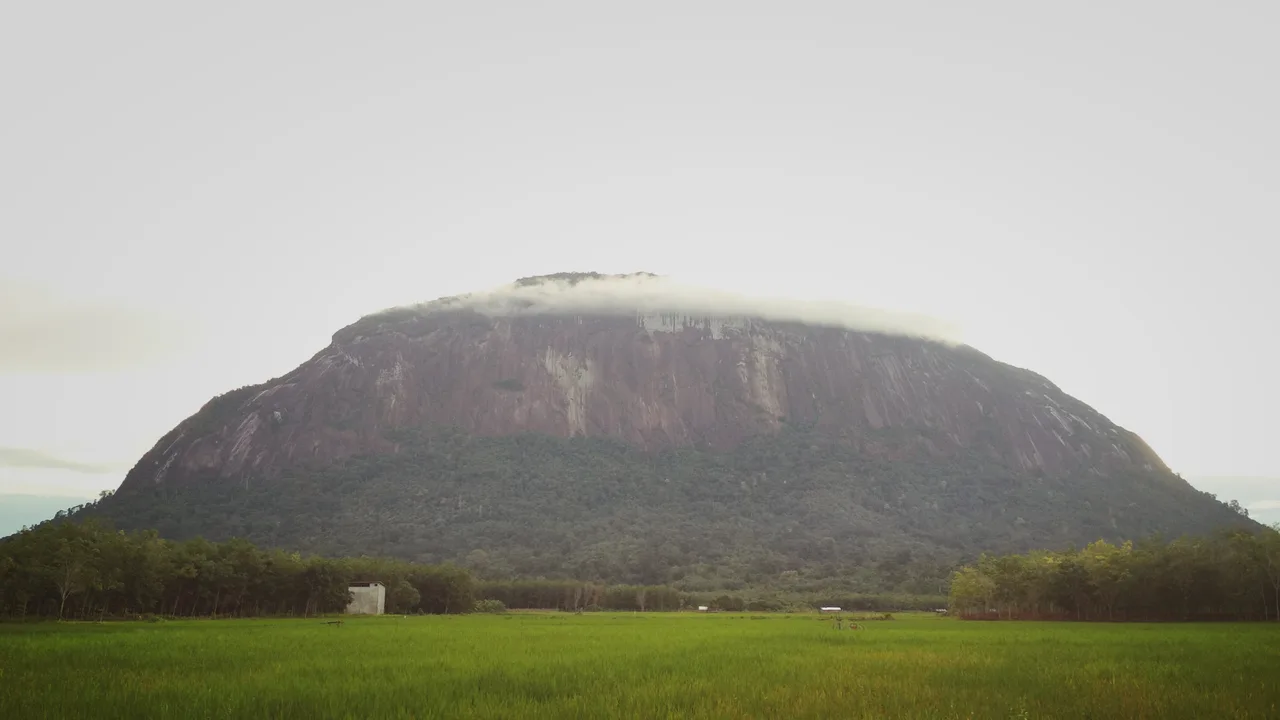
Bukit Kelam is one of the distinctive inland landscapes of West Kalimantan. Its steep rock mass rises above a forested base and stands apart from the surrounding terrain. The attraction of the place begins with this contrast between exposed stone and vegetation; a summit attempt is not necessary to understand why the landscape is important.
The national conservation register includes Bukit Kelam as a Taman Wisata Alam, a nature tourism park. This is a protected-area designation, not a guarantee that every climb, cave or forest path is currently open. The area is presented here for conservation and landscape context. Any practical visit must be matched to the specific place and route that the manager currently authorises.
Forest belongs to the story too
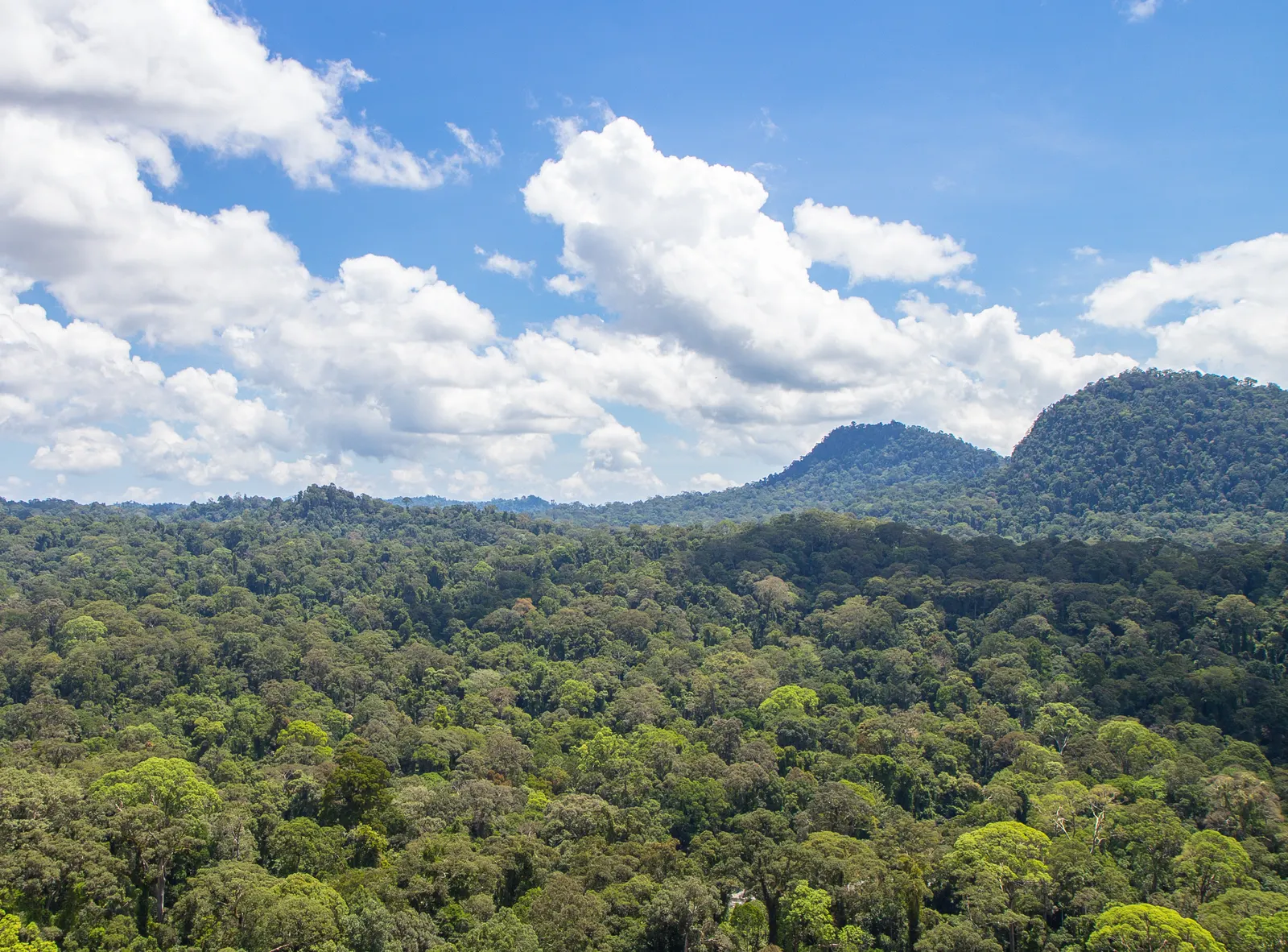
The official park background describes tropical rainforest at the foot of the hill, including dipterocarp trees. This connects Bukit Kelam with the wider story of Borneo’s lowland rainforest, even though its exposed rock gives it a very different appearance from an uninterrupted forest canopy. The transitions between sheltered vegetation and open surfaces matter as much as the dramatic outline.
Treat the forest as habitat rather than scenery to clear for a better picture. Keep to any authorised visitor area and avoid moving plants, entering caves or creating shortcuts. Historical descriptions of species and vegetation help explain the protected area; they should not be converted into guarantees of what a casual visitor will see on a particular day.
Rare plants are a reason for restraint
Botanical literature associates Bukit Kelam with Nepenthes clipeata, a rare pitcher plant. A BRIN-hosted botanical reference describes its very restricted natural origin and pressure from collecting. That makes the plant relevant to understanding the hill, but not an objective for an unapproved search. Old population estimates are not presented here as current counts.
Do not ask a guide to reveal sensitive plant locations, take cuttings or buy plants claimed to have been collected locally. A conservation-minded visit should leave the habitat intact. Photographs of cultivated specimens elsewhere are not proof of easy encounters on the hill, and the presence of a rare species does not make the route to its habitat suitable for public navigation.
Landscape and local storytelling
The forestry authority also publishes the Bujang Beji legend in connection with Bukit Kelam. It belongs to cultural storytelling about the landscape, not a scientific explanation of how the rock formed. Hearing the story with its local context can add depth without turning a living tradition into a performance expected from every resident.
If a locally arranged visit includes cultural interpretation, ask who is providing it and where visitors are welcome. Separate that agreement from any climbing or protected-area permission. A religious site, village house and conservation route may lie in the same broader landscape while retaining different rules and responsibilities. One guide’s invitation does not automatically extend to all of them.
Plan through Sintang and the area manager
Sintang is the regional place from which to discuss an approach to Bukit Kelam. Before reserving a climb, ask BKSDA Kalimantan Barat or its Sintang office which visitor area is open, whether your proposed route is permitted and which local provider can operate it. Confirm equipment, weather limits, guide arrangements and return transport. No old transport timetable or ascent duration is reproduced here.
This guide does not supply a summit track, research point or plant-location pin. If current access cannot be established, keep Bukit Kelam as landscape context rather than improvising an ascent. The outline can remain a meaningful part of understanding inland West Kalimantan without making a risky or ecologically intrusive climb the measure of a successful journey.