Recognition
The Asian arowana has an elongated body covered in conspicuous, broad scales. Two barbels project from the tip of its lower jaw, and its upturned mouth suits feeding near the water surface. The dorsal and anal fins lie toward the rear of the body. Adult colour varies between populations and also makes the fish attractive in the ornamental trade. Colour labels alone are not a safe taxonomic guide: this account follows the accepted name Scleropages formosus in the Catalog of Fishes. The Bornean record belongs to a wider Southeast Asian range.
Sources & references · 2
California Academy of Sciences · Eschmeyer’s Catalog of Fishes: Scleropages formosusFishBase / IUCN · FishBase: Scleropages formosus — biology and global assessmentHabitat and Borneo range
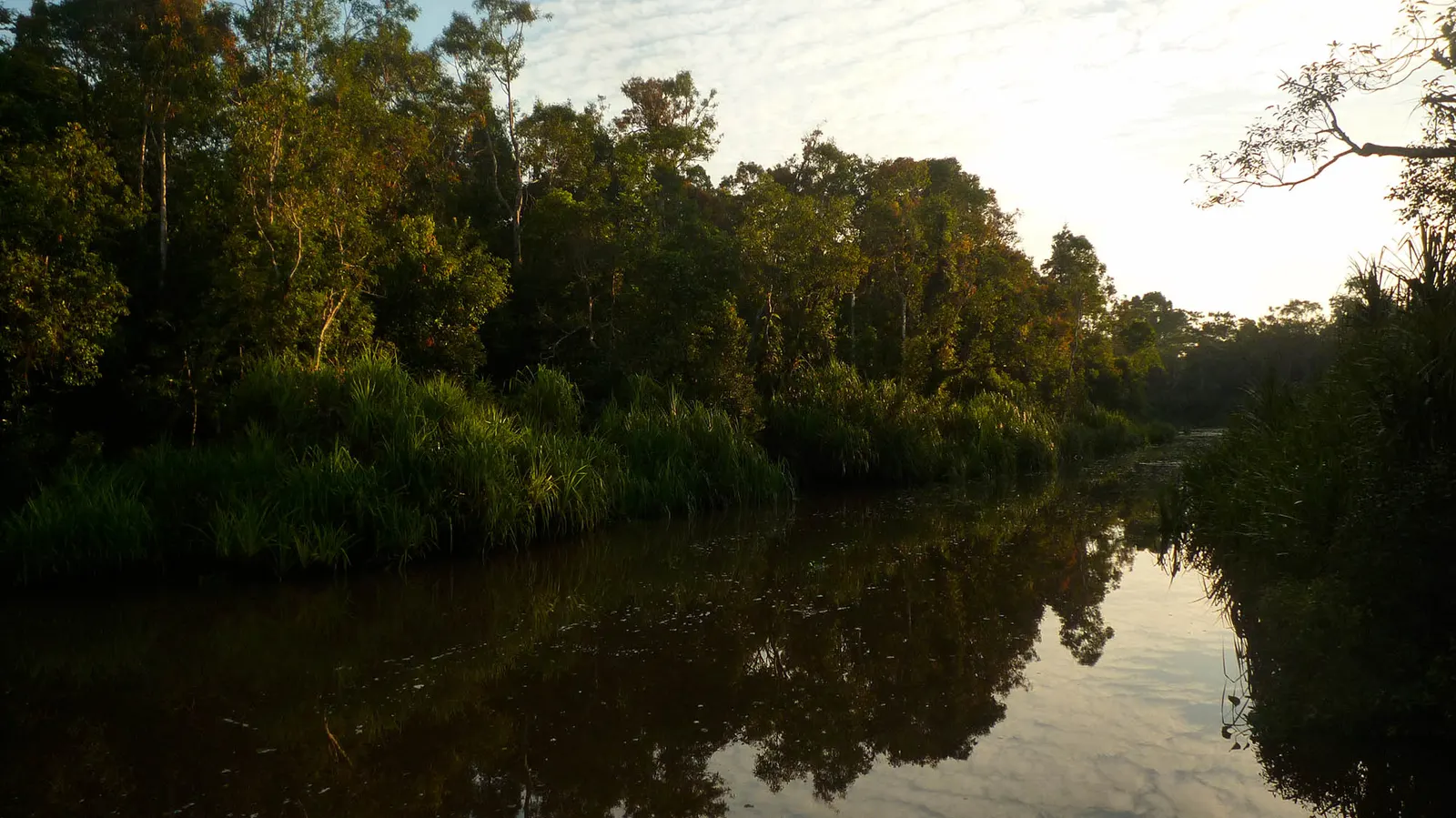
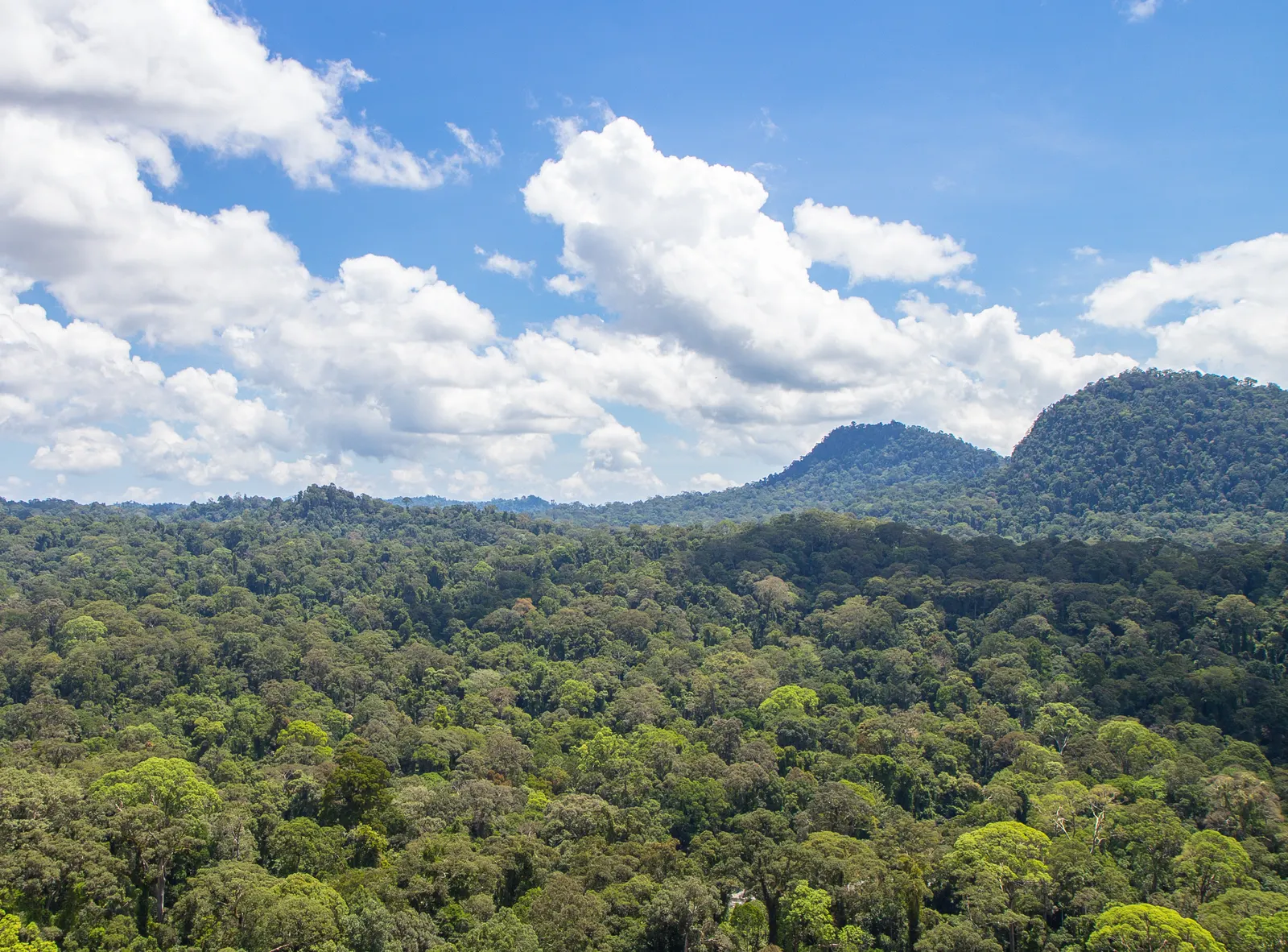
Slow-moving forest streams and wetland waters form its freshwater habitat, including dark water coloured by forest organic matter. On Borneo, Indonesian conservation authorities document arowana protection in Danau Sentarum, West Kalimantan. The lake, river and seasonally flooded forest mosaic links feeding waters with sheltered habitat. An arowana in a shop or aquarium is not evidence of a nearby wild population. For travellers, the Sentarum landscape offers a way to understand the fish’s habitat without promising a sighting.
Sources & references · 2
FishBase / IUCN · FishBase: Scleropages formosus — biology and global assessmentIndonesian Directorate General of Natural Resources and Ecosystem Conservation · Conserving arowana in Danau Sentarum National ParkFood and ecological role
Young arowanas feed especially on insects at the surface. Larger individuals also take fishes and other small animals. Their feeding position connects the aquatic food web with insects arriving from the banks and forest above the water. The upturned mouth helps explain why the surface layer matters so much to this predator. That connection does not establish a feeding relationship with any particular tree species: the available evidence supports the forest–water link rather than a named fruit or leaf diet.
Sources & references · 1
FishBase / IUCN · FishBase: Scleropages formosus — biology and global assessmentReproduction
The male incubates the eggs in his mouth and protects the developing young there. This paternal mouthbrooding is very different from scattering unguarded eggs into open water. Aquarium observations contribute much of the detailed breeding information, so they should not be read as a calendar for wild spawning in Kalimantan. International trade restrictions and an Endangered global assessment reflect the conservation importance of the species. Protecting wild fish and their waters remains distinct from breeding ornamental fish in captivity.