Appearance & recognition
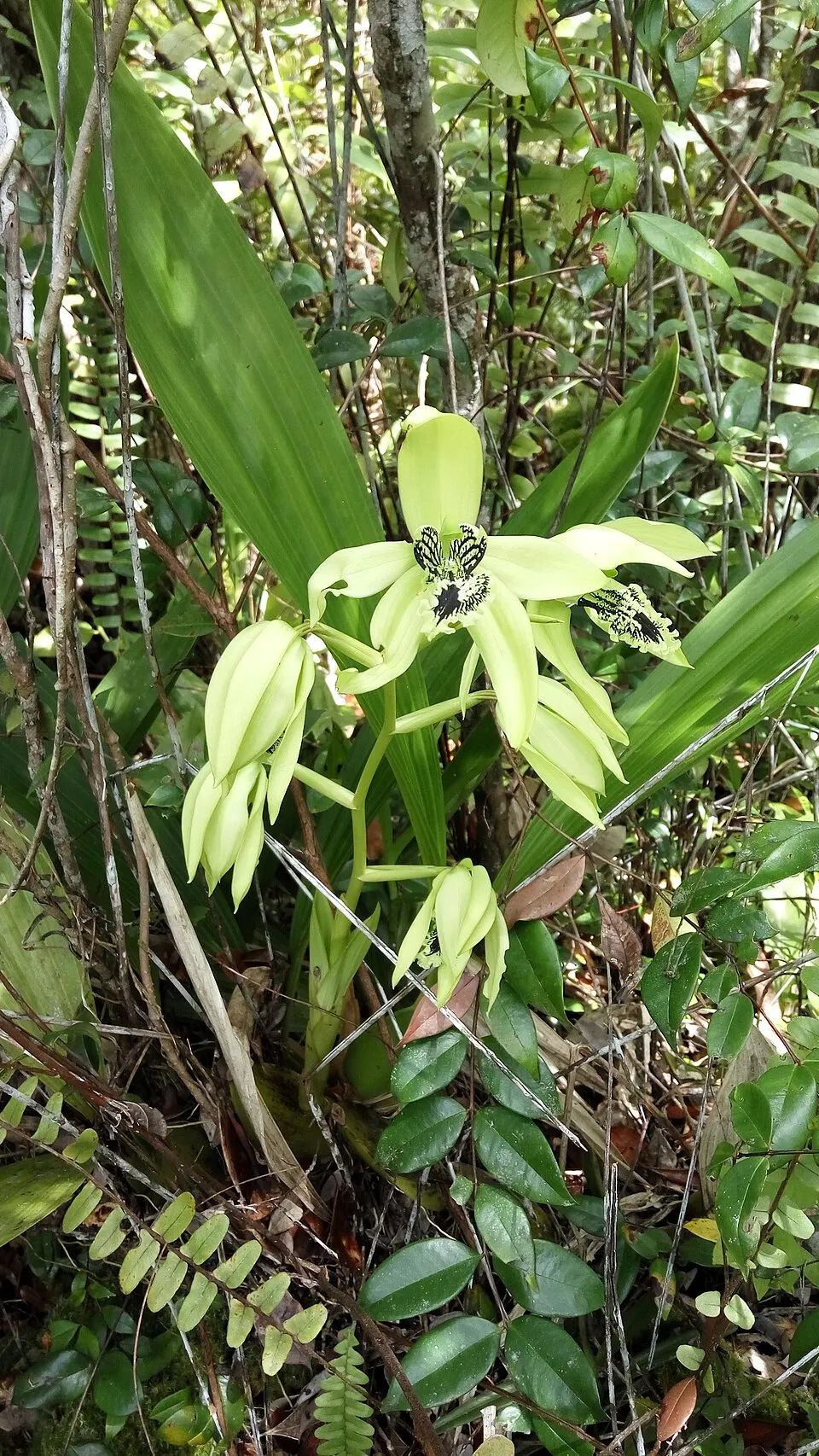
The name black orchid refers to the dark markings on the flower’s lip. The surrounding petals and sepals are green, so a completely black flower would be a poor match for Coelogyne pandurata. The lip is an enlarged, patterned petal and is the feature that draws the eye. The plant forms clusters of pseudobulbs, each carrying folded leaves; these swollen stems store resources between periods of growth.
Sources & references · 2
Royal Botanic Gardens Kew POWO · Coelogyne pandurataSingapore Botanic Gardens, Gardenwise 55 (2020) · Orchids in the Singapore Botanic Gardens: Coelogyne pandurataHow the plant grows
An epiphyte grows on another plant for support without feeding parasitically on it. This orchid can occupy branches and also grow on rock or ground in suitable humid settings. Its roots attach to the support while remaining exposed to air and moisture. A tree with suitable bark and a humid microclimate is therefore part of its habitat, rather than merely a convenient display stand.
Sources & references · 2
Royal Botanic Gardens Kew POWO · Coelogyne pandurataSingapore Botanic Gardens, Gardenwise 55 (2020) · Orchids in the Singapore Botanic Gardens: Coelogyne pandurataFlowers, fruits & reproduction
Fragrant flowers are carried in an inflorescence, making the green-and-dark contrast visible above the foliage. Flowering is a temporary stage, so the same clump may look much less conspicuous outside bloom. Published accounts describe appearance and habitat more securely than a universal flowering calendar for Borneo; rainfall and local growing conditions can differ between sites.
Sources & references · 1
Singapore Botanic Gardens, Gardenwise 55 (2020) · Orchids in the Singapore Botanic Gardens: Coelogyne pandurataRange & habitat
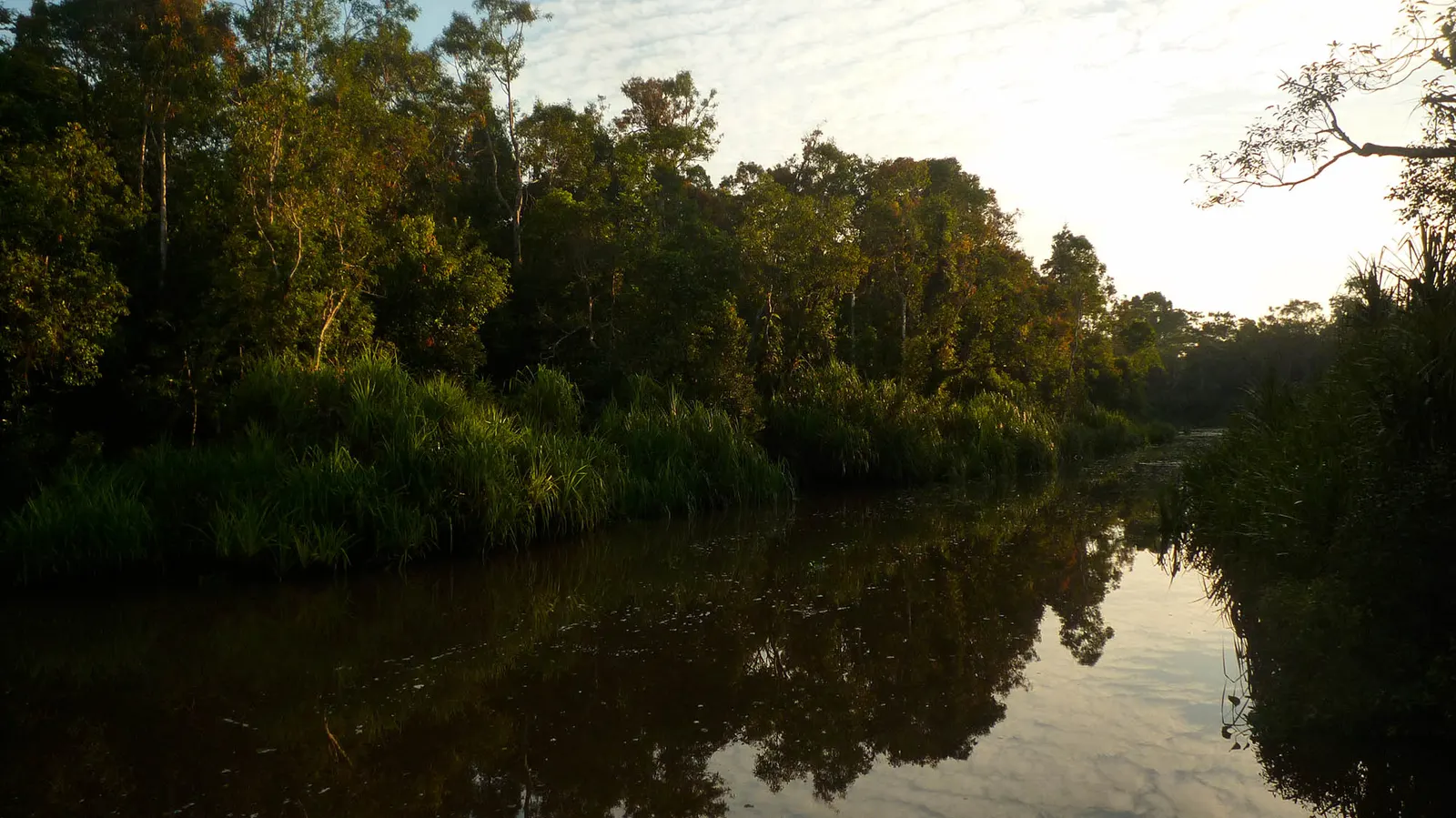
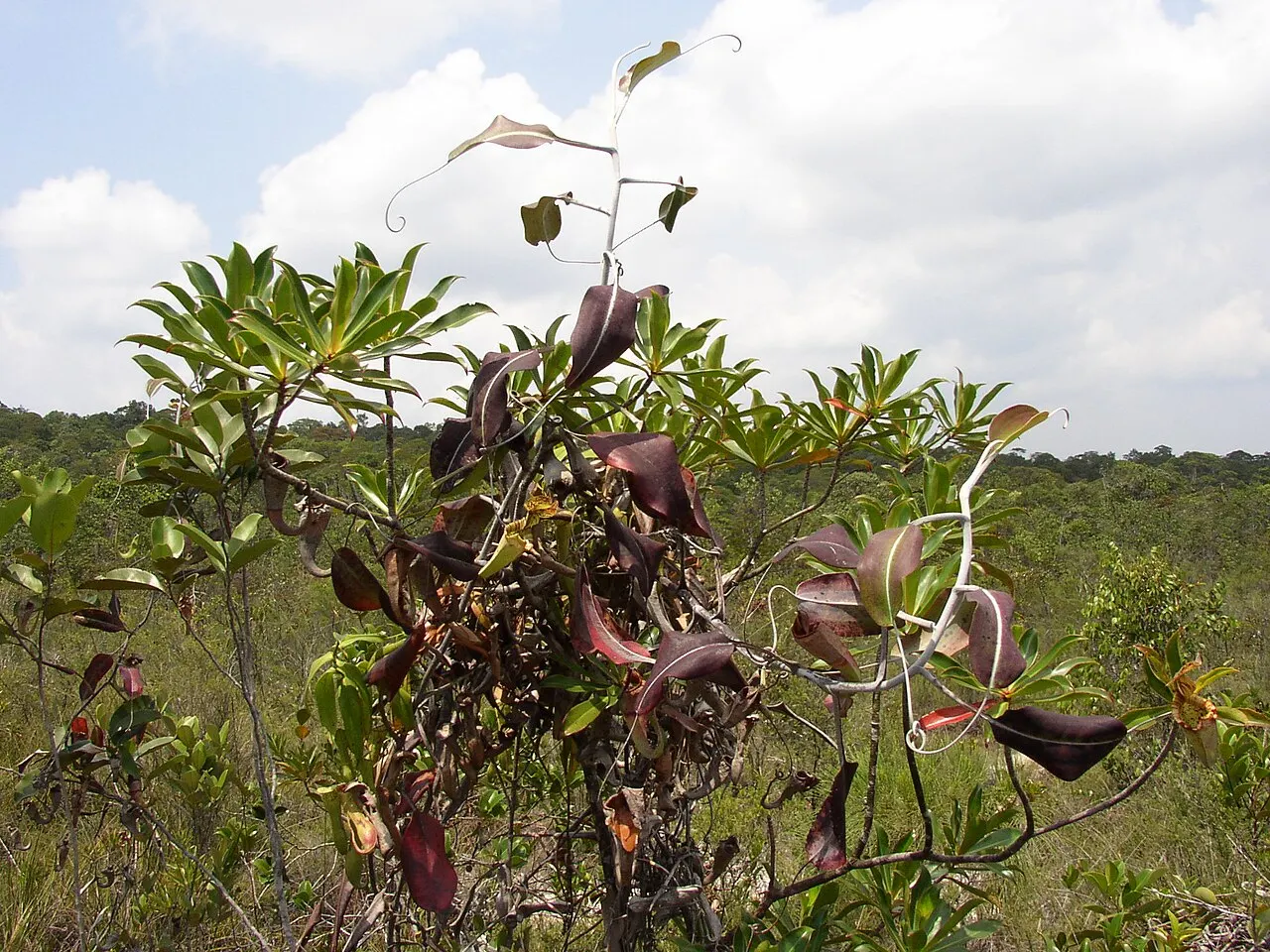
Borneo is an important part of its native range, but the species is not exclusive to Kalimantan. Indonesia’s conservation authority documents it in the kerangas landscape of Padang Luwai, Kutai Barat, East Kalimantan. Botanical accounts also describe growth near rivers. Its future depends on retaining suitable vegetation and microclimates as well as preventing damaging collection; a flower alone cannot survive the loss of those conditions.