Crest, broad wings and a pale tail band
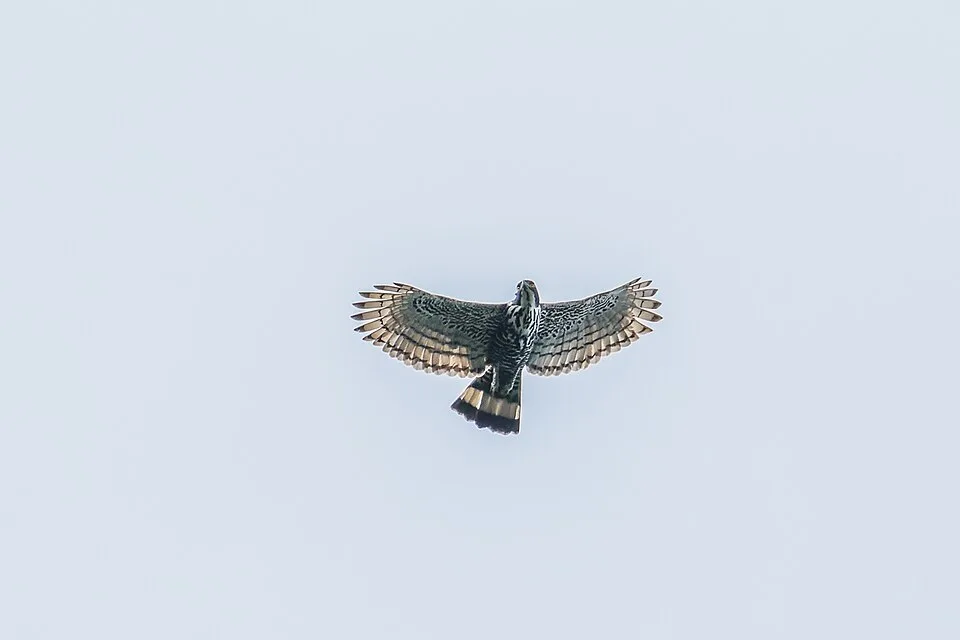
Adults have dark upperparts and a white underside strongly marked with black. A broad pale tail band shows in flight, along with rounded wings; the crest is easier to see on a perched bird. Juveniles resemble Wallace's Hawk-Eagles and require care. Elevation alone is unreliable on Borneo, where verified records include both lowland and upland forest.
Sources & references · 2
Cornell Lab of Ornithology, eBird/Merlin · Blyth's Hawk-Eagle identificationStyring A.R., Donald J.J. and Gawin D.F.; Journal of Asian Ornithology 42:6–11 · Nest description, post-fledging vocalisations and elevational distribution of Blyth's Hawk-Eagle Nisaetus alboniger in BorneoA high nest in lowland forest
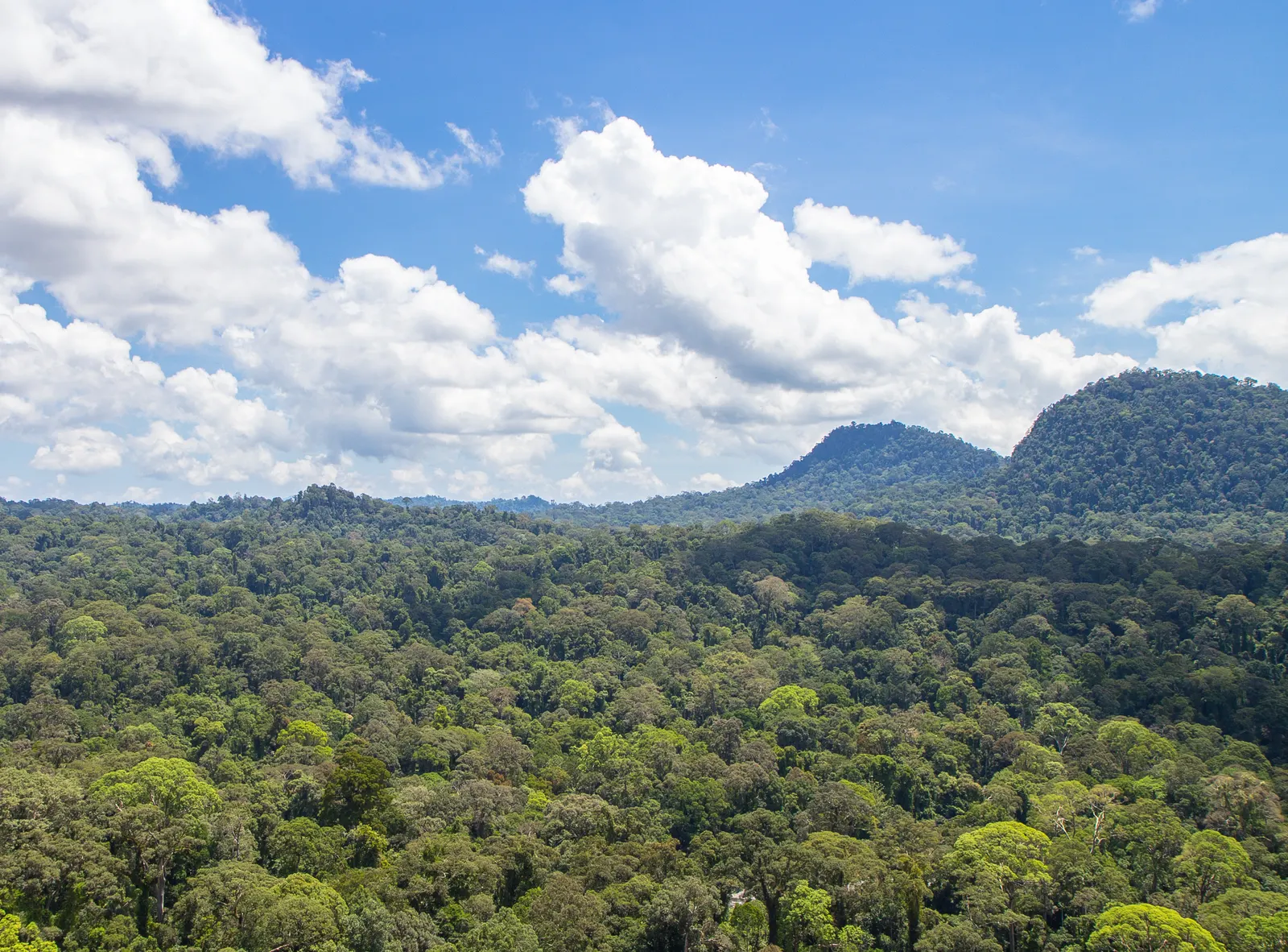
A 2024 nest in the Bau region of Sarawak lay high in an emergent tree within mature secondary rainforest. The site was only 73 metres above sea level. A juvenile returned near the nest and called; an adult was later observed nearby. The record demonstrates lowland nesting, rather than a species confined to mountain forest. The nest platform was about 50 centimetres across and 40 centimetres deep, positioned 37 metres up a 45-metre tree. It rose above the surrounding canopy. This combination of a lowland site and a high nest illustrates why ground elevation and nest height must be kept distinct.
Sources & references · 1
Styring A.R., Donald J.J. and Gawin D.F.; Journal of Asian Ornithology 42:6–11 · Nest description, post-fledging vocalisations and elevational distribution of Blyth's Hawk-Eagle Nisaetus alboniger in BorneoOften heard through the crowns
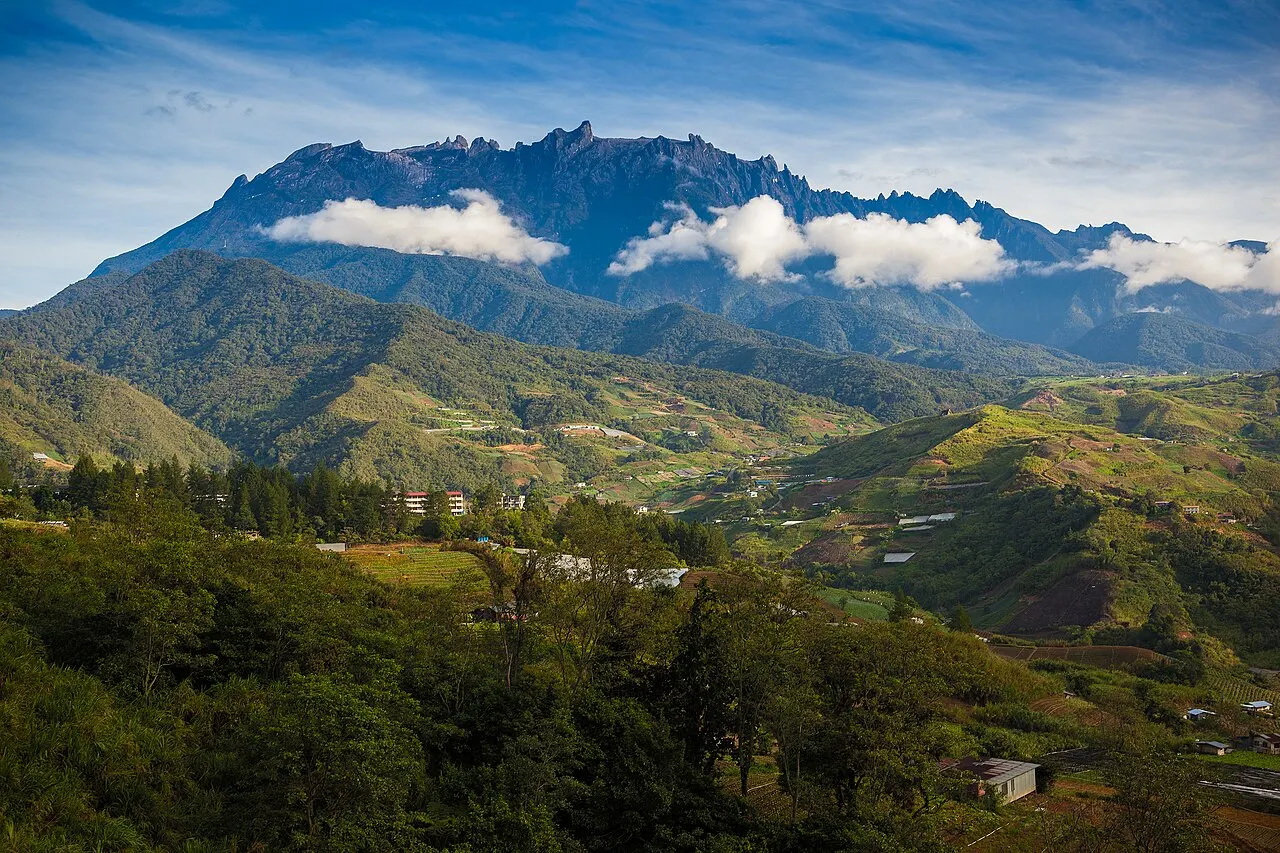
Calls can reveal a hawk-eagle obscured by leaves, but a clear view remains important for separating similar species. On Borneo it occupies forests over a broad elevation range, including steep terrain. The species is globally Least Concern, while forest loss and capture for trade remain concerns. Quiet daytime observation of emergent trees and canopy openings suits a bird that can remain concealed even while calling.