Flowers, fruits & reproduction
Cluster fig produces its figs on woody parts of the tree, with flowers hidden inside the rounded syconia. Male and female flowers occur within the same species’ monoecious reproductive system. The documented pollinator is the fig wasp Ceratosolen fusciceps. A fig is therefore more than a container of seeds: it is also the place where a very small insect completes part of its life cycle.
Sources & references · 1
Singapore Botanic Gardens, Gardens’ Bulletin · Fig pollination and fig-wasp associationsLife in the ecosystem
This mutual dependence is a useful contrast with Ficus fistulosa, whose male and female trees are separate and whose recorded wasps differ. Forest fig diversity includes differences invisible from the outside: flower arrangement, insect partners and timing of reproduction. General statements that “figs feed animals” do not identify the particular animal or establish a Bornean observation for this species.
Sources & references · 1
Singapore Botanic Gardens, Gardens’ Bulletin · Fig pollination and fig-wasp associationsEcological relationships
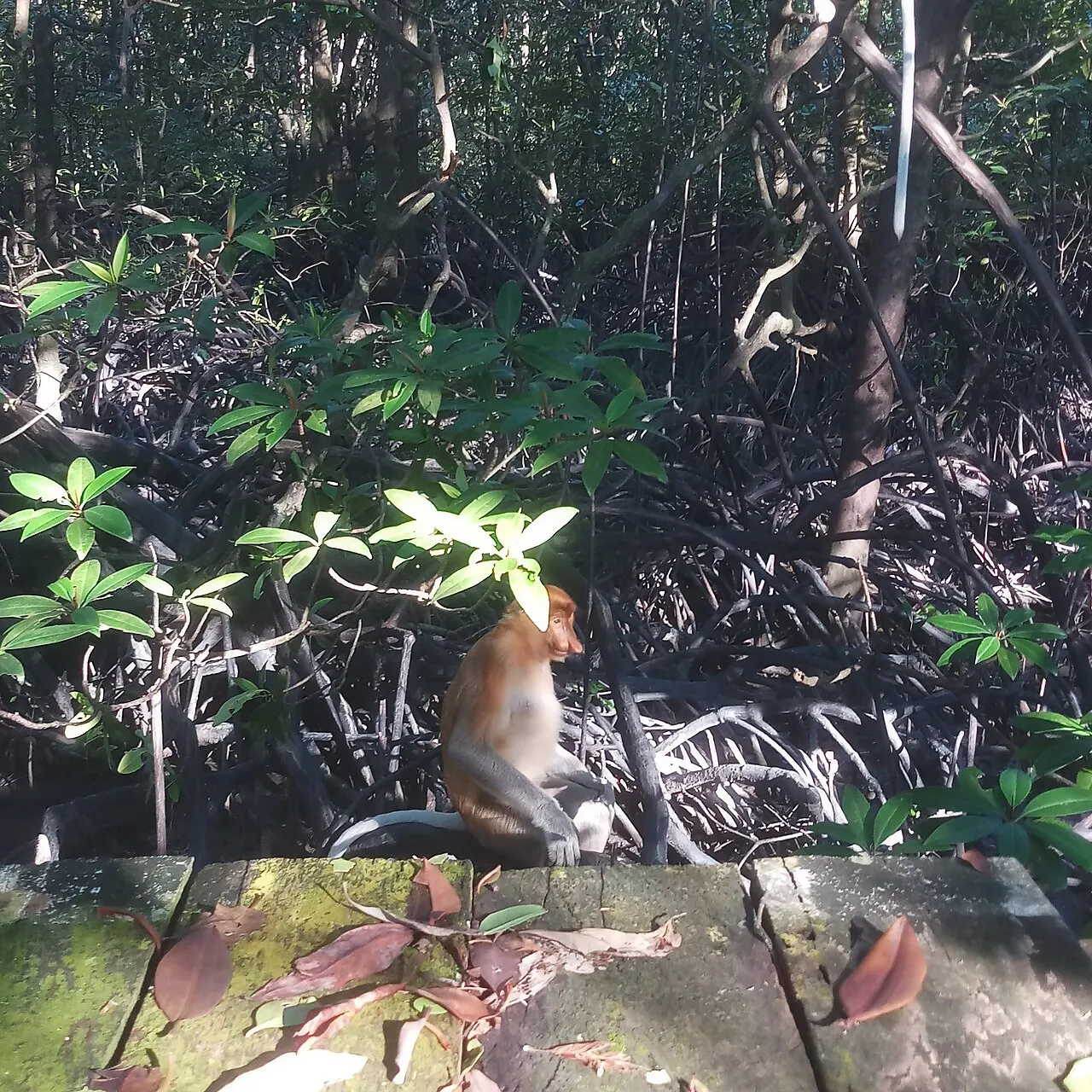
Along the Kinabatangan riverbanks, direct observations found this fig to be the most frequently eaten plant in the study of proboscis monkeys. Its leaves accounted for a large share of recorded leaf feeding; the result describes this riverside sample, not every group across Borneo.