Daily life
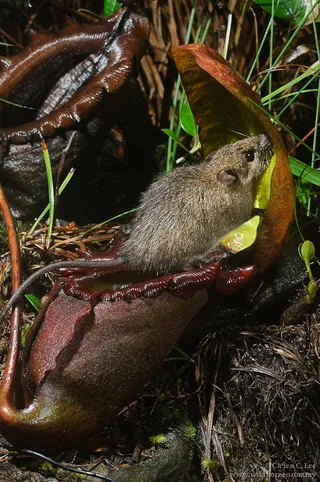
Camera monitoring recorded visits to N. rajah mainly at night. Feeding and defecation link the rodent to the plant’s nutrient budget. The observation concerns a studied mountain population, not every rat species or every pitcher plant.
Sources & references · 2
Mammal Diversity Database, American Society of Mammalogists · Rattus baluensisPLoS ONE, 2011 · A unique resource mutualism between Nepenthes rajah and small mammalsA highland nutrient exchange
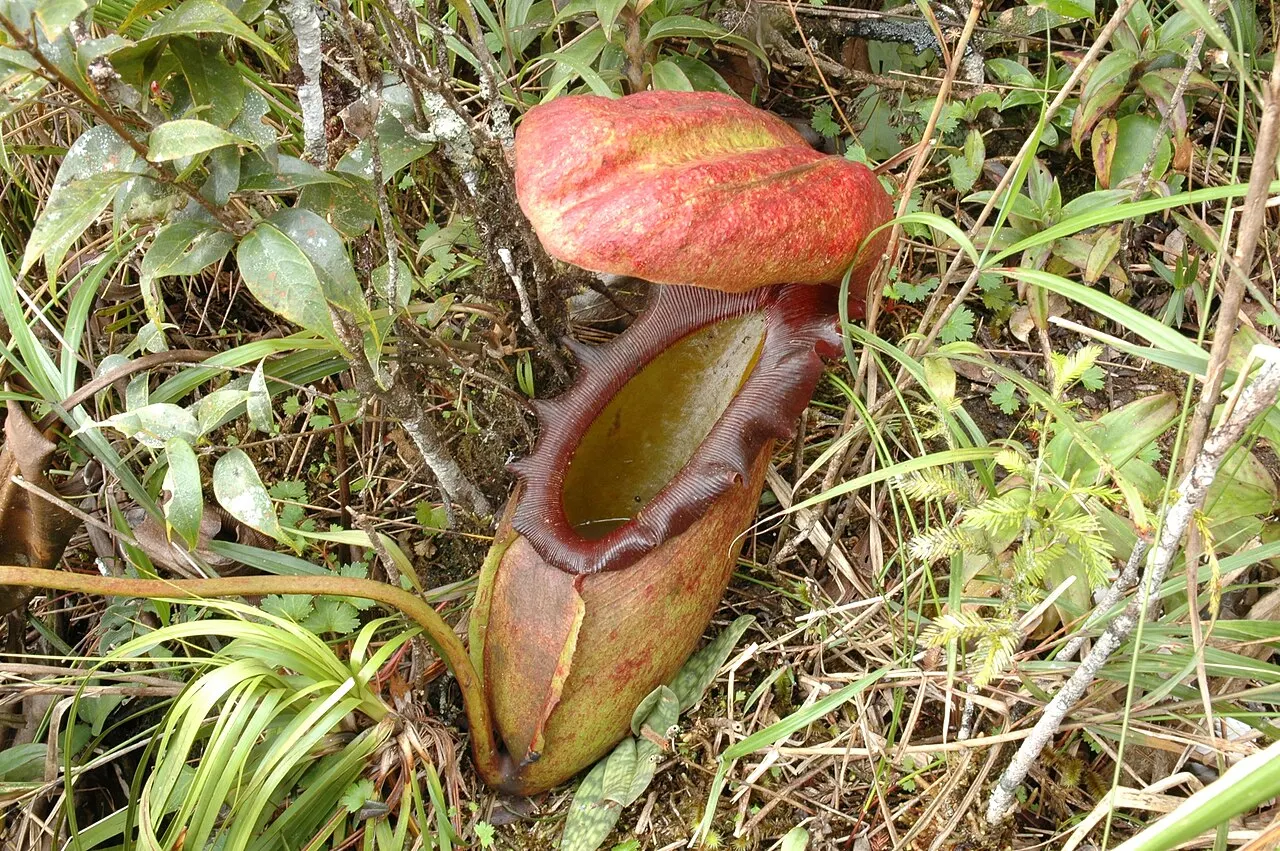
The Kinabalu rat is a narrowly distributed highland mammal of northern Borneo, with populations on Kinabalu and Tambuyukon. It is not a widespread lowland rat. At Nepenthes rajah pitchers, nocturnal visits complement the mountain treeshrew's daytime use. The rat feeds on nectar at the lid and can leave droppings in the pitcher, allowing the plant to obtain nutrients from a mammal rather than solely from trapped insects. These observations describe a particular interaction in the Kinabalu highlands; they do not establish the rat's complete diet or social system.
Sources & references · 3
Mammal Diversity Database, American Society of Mammalogists · Rattus baluensisPLoS ONE, 2011 · A unique resource mutualism between Nepenthes rajah and small mammalsDiversity and Distributions, Camacho-Sanchez et al. · Interglacial refugia on tropical mountains: Novel insights from the summit rat (Rattus baluensis), a Borneo mountain endemicTwo mountain refuges
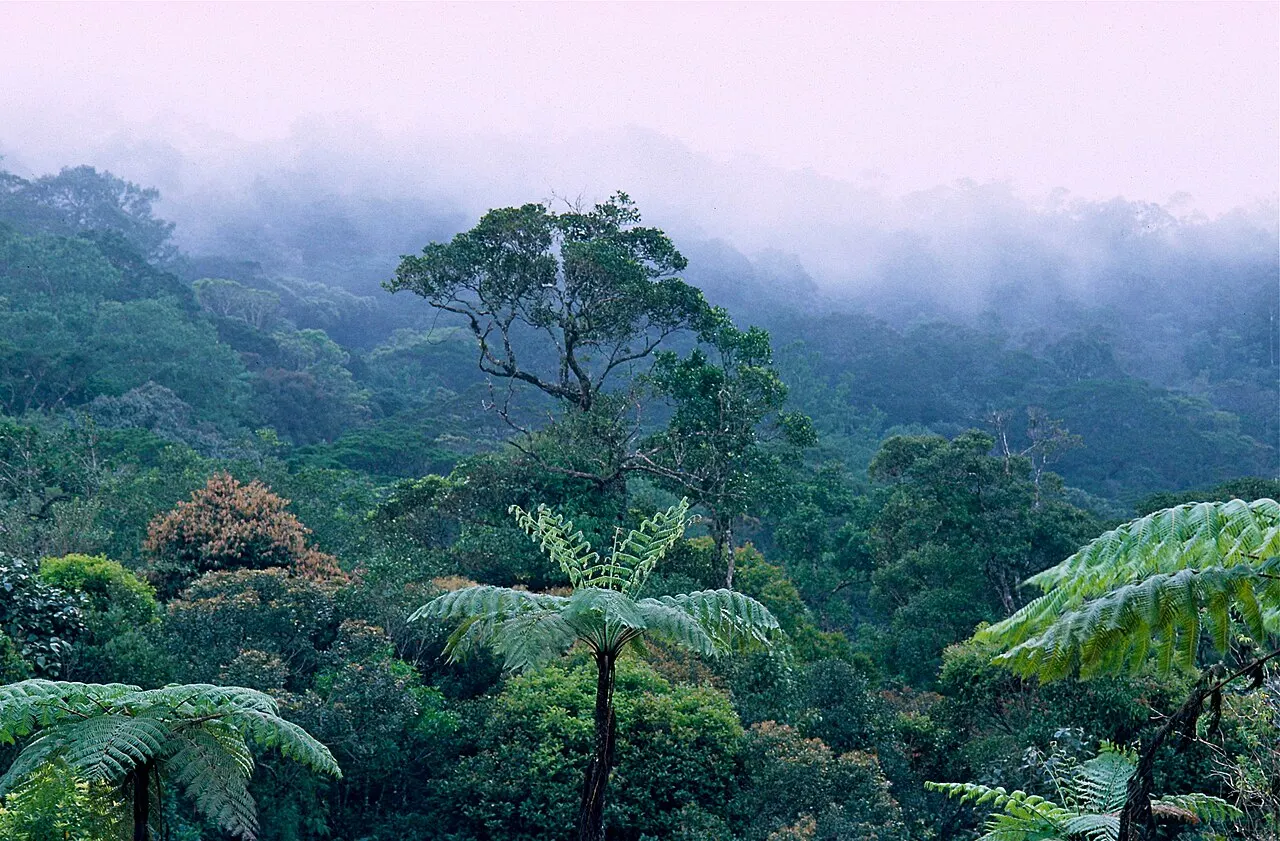
The rat is known from both Kinabalu and neighbouring Tambuyukon. It is strongly associated with mossy forest and mountain scrub, especially above 2,000 metres. These cool uplands are separated by lower forest. Genetic evidence indicates that today's isolated populations arose as suitable habitat retreated uphill after the last ice age.
Sources & references · 1
Diversity and Distributions, Camacho-Sanchez et al. · Interglacial refugia on tropical mountains: Novel insights from the summit rat (Rattus baluensis), a Borneo mountain endemicOrigins and a warming climate
Although similar mountain rats live on Sumatra, their highland origins were separate from the Kinabalu rat's. Its ancestry is closely linked to a Sunda lowland rat lineage. A warmer climate can compress cool habitat toward the summits; Tambuyukon offers less height than Kinabalu. Its global Least Concern category therefore coexists with a narrow, climate-sensitive habitat.