A name tied to a place
This minute frog was described from Gunung Serapi in Sarawak. AMNH currently accepts Microhyla nepenthicola separately from M. borneensis following its revalidation in 2020.
Sources & references · 1
AMNH · Microhyla nepenthicolaA pitcher nursery
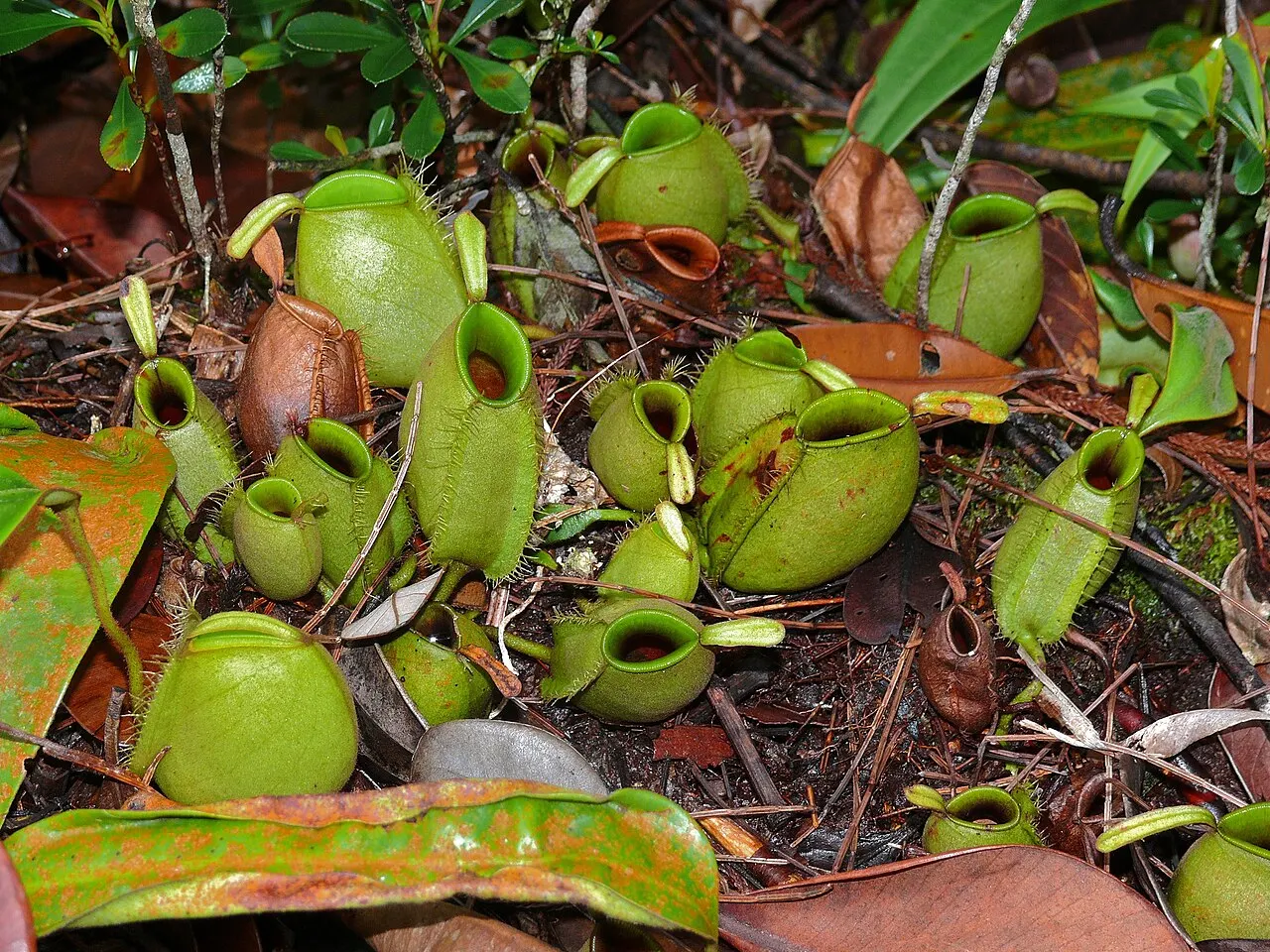
Das and Haas documented breeding in mature or ageing Nepenthes ampullaria pitchers. These water-filled plant structures provide a nursery; the finding concerns this precise frog and plant pairing.
Sources & references · 1
Zootaxa · Das & Haas 2010: miniature pitcher-breeding frogLife in a tiny reservoir
The larvae hover almost motionless inside pitchers, beating the slender tail tip to hold position. They rely on stored reserves rather than feeding. Different developmental stages can share one pitcher, indicating repeated egg laying. When disturbed they dart into bottom debris. Researchers explicitly leave the larvae of Microhyla borneensis unconfirmed.
Sources & references · 1
Haas and colleagues / Frogs of Borneo · Microhyla nepenthicola tadpolesA high, rapid advertisement call
A study published in 2026 analysed seven individuals from Kubah, Matang and the Bungo Range. Their advertisement calls had the highest dominant frequency and repetition rate among the eight sampled microhylid species. The recordings came from 2015–2019 night surveys; they document acoustic identity rather than a universal nightly calling schedule.
Sources & references · 1
Amram and Zainudin / Malaysian Applied Biology 55(1):48–58 · Vocal Signatures For Species Identification Among Eight Microhylid Frogs in Sarawak, MalaysiaBrown adults on the forest floor
Adults are brown or greyish, with expanded finger and toe tips. Males commonly measure only 10.6–12.8 millimetres; females can reach 16 millimetres. Breeding groups are active by day, particularly afternoon, and at night around pitcher plants. Northwestern Borneo is suggested more widely, but sampling remains inadequate for a detailed range map.