Habitat and Borneo range
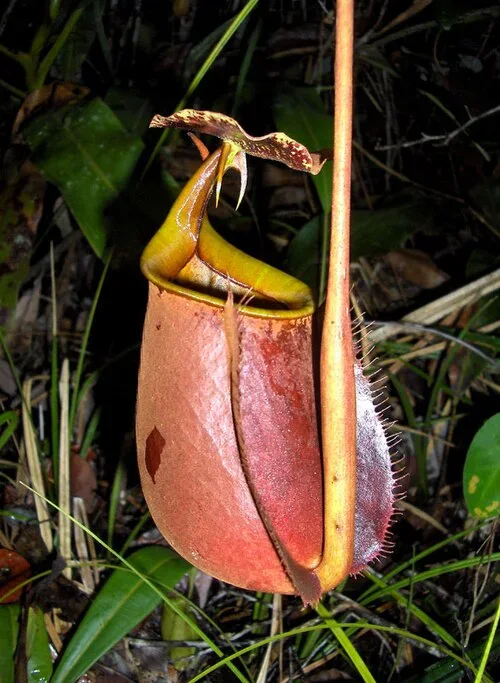
The host plant grows in Bornean peat-swamp forest. A swollen hollow section of the tendril beneath each pitcher supplies nesting space; studies show workers and brood occupying these chambers. This is a close relationship with Nepenthes bicalcarata, rather than a general habit shared by every ant seen around pitcher plants. The host’s living structure forms the colony’s physical habitat.
Sources & references · 1
Species account or primary research · Bazile et al. (2012): ant–pitcher-plant nutritional mutualismFood and ecological role
Workers take nectar from the pitcher rim, including its prominent paired “fangs”. They also consume captured insects, obtaining both sugary food and animal protein from the plant’s trapping system. Prey can be removed from the pitcher fluid and eaten beneath the rim. Undigested remains and ant waste subsequently return to the pitcher, linking feeding to the plant’s own nutrient supply.
Sources & references · 1
Species account or primary research · Bazile et al. (2012): ant–pitcher-plant nutritional mutualismBehaviour
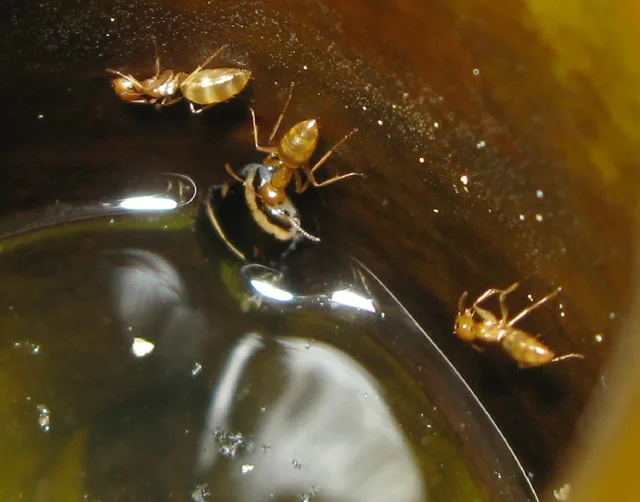
The ants can enter the liquid and swim to retrieve prey. This behaviour is striking because the same pitcher traps many other insects. They also clean the slippery pitcher rim, helping maintain the surface that brings prey into the trap. Their activity therefore works at several points in the system: around the rim, inside the liquid and within the hollow nesting tendril.
Sources & references · 2
Species account or primary research · Scharmann et al. (2013): predatory swimming ants in pitchersSpecies account or primary research · Thornham et al. (2012): pitcher-rim cleaning by antsRelationships with plants
Experiments found better growth and nitrogen nutrition in occupied plants than in unoccupied plants. Ant waste supplies nutrients that the plant can recycle, while the ants receive housing and food. This mutualism combines plant carnivory with animal-derived fertilisation. It helps explain why an ant removing some prey is not simply stealing all the plant’s benefits: the wider exchange can improve the host’s nutrition.