Life in the ecosystem
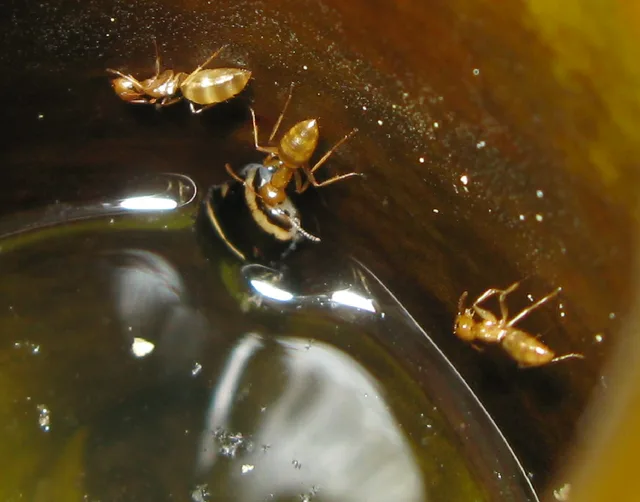
A pitcher is both a trap and a small habitat. Research shows that an insect-eating plant can benefit from keeping ants alive: waste from the residents returns nutrients to the plant. This is mutualism, not a claim that all visiting insects are protected.
Sources & references · 1
PLoS ONE, 2012 · A carnivorous plant fed by its ant symbiontAppearance & recognition
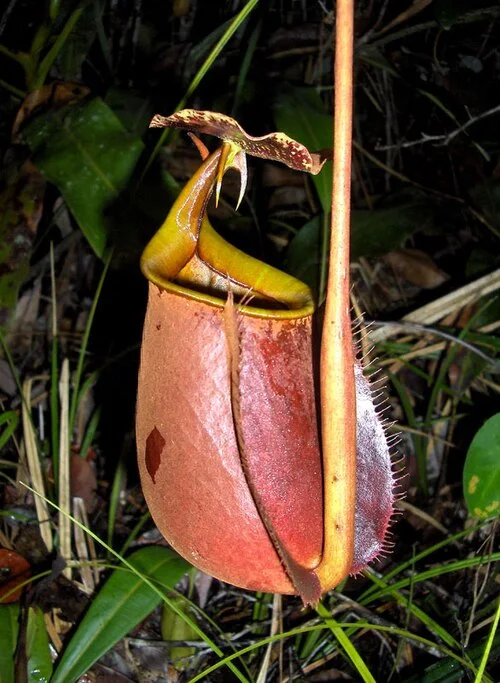
Two sharp-looking projections beneath the lid give Nepenthes bicalcarata its striking appearance. The pitchers hang from tendrils linked to green leaves. Within parts of those tendrils, the plant provides nesting space for Colobopsis schmitzi, known as the swimming ant. The old name Camponotus schmitzi appears in research papers; it refers to the same partner under an earlier genus assignment.
Sources & references · 2
PLoS ONE, 2012 · A carnivorous plant fed by its ant symbiontAntWeb, California Academy of Sciences · Colobopsis schmitzi: classification and taxonomic historyConnections with animals
The ants enter the pitcher fluid and retrieve prey. Their feeding waste and faeces return nutrients to the plant, making the residents part of the plant’s nutrition rather than simply escaped prey. Research documents benefits for plant growth and nutrient supply. The association belongs to this particular ant and pitcher-plant pair; a visiting ant on another Nepenthes is not automatically the same partnership.
Sources & references · 1
PLoS ONE, 2012 · A carnivorous plant fed by its ant symbiontRange & habitat
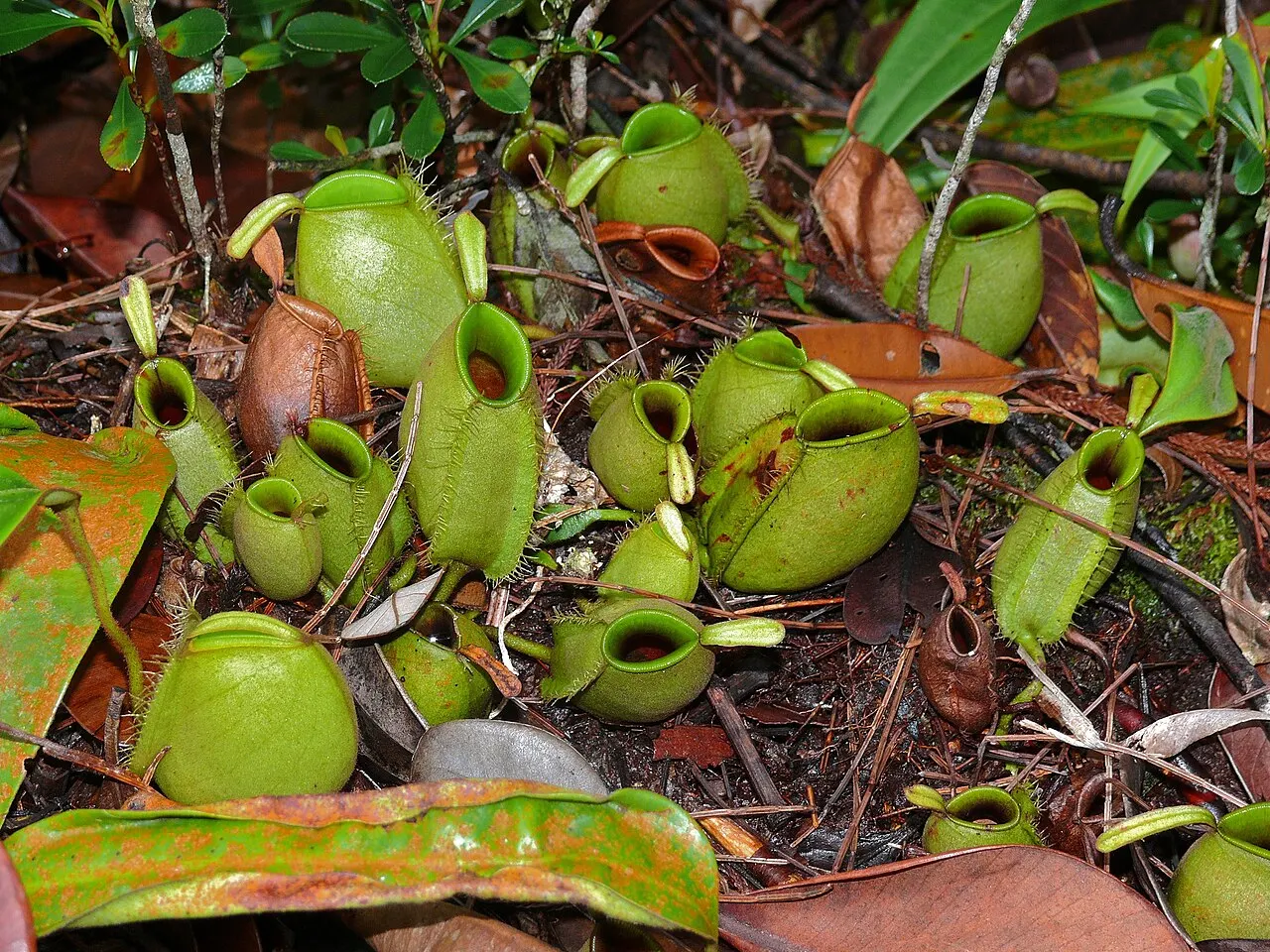
This Bornean endemic is associated with lowland wet forest, including peat-swamp habitats in northwestern Borneo. Its large climbing growth differs from the near-ground pitcher carpets of Flask-shaped pitcher plant. Preserving surrounding forest protects the supporting vegetation, local moisture and nesting partnership together. The plant still captures insects, even though its ant residents provide additional benefits.