Daily life
Shelter quality matters: stable conditions inside suitable pitchers affect roost choice. Experiments found that bats did not use every pitcher species in the same way. Occupied plants should be left undisturbed; opening a pitcher is not an acceptable viewing method.
Sources & references · 2
Oecologia, 2013 · Supply determines demand: partner quality in bat–pitcher interactionsScientific Reports, 2017 · Stabilization of a bat–pitcher plant mutualismRange and habitat
Hardwicke's woolly bat belongs to the insect-eating vesper bats. It occurs on Borneo and elsewhere in Southeast Asia. Its scientific name remains Kerivoula hardwickii for the Borneo bats discussed here, although several mainland and Sri Lankan members formerly included in the wider complex have been separated. The pitcher partnership is a local forest behaviour documented in Brunei and Sarawak, rather than a habit of every population across the bat's range.
Sources & references · 1
American Society of Mammalogists, MDD v2.5 · Kerivoula hardwickii: taxonomyRelationships with plants
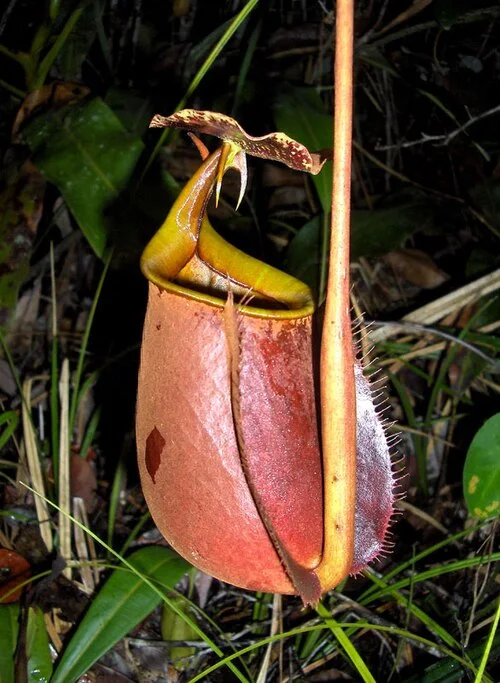
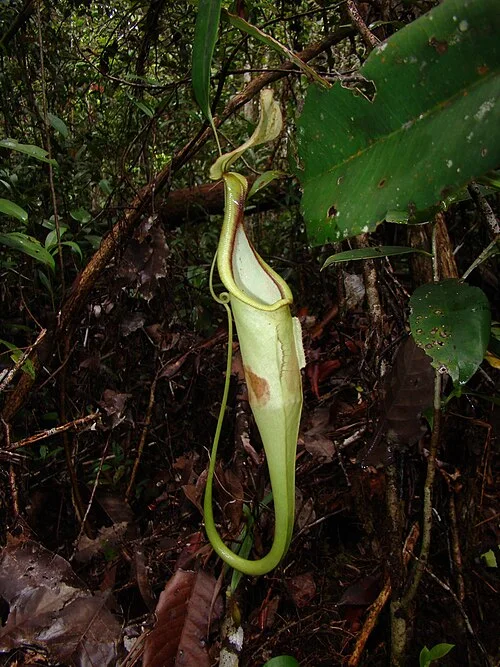
The bat uses the hollow upper pitchers of Nepenthes hemsleyana as daytime shelters. Its droppings supply nitrogen to the plant, while the pitcher provides a protected roost. The bat is not feeding on the plant or the insects drowned inside it. Early research used the plant name N. rafflesiana variety elongata; subsequent botanical work identifies this partner as N. hemsleyana. Ordinary N. rafflesiana should therefore not inherit the same mutualism simply because the old paper used that name.
Sources & references · 2
Biology Letters, Grafe et al. · A novel resource-service mutualism between bats and pitcher plantsRoyal Botanic Gardens Kew · Nepenthes hemsleyana: accepted name and synonymsListening for a pitcher
Echolocation helps this tiny bat find its way through vegetation. The inner back wall of N. hemsleyana reflects its calls clearly. Experiments altering that reflector affected how bats found and selected pitchers, showing that the plant's shape acts as an acoustic signal. The useful sound is ultrasonic and does not amount to a human-audible forest song.
Sources & references · 1
Current Biology, Schöner et al. · Bats Are Acoustically Attracted to Mutualistic Carnivorous PlantsMore than one roost
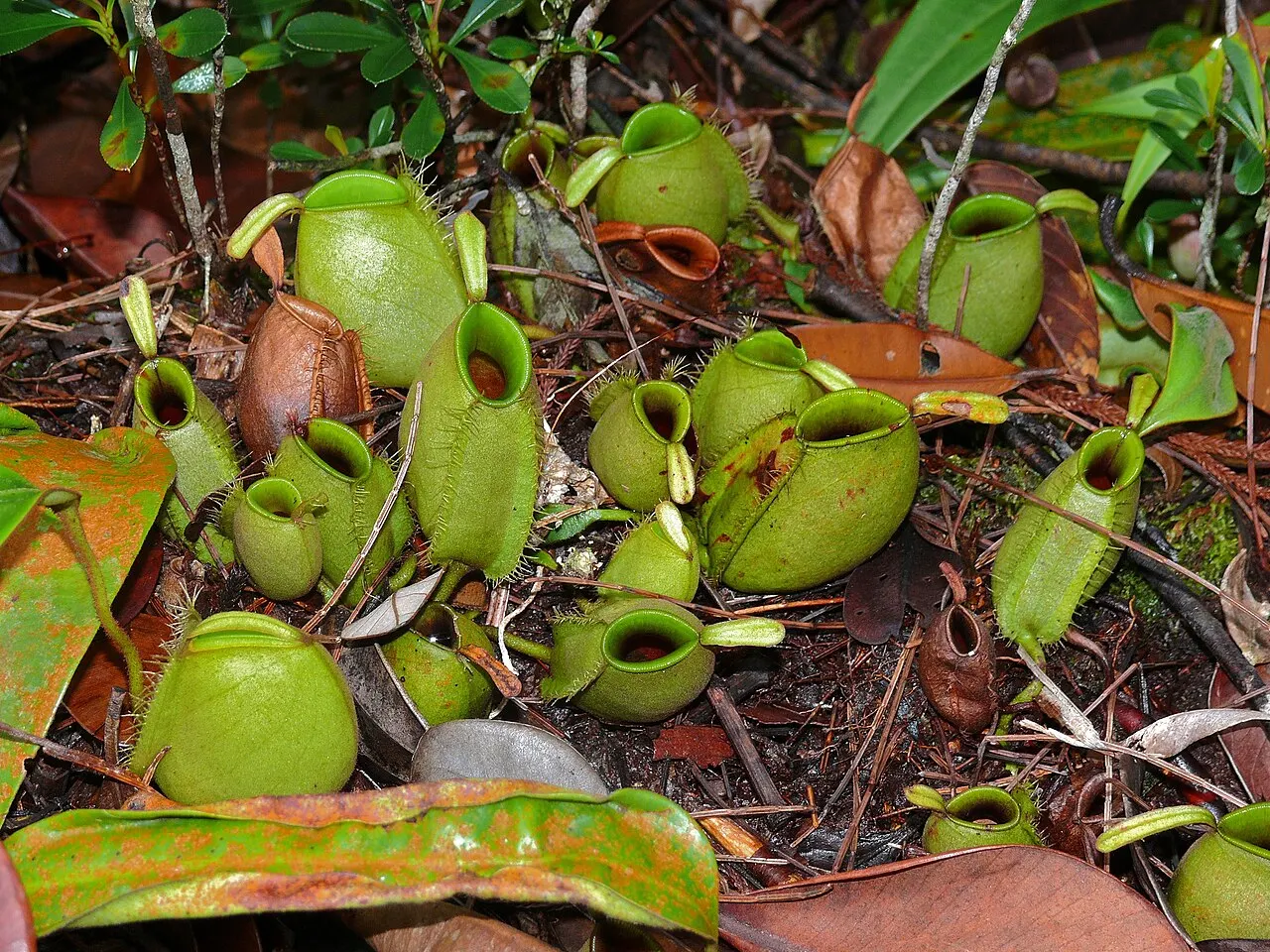
Not every bat chooses a living N. hemsleyana pitcher. Field work found individuals faithful to either pitchers or furled leaves. Dead pitchers of N. bicalcarata and N. ampullaria can also be used as shelters; the same nitrogen benefit to those plants is not established. In comparative work N. hemsleyana offered a steadier microclimate, and bats using it showed better condition than those using N. bicalcarata. Roost choice combines available shelters with individual habits.