Appearance & recognition
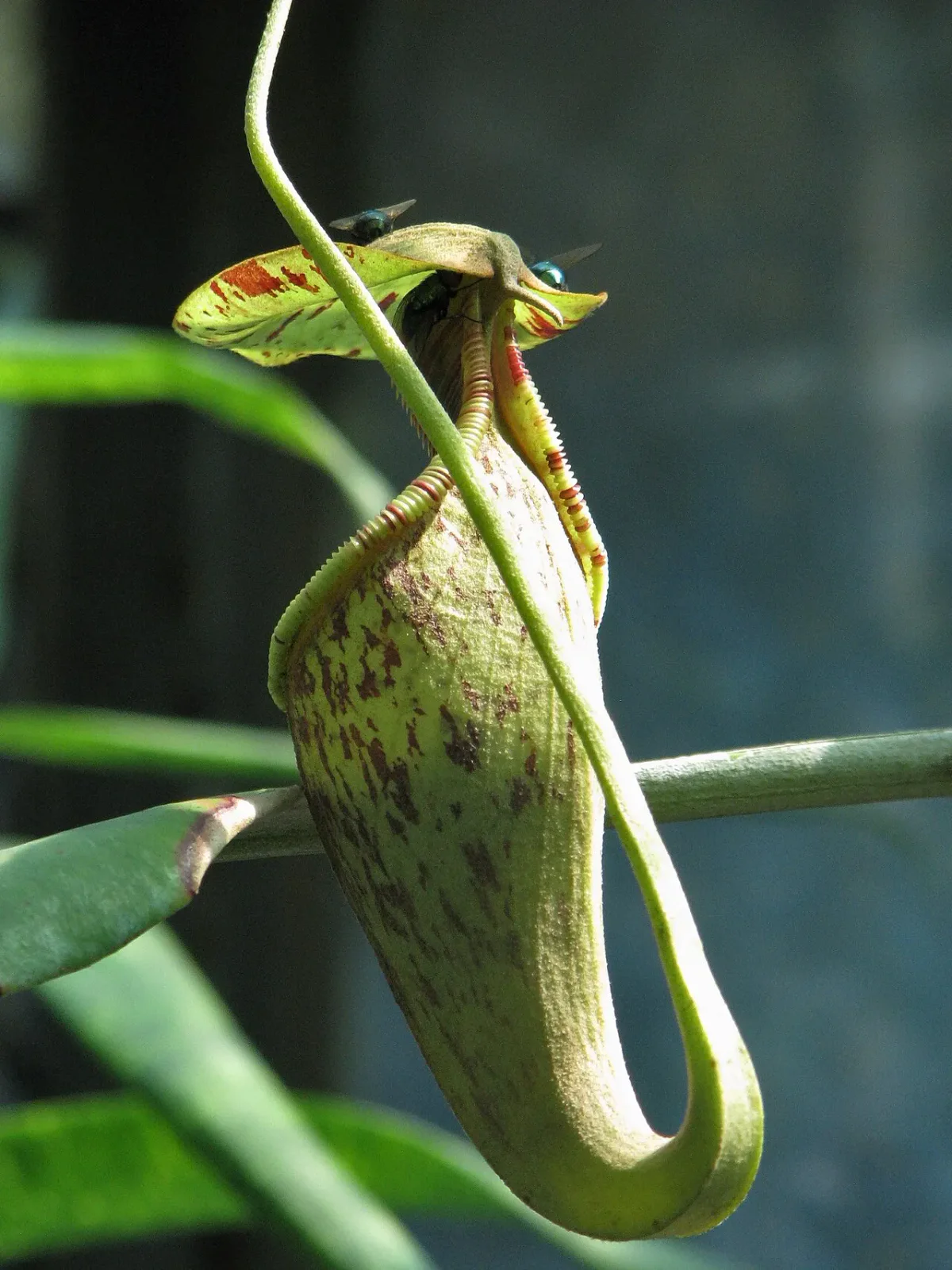
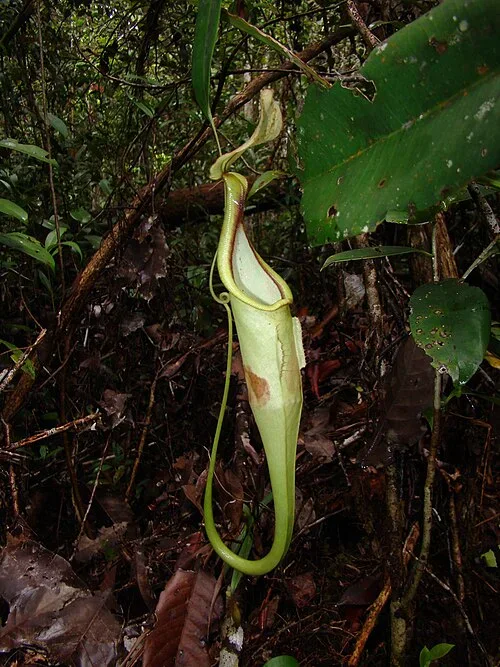
The trap hangs at the end of a leaf tendril. In this species, elongated upper pitchers have a roomy chamber and relatively little digestive fluid, making them suitable shelters for small bats. Nepenthes hemsleyana belongs to Nepenthaceae. Older papers called it an elongated form of Nepenthes rafflesiana, but botanical revision recognises a separate species; its bat partnership should therefore not be assigned to every Raffles’ pitcher plant.
Sources & references · 3
Royal Botanic Gardens, Kew · Nepenthes hemsleyana: accepted species and rangeScientific Reports, 2017 · Stabilization of a bat–pitcher plant mutualismOecologia, 2013 · Supply determines demand: partner quality in bat–pitcher interactionsConnections with animals
Hardwicke’s woolly bat uses the pitchers as daytime roosts. The plant receives nutrients from droppings released inside the trap, while the bat obtains a sheltered resting place. Research finds that the bats favour pitchers of this plant over less suitable alternatives: the partnership depends on the quality of the shelter, not just on a mammal happening to enter a trap. This exchange of benefits is a mutualism, and the bat is a partner rather than intended prey.
Sources & references · 2
Scientific Reports, 2017 · Stabilization of a bat–pitcher plant mutualismOecologia, 2013 · Supply determines demand: partner quality in bat–pitcher interactionsRange & habitat
Kew documents the native range in Brunei and Sarawak. The relationship has been studied in Borneo’s wet forest landscapes, where pitcher structure and shelter availability both matter. Like other pitcher plants, it photosynthesises through its green leaves; nutrients supplied by animals supplement that energy-producing system. Preserving an occupied pitcher also preserves a small resting habitat, so observers should avoid opening, shaking or collecting traps.