Recognition
This very small labyrinth fish reaches a reported total length of less than three centimetres. Mature males can show red markings in the fins, but sex, display and lighting influence the colours visible in a photograph. Its name was published in 1979. The type locality belongs to the Mentaya river system, later clarified as the Palangan area upstream from Sampit. Identifying a tiny Parosphromenus requires more than recognising a striped body; closely related species have their own fin patterns and distribution.
Sources & references · 3
California Academy of Sciences / Eschmeyer’s Catalog of Fishes · Parosphromenus parvulus: accepted name and Mentaya type localityFishBase · Parosphromenus parvulus: freshwater habitat and conservationMartin Hallmann and Horst Linke, AMAZONAS · Field observations of Parosphromenus in Kalimantan TengahHabitat and Borneo range
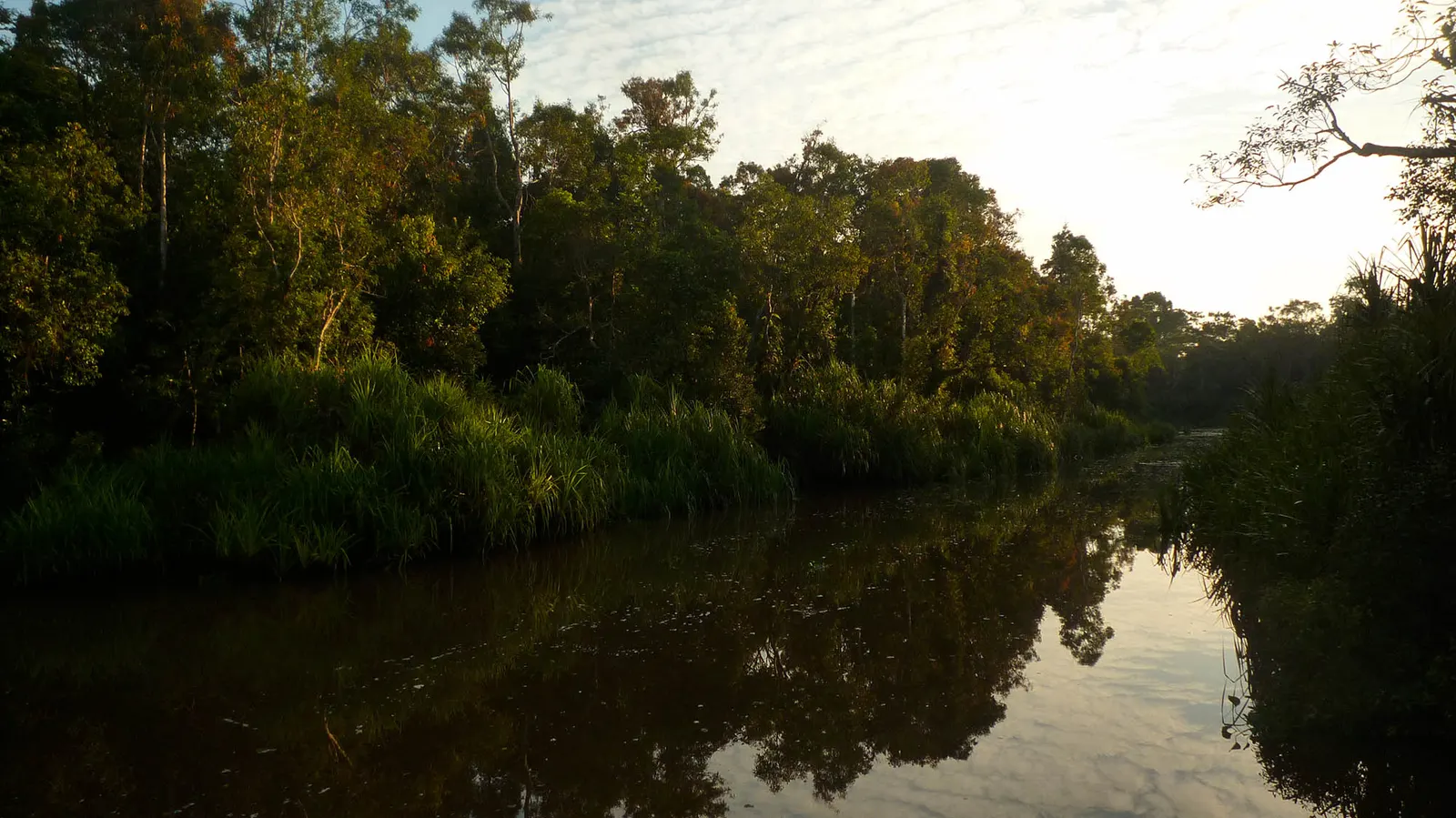
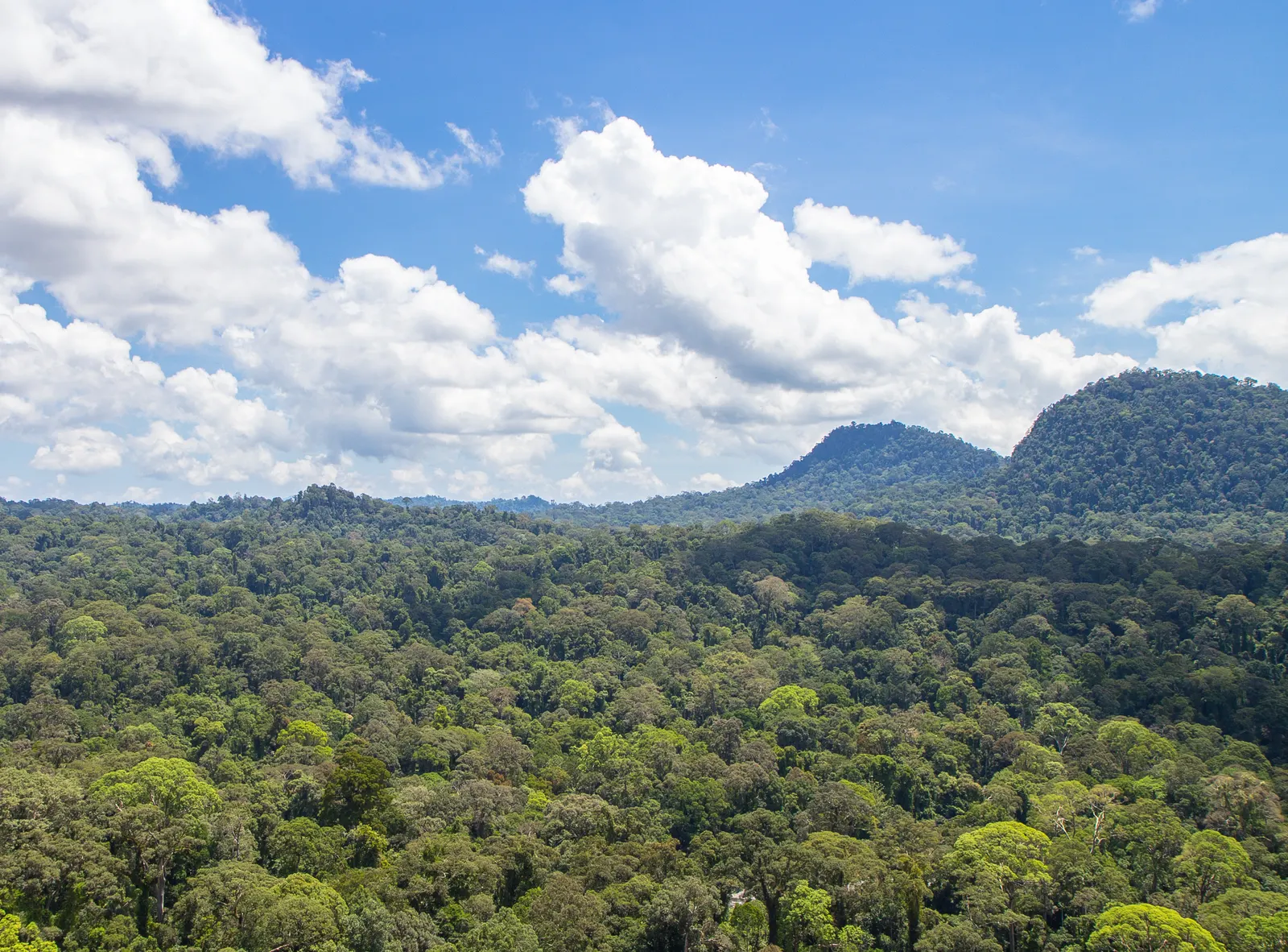
Records from Central Kalimantan place the fish in small waters around the lowland forest landscape. Vegetation, grasses and plant debris create cover at the water’s edge. Dark water and shade can make these fishes inconspicuous even where they occur. The existence of a road-side or drainage record does not prove that an altered ditch is a sustainable replacement for forest habitat. Local stream conditions and the surrounding land use matter together.
Sources & references · 2
FishBase · Parosphromenus parvulus: freshwater habitat and conservationMartin Hallmann and Horst Linke, AMAZONAS · Field observations of Parosphromenus in Kalimantan TengahBehaviour and daily life
Field accounts emphasise how carefully these small fishes must be sought among cover; they are not conspicuous open-water animals. As a labyrinth fish, Parosphromenus parvulus can supplement aquatic respiration with air. Plant material in its habitat has a structural role, but the cited observations do not identify an exact partner among the platform’s plant species. A general association with submerged leaves therefore should not be turned into a feeding link to an arbitrary plant.
Sources & references · 2
FishBase · Parosphromenus parvulus: freshwater habitat and conservationMartin Hallmann and Horst Linke, AMAZONAS · Field observations of Parosphromenus in Kalimantan TengahConservation and observation
The species is classified as Vulnerable in the global assessment reproduced by FishBase. Loss and alteration of small-water habitats are particularly relevant for a fish with a limited Bornean distribution. For visitors, preserving the bank, shade and water quality is more valuable than trying to net an individual. Neither its small size nor its presence in aquarium literature makes collecting appropriate. The Mentaya record offers geographic context; it is not a published wildlife-viewing route.