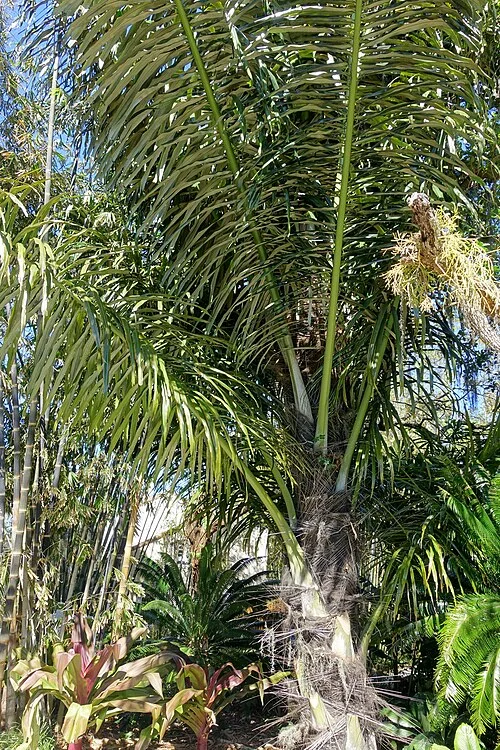
Appearance & recognition
This is a true palm in the genus Metroxylon, not the ornamental cycad also sold as “sago palm”. The edible product is extracted starch, not an untreated piece of trunk. Confusing the two plants would be dangerous.
Sources & references · 1
FAO EcoCrop · Metroxylon saguIn Borneo’s kitchens
Sago palm supplies processed trunk starch for Ambuyat. Hot water turns this starch into a sticky, mild-tasting food whose flavour comes mainly from its dips and accompanying dishes. The connection concerns starch extraction and cooking, not raw pith consumption.
Sources & references · 1
Brunei Tourism · Local delicacies: ambuyat and ingredientsHow the plant grows
Metroxylon sagu is a true palm in Arecaceae. It develops a substantial trunk and a crown of feather-like leaves, often with suckers around the parent stem. Starch accumulated in the trunk supports its large flowering event; the flowering stem subsequently dies while the clump can continue through its suckers. Wetland growing conditions connect the crop with water management and livelihoods, not simply with an isolated bag of starch.
Sources & references · 2
FAO EcoCrop · Metroxylon saguRoyal Botanic Gardens, Kew · Metroxylon sagu Rottb.Edible parts, flavour & texture
The food is extracted and cleaned starch from the trunk pith. In Ambuyat, cooking transforms it into a translucent, sticky mass with a mild flavour; sauces provide most of the taste. A raw piece of trunk is not the food product. Nor is this palm the ornamental cycad sometimes called a sago palm: Cycas belongs to a different plant group and has toxic constituents.