Recognition
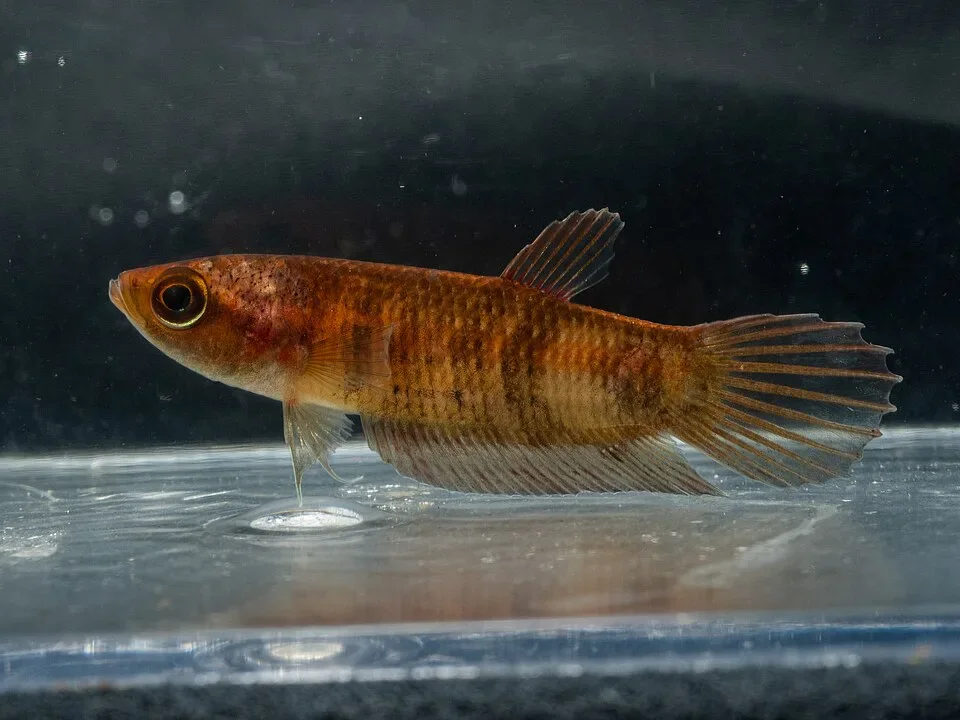
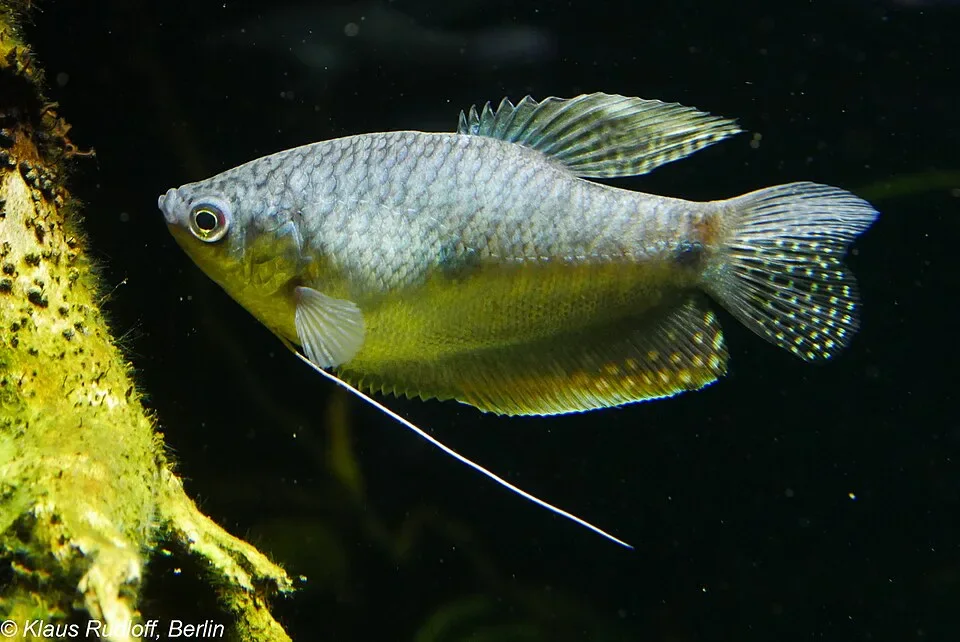
Two dark spots, one on the side and another at the tail base, are familiar recognition features; the eye is the “third spot”. Wild colour is generally brownish with darker markings, unlike some bright aquarium strains. Long thread-like pelvic fins and a laterally compressed body are characteristic. Males and females differ in dorsal-fin shape, but colour alone is not a reliable sex test. This fish belongs to Trichopodus; older literature often places it in Trichogaster.
Sources & references · 1
FishBase · Trichopodus trichopterus: recognition, feeding and bubble nestsHabitat and Borneo range
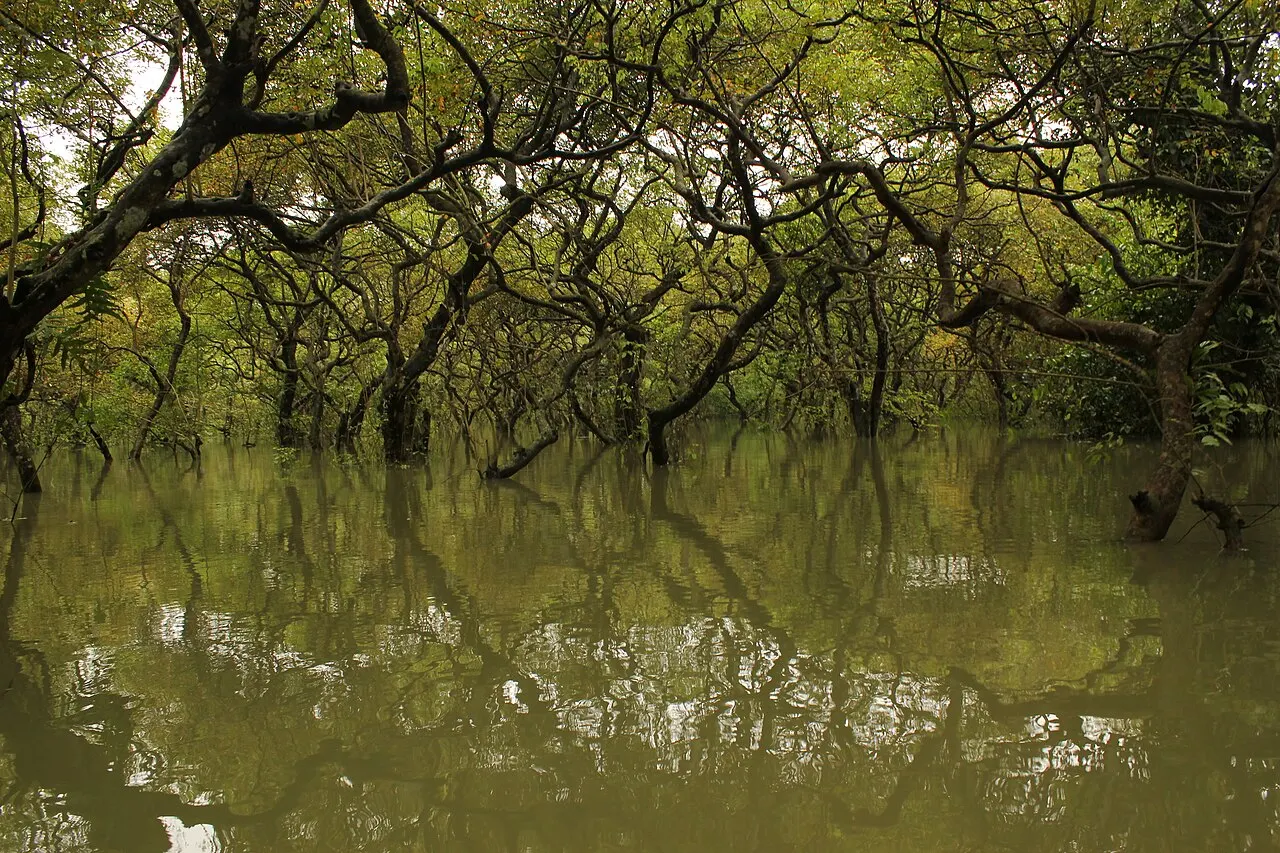
Shallow, slow or standing water with abundant vegetation provides its usual environment. Bornean records include the Rajang basin of Sarawak, as listed in the published field guide. The wider species occurs across Southeast Asia and has also been introduced elsewhere. Consequently, an aquarium release or an introduced population cannot establish its native range. Its air-breathing organ helps in oxygen-poor wetland water, while vegetation provides cover near the surface.
Sources & references · 2
FishBase · Trichopodus trichopterus: recognition, feeding and bubble nestsFishBase, published field guide · Trichopodus trichopterus: Borneo records including the Rajang basinFood and ecological role
Food includes zooplankton, small crustaceans and insect larvae. The fish links small aquatic prey with larger consumers in the wetland food web. Published Mekong records describe movements into flooded areas and back toward permanent water; that behaviour gives ecological context but is not evidence for an identical seasonal schedule in Sarawak. No exact feeding relationship with one of Borneo’s named plant species is established by the selected sources.
Sources & references · 1
FishBase · Trichopodus trichopterus: recognition, feeding and bubble nestsReproduction
The male builds a bubble nest at the water surface, gathers the eggs into it and guards the brood until the young swim freely. He can drive the female away after spawning. This is a marked contrast with the mouthbrooding Betta anabatoides. The global conservation category is Least Concern. That broad category does not replace local attention to water pollution, bank vegetation or introduced aquarium strains. Observing from the bank should leave nests and shallow cover undisturbed.