Recognition
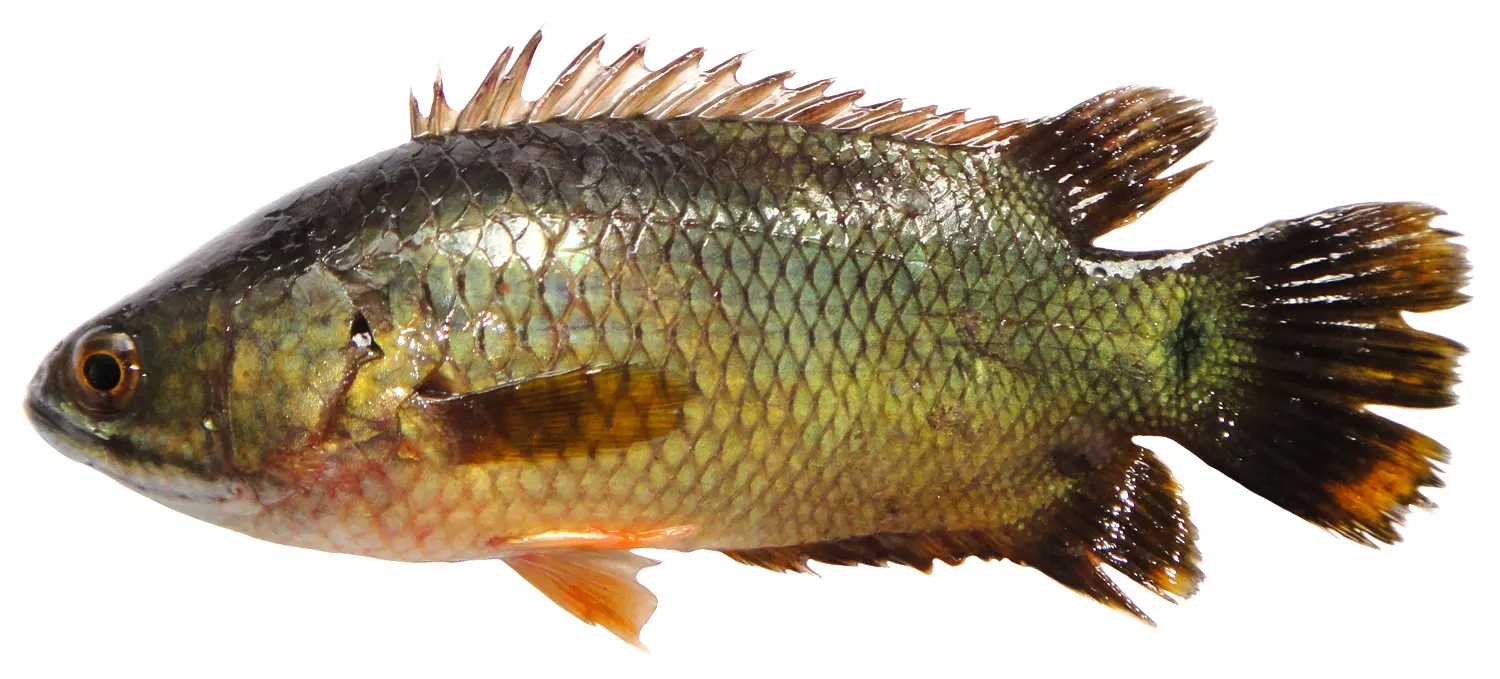
Betta anabatoides has a deep, sturdy body that recalls the climbing perch Anabas testudineus. A dark stripe passes through the eye and continues toward the rear of the gill cover; the gill cover can show faint golden iridescence. Some central tail-fin rays extend beyond the fin margin. The name “giant betta” refers to a wild species, not selectively bred large Betta splendens. The taxonomic description reports a maximum standard length of about eight centimetres, measured without the tail fin.
Sources & references · 1
FishBase · Betta anabatoides: habitat, recognition and male mouthbroodingHabitat and Borneo range
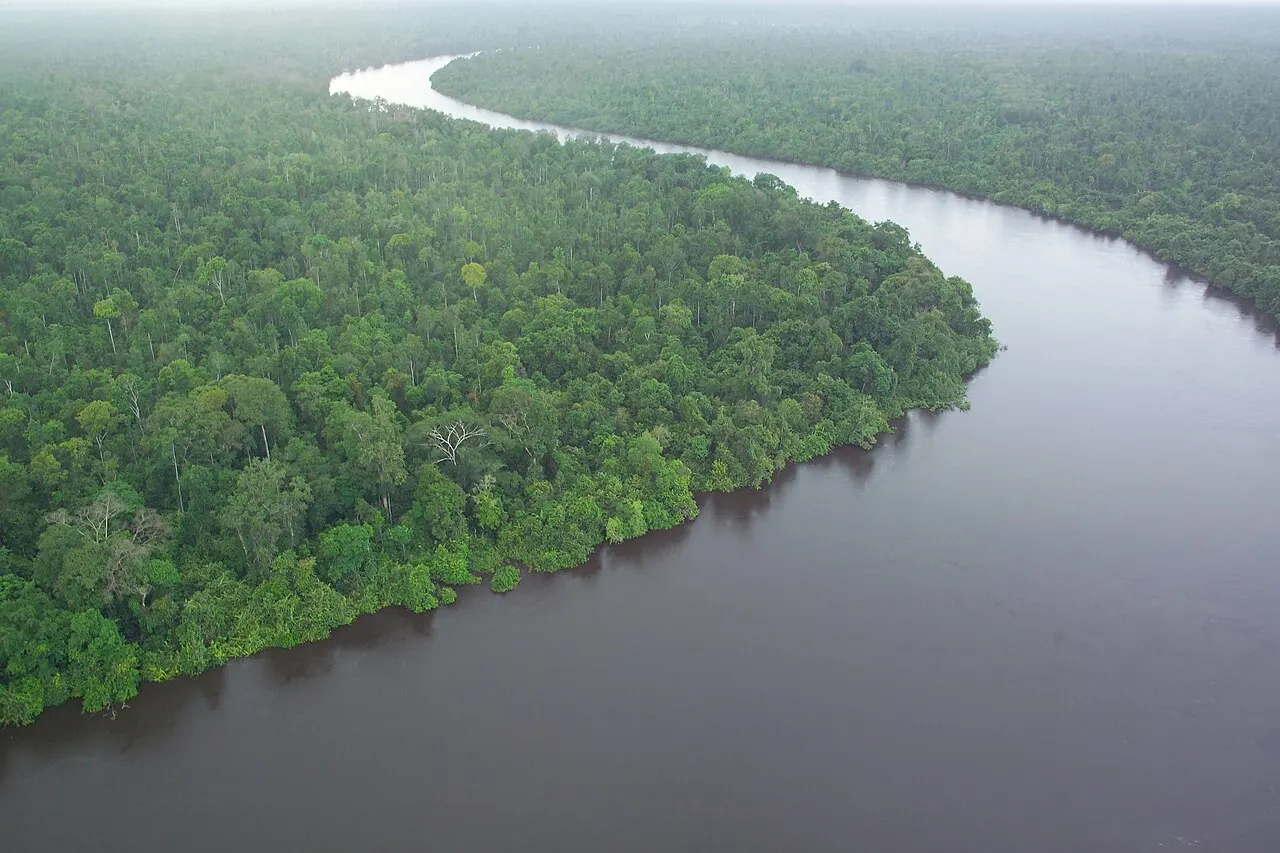
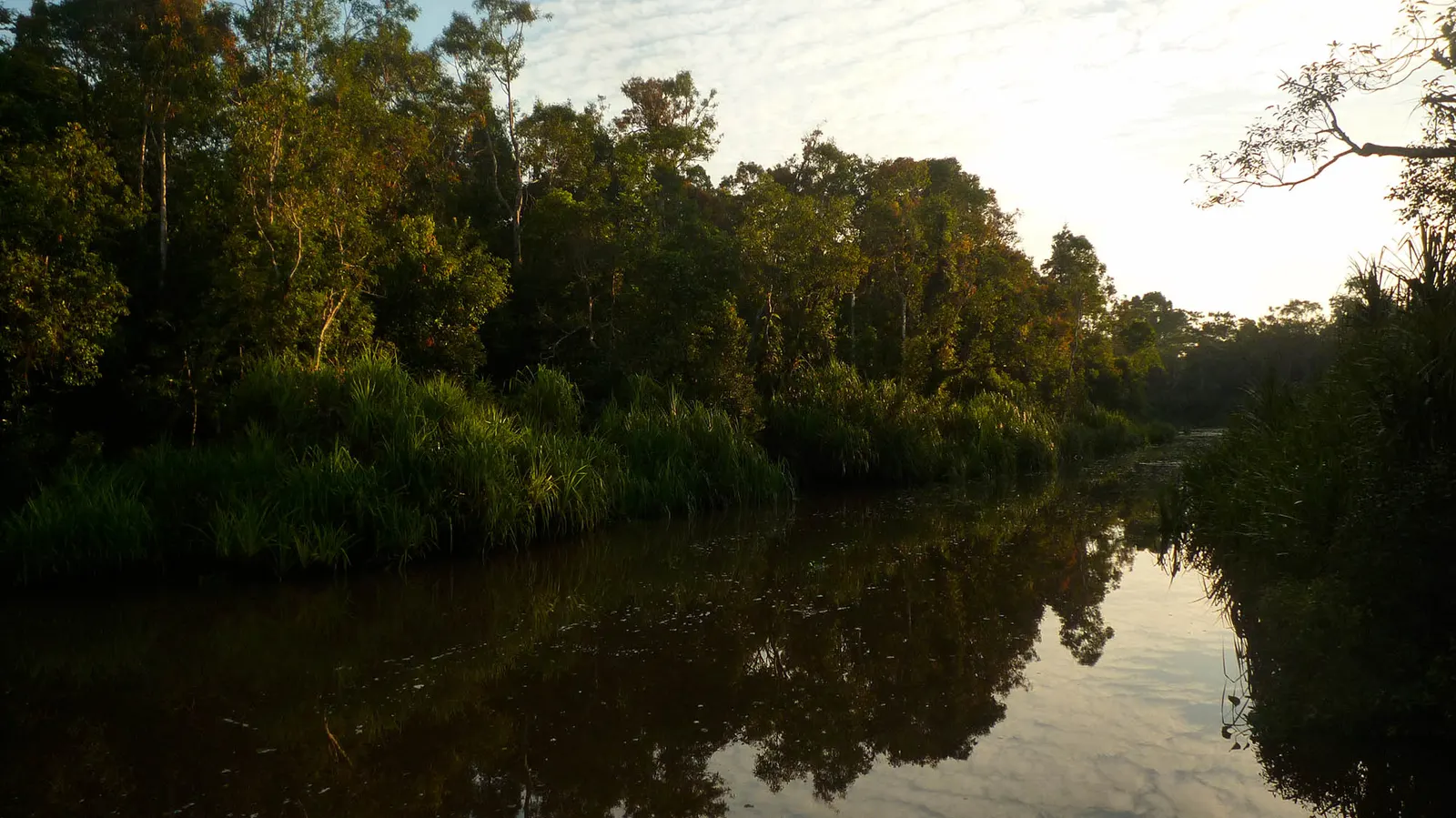
Its range includes the lower Barito basin in South Kalimantan and several basins in Central Kalimantan, including the Kotawaringin, Katingan and Kahayan. A southern stream locality was sluggish and turbid, showing that the fish should not be described as exclusively inhabiting pristine, strongly acidic pools. In the Sebangau study, it formed an important part of forest catches. River and forest sampling were separate, so this evidence identifies a landscape rather than an exact visitor site inside the national park.
Sources & references · 3
California Academy of Sciences / Eschmeyer’s Catalog of Fishes · Betta anabatoides: accepted name and Bornean distributionFishBase · Betta anabatoides: habitat, recognition and male mouthbroodingMires and Peat · Thornton et al. (2018): Peatland fish of Sebangau: diversity, monitoring and conservationReproduction
Males incubate developing young in the mouth. This is a different form of parental care from the surface bubble nests of Betta hendra. Air breathing through the labyrinth organ helps the fish use oxygen above the water, while the developing offspring remain dependent on the father’s brood chamber. The available field evidence does not establish a local breeding calendar or detailed Bornean dietary percentages. Such information should not be borrowed from a better-known aquarium betta.
Sources & references · 1
FishBase · Betta anabatoides: habitat, recognition and male mouthbroodingConservation and observation
The global category is Least Concern, but that does not measure the condition of every Kalimantan waterway. Peatland fisheries research identifies drainage, fire, forest clearance and water-quality change as threats to the wider fish community. Maintaining shaded forest waters and seasonal connections is valuable even for a species with a relatively broad regional range. A documented catch is a research observation, not a guarantee of a sighting during a river trip.