Recognition
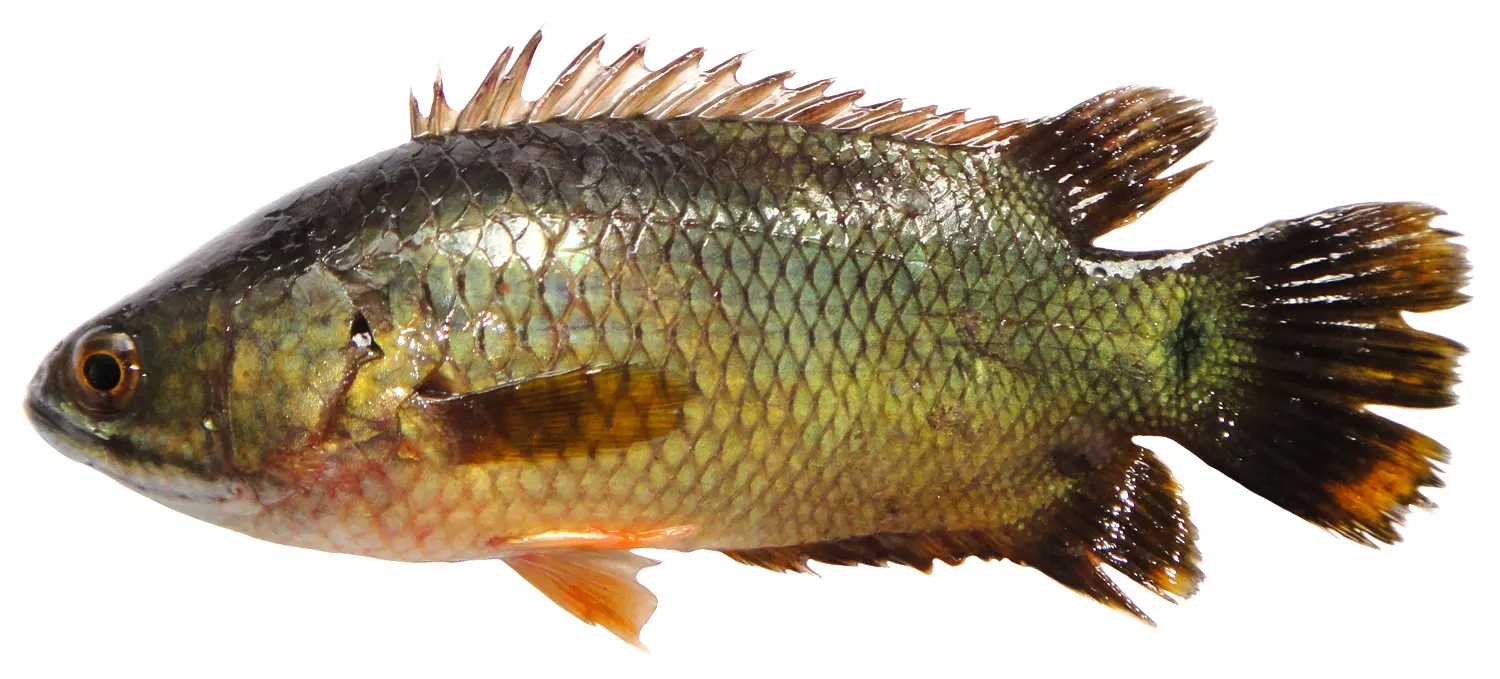
The body is compressed from side to side and covered in large, regularly arranged scales. Live colour ranges from dark to pale green, with a lighter underside. A dark mark behind the gill cover is another useful feature. The reported maximum total length is about twenty-five centimetres. The robust outline is quite different from the elongated body of a snakehead or the small reddish shape of a clown rasbora.
Sources & references · 1
Species account or primary research · FishBase: Anabas testudineusHabitat and Borneo range
It inhabits ponds, swamps, canals, flooded fields and other vegetated waters, including turbid or stagnant places. In Central Kalimantan, a Sebangau forest pilot survey caught the species in September 2014. Its use of a broad range of wetland waters sets it apart from fishes tied closely to acidic peat streams. Water-level changes are part of the landscape in which it lives.
Sources & references · 2
Species account or primary research · FishBase: Anabas testudineusMires and Peat · Rasbora kalochroma: documented occurrenceBehaviour
The accessory breathing organ allows it to use air rather than relying entirely on oxygen dissolved in water. Survival on land depends on remaining moist; air breathing does not turn it into a terrestrial animal. During dry conditions it can remain buried in mud. These abilities help explain its association with shallow, changeable wetlands, although the name is not a reason to expect a fish climbing a tree.
Sources & references · 1
Species account or primary research · FishBase: Anabas testudineusFood and ecological role
Its food includes aquatic plants, shrimps and fish fry. That mixture combines plant material with animal prey rather than a single narrow food source.