Recognition
Green iridescence across the sides and unpaired fins is the distinctive feature of Betta hendra. It belongs to the small, predominantly red fighting fishes of the coccina group. Colour changes with lighting and condition, so a single dark photograph is a poor identification guide. The original description also distinguishes it from Betta uberis through its lower dorsal-fin ray count. It was formally described in 2013, rather than being a colour form of a familiar aquarium betta.
Sources & references · 1
Vertebrate Zoology / Senckenberg · Schindler & Linke (2013): Betta hendra, a new fighting fish from Central KalimantanHabitat and Borneo range
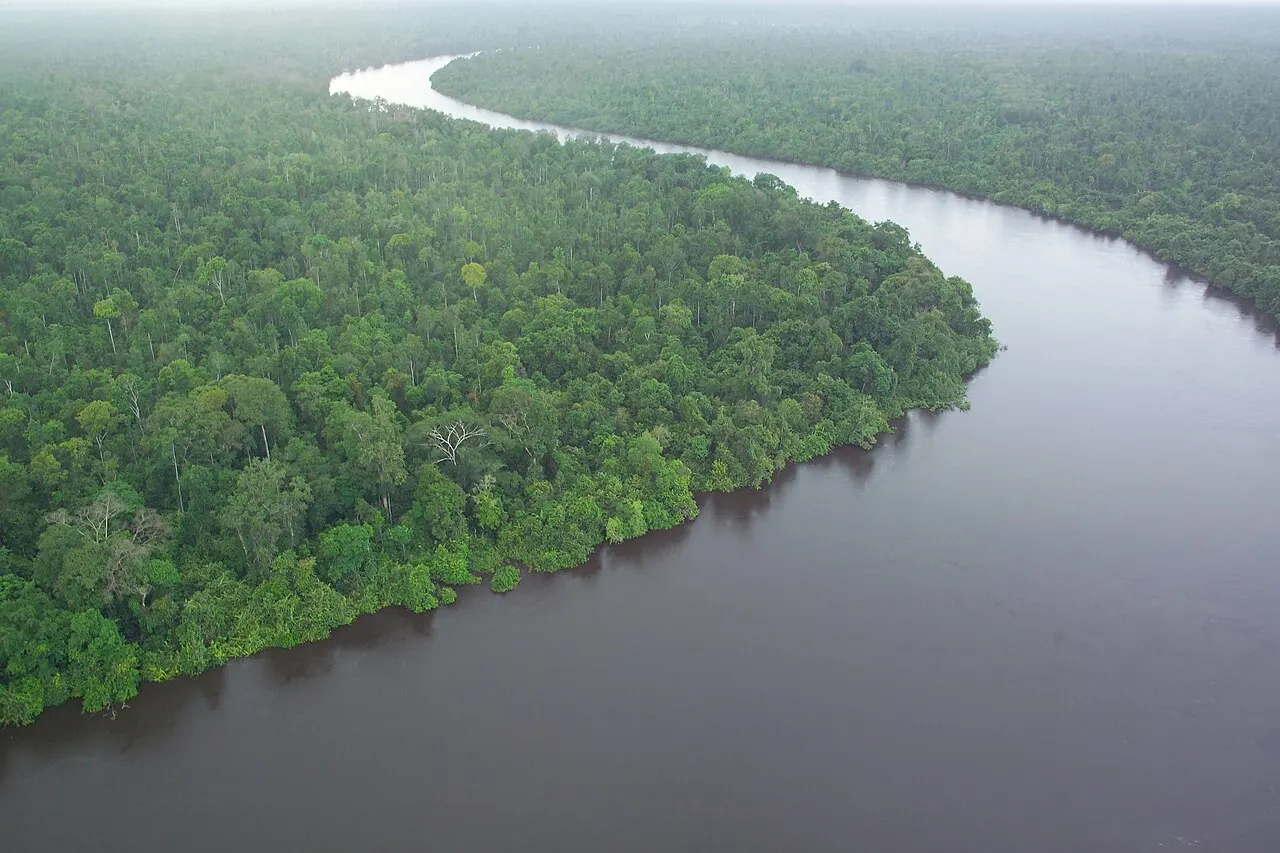
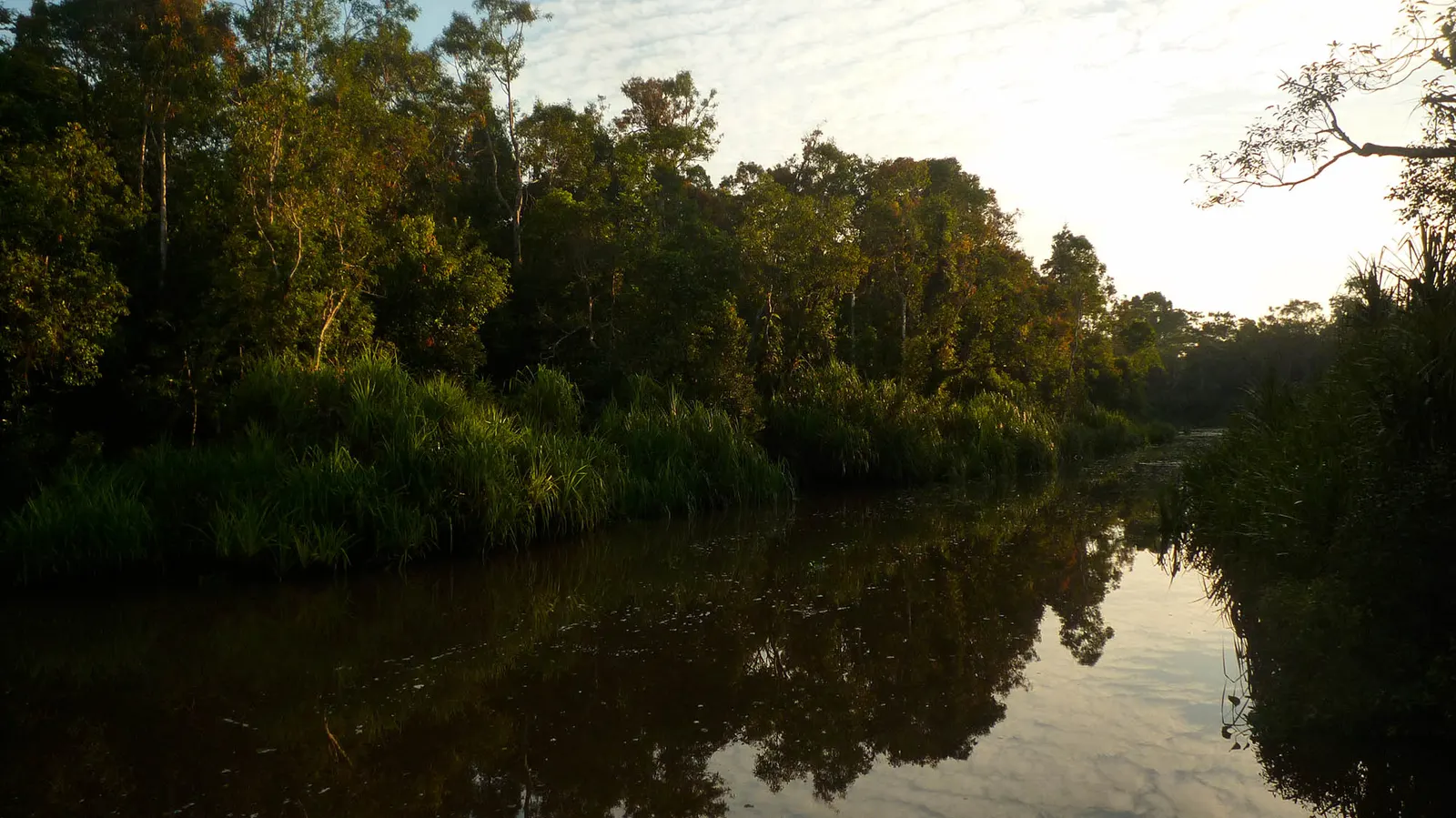
The type locality lies close to Palangka Raya in Central Kalimantan, within the Sebangau drainage. The fish was collected in still, shallow water beneath trees and shrubs, among aquatic and partly submerged vegetation. Peat-derived organic matter gives this water its dark colour and acidity. These small shaded pools are a different environment from a broad open river. The documented locality is a drainage record; it should not be confused with a precisely confirmed visitor site inside a national park.
Sources & references · 2
Vertebrate Zoology / Senckenberg · Schindler & Linke (2013): Betta hendra, a new fighting fish from Central KalimantanConservation petition archived in the USFWS public docket · Conservation evidence for Betta hendra, with habitat and range documentationReproduction
Betta hendra is a paternal bubble-nester: the male builds and tends a nest of bubbles near the surface. The original description and later captive work support this breeding mode. Details observed in an aquarium do not automatically establish the timing of reproduction in the wild. The labyrinth organ allows these fishes to use atmospheric oxygen, which is useful in poorly oxygenated water, but does not make them independent of their aquatic habitat. In the original survey, Betta foerschi occurred alongside them.
Sources & references · 2
Vertebrate Zoology / Senckenberg · Schindler & Linke (2013): Betta hendra, a new fighting fish from Central KalimantanConservation petition archived in the USFWS public docket · Conservation evidence for Betta hendra, with habitat and range documentationConservation and observation
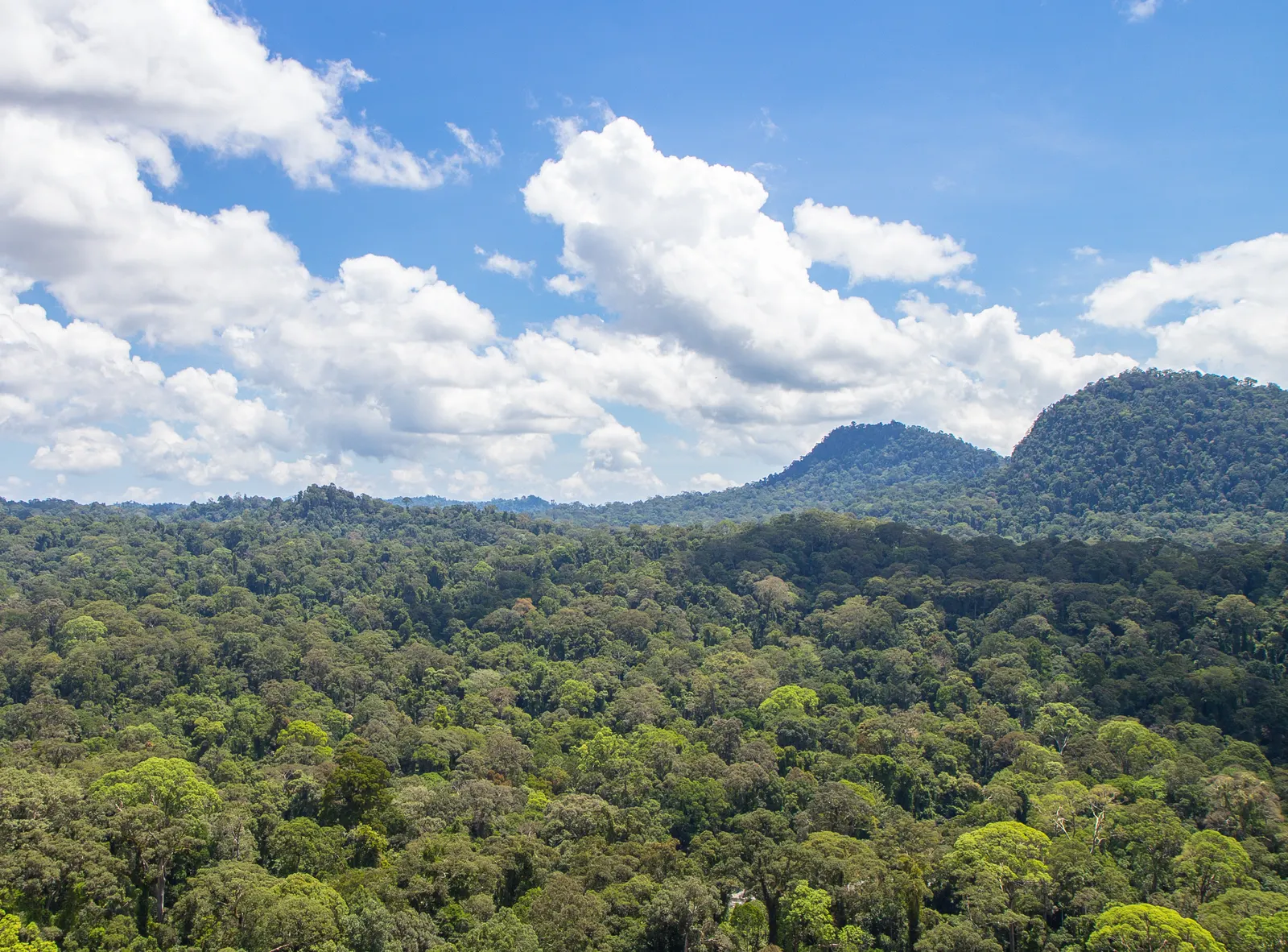
This geographically restricted fish is classified as Critically Endangered. Drainage, clearance and burning of peat-swamp forest can remove both the water and the shade on which it depends; collection for trade adds pressure. Conservation therefore concerns the whole small-water landscape, including its forest cover and hydrology. A peat-swamp visit near Palangka Raya provides ecological context, not a reliable chance to see this inconspicuous fish. Do not collect fish or disturb vegetation to obtain a photograph.