Edible parts, flavour & texture
Fresh or dried rhizome is used as a spice. Culinary use is distinct from concentrated supplements, and the colour of a dish does not demonstrate a medical effect. Plant-part labels here therefore specify rhizome rather than calling the whole plant edible.
Sources & references · 1
NParks · Curcuma longaTraditional use
Turmeric is documented in several Asian medical traditions, including uses for digestive and other complaints. Those accounts record cultural practice. They are not proof of treatment efficacy and should not be attributed to a specific Bornean community without a local source.
Sources & references · 1
NIH National Center for Complementary and Integrative Health · Turmeric: usefulness and safetyWhat research tells us
Human studies of turmeric and curcumin exist, but formulations differ and definitive health benefits remain unestablished in the NCCIH overview. Laboratory activity of a compound is a different evidence level from clinical benefit. Highly absorbable curcumin formulations may harm the liver; ordinary seasoning and supplements must not be treated as equivalent.
Sources & references · 1
NIH National Center for Complementary and Integrative Health · Turmeric: usefulness and safetyHow the plant grows
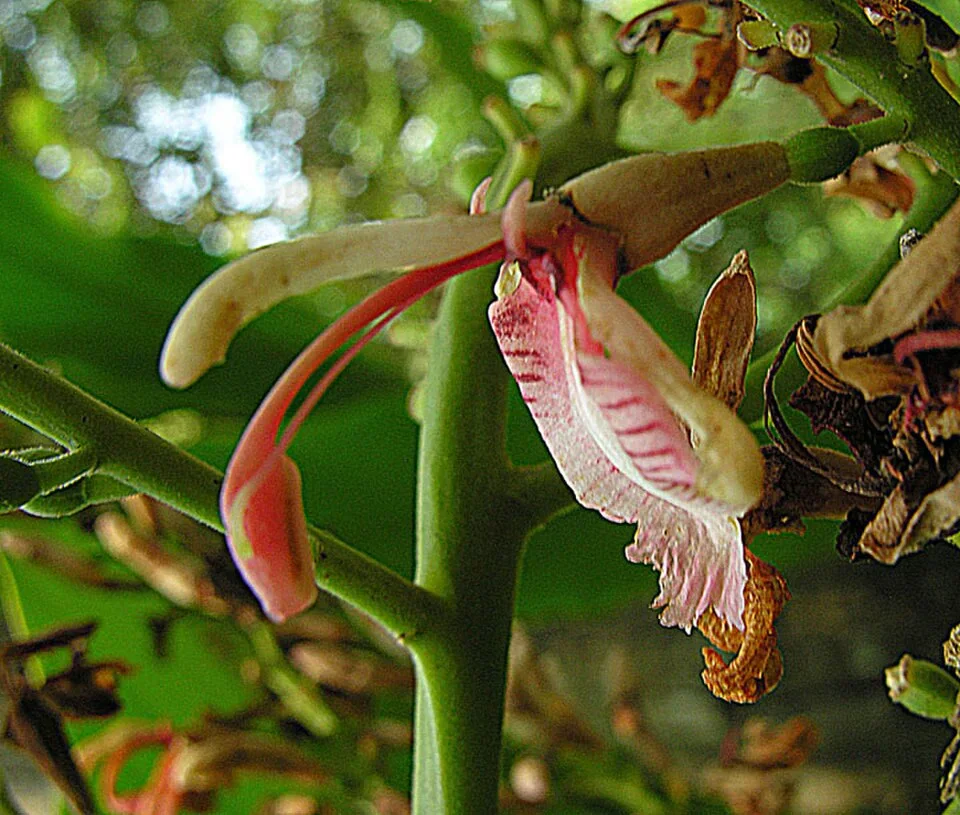
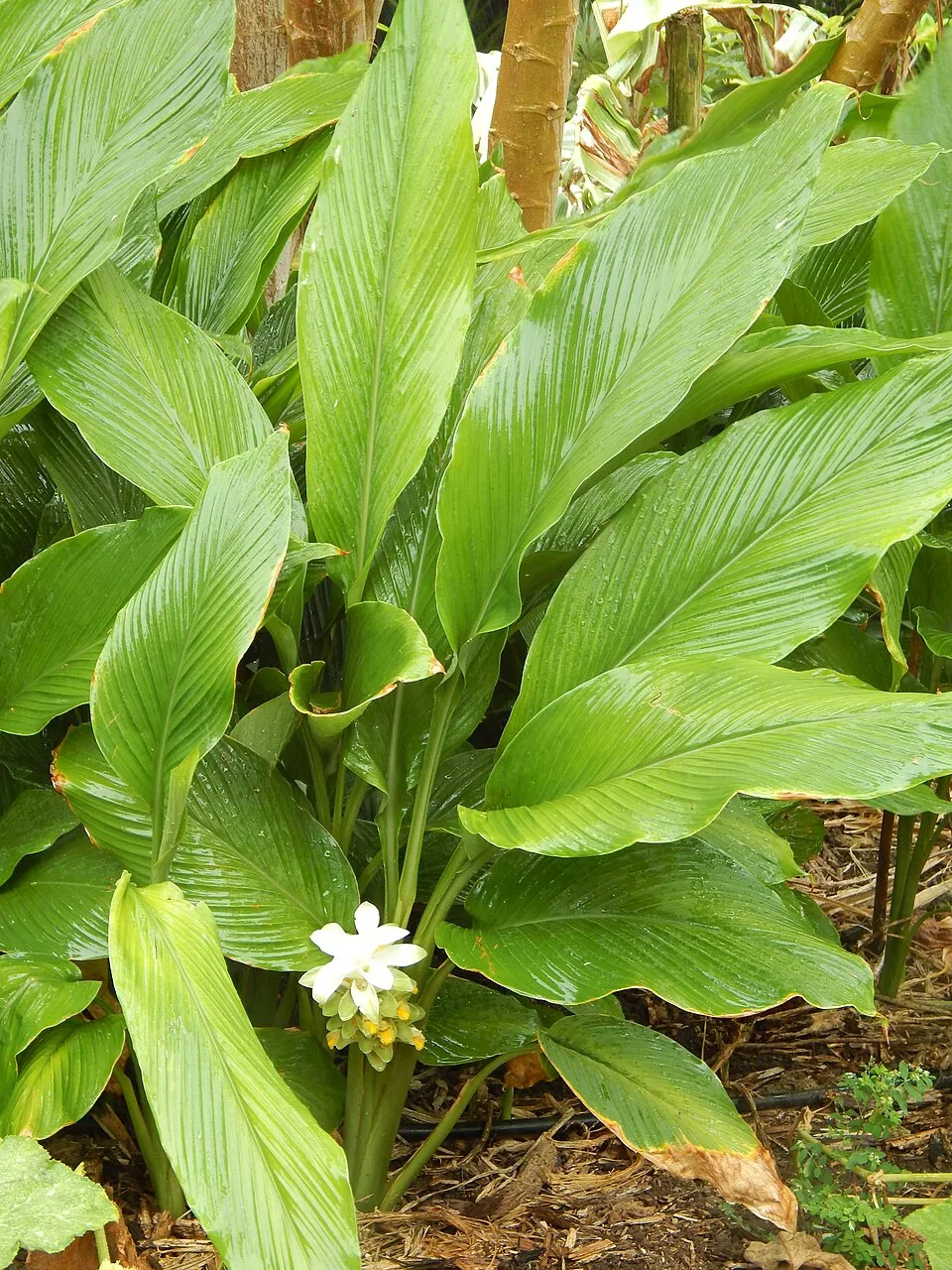
Broad leaves rise from an underground branching rhizome. That stem is orange inside and supplies the familiar spice; it is not a botanical root. Curcuma longa is a cultivated perennial in the ginger family and can be propagated from rhizome pieces. Its leafy growth and inflorescence also distinguish the living plant from a jar of dried powder.
Sources & references · 1
NParks · Curcuma longaIn Borneo’s kitchens
Fresh or dried rhizome contributes yellow colour and an earthy, slightly bitter note. It is linked to Pinasakan, where turmeric accompanies fish and other seasonings in Sabah. Colour, flavour and preservation techniques are separate aspects of a dish: the presence of turmeric does not establish a health claim. Research on concentrated curcumin formulations should not be treated as research on an ordinary serving of seasoned food.