Overview
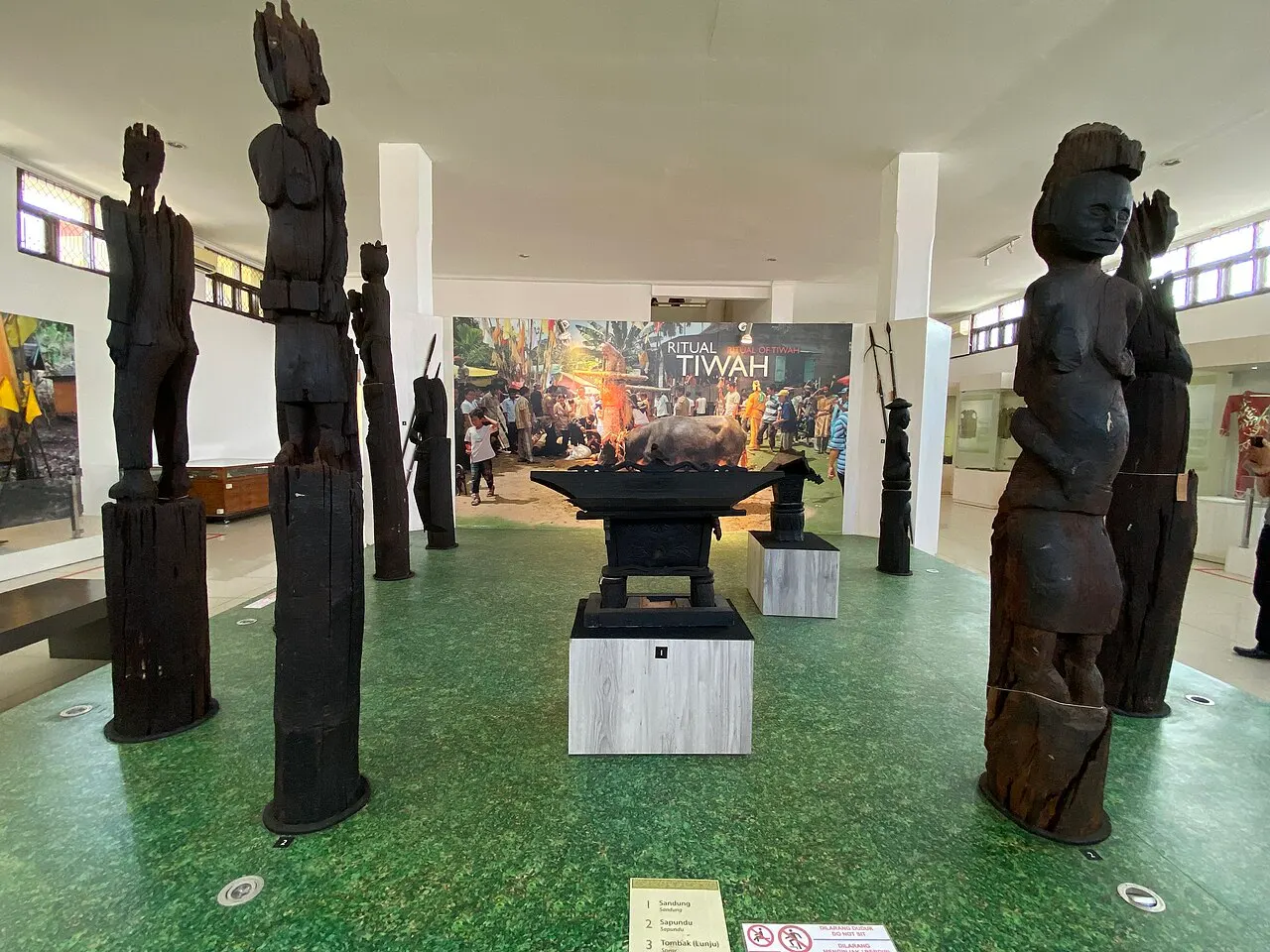
Tiwah belongs to the relationship between families, deceased relatives and Kaharingan religious practice. It should be understood within the community that holds the ceremony, rather than presented as a ritual followed by every Dayak person. The associated Ngaju record provides linguistic context, not a claim of uniform religious identity.
Traditions
Arrangements and duration depend on family and community agreements. The ceremony is a religious and social occasion rather than a standard performance with a fixed tourist timetable.
Locations
Not every Ngaju person practises Tiwah. Visitors should seek host permission and follow local guidance, particularly around photography and participation; this is editorial guidance, not a claim about a universal legal rule.