What is Bambangan?
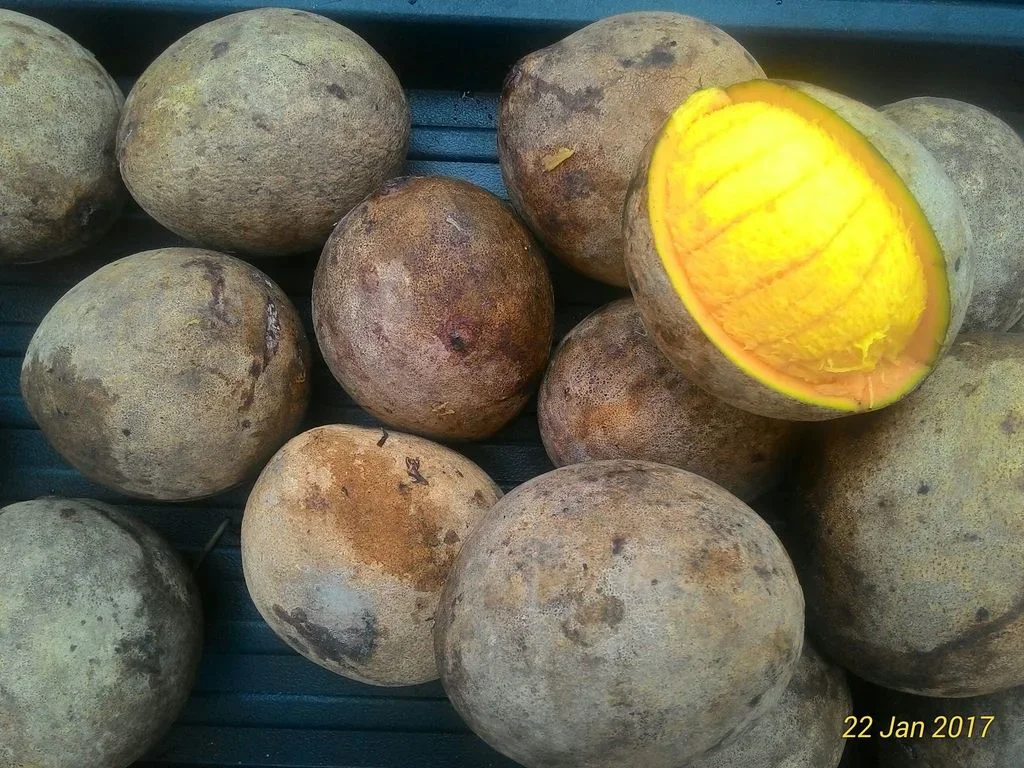
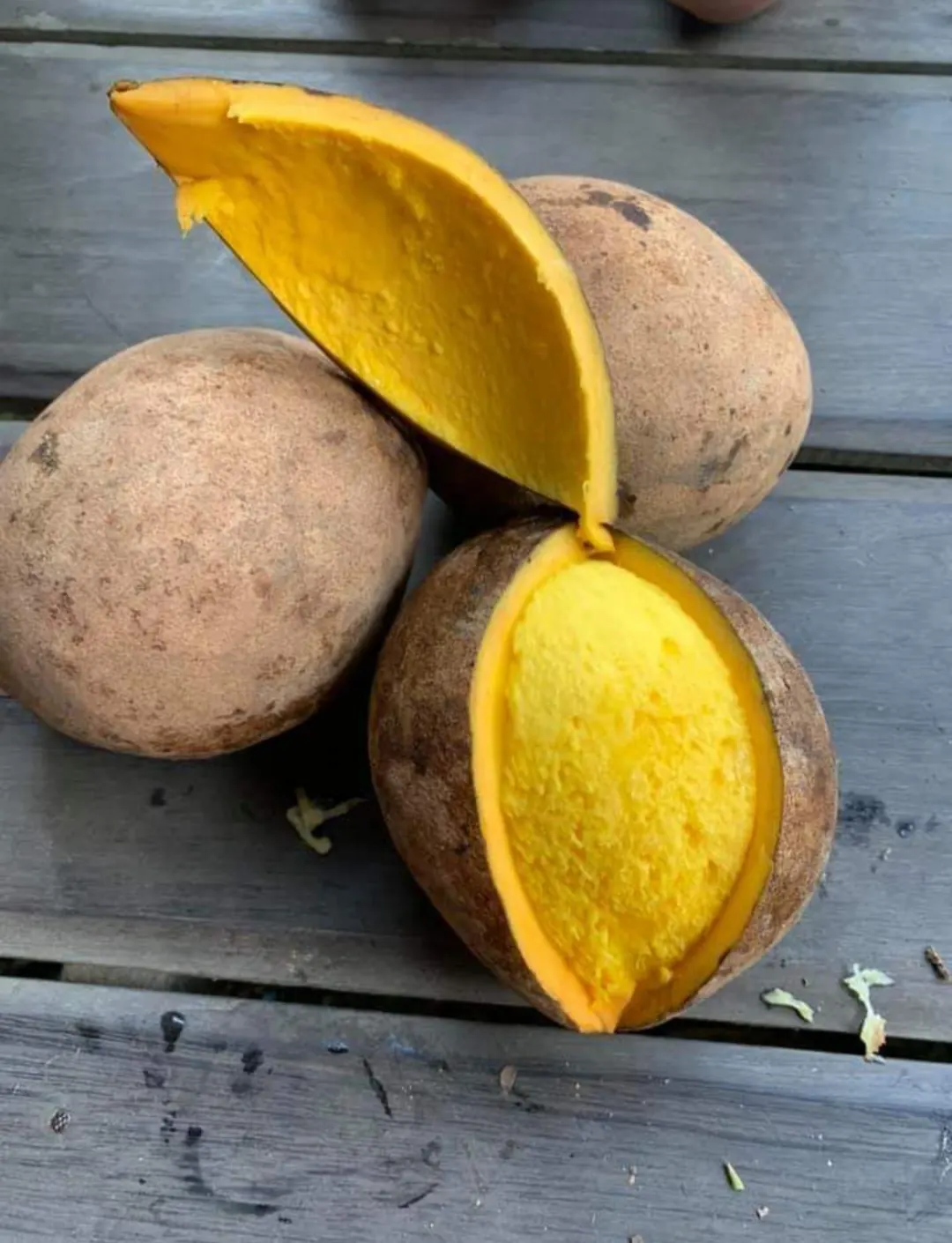
The fruit comes from Mangifera pajang, a mango relative distinct from the common supermarket mango. Its thick skin, fibrous flesh and emphatic aroma explain why it is treated as an ingredient with its own identity. Bambangan on a menu may mean fresh fruit, a preserved preparation or a condiment made from it; these are different experiences.
The existing photograph shows the fruit. A jar of prepared bambangan, with cut pieces and seasoning, would look different. That distinction is useful when recognising it at a market or deciding what to order.
Flavour and texture
Expect acidity, a pronounced mango aroma and a fibrous bite rather than the soft sweetness of a dessert mango. Preserving and seasoning change the balance: salt deepens the savoury impression, while chilli and shallot can bring heat and crunch. Compare a small portion with rice before adding more.
Tonsom and nonsom refer to preserved preparations. The culinary account from Ranau describes flesh combined with grated seed material and salt; optional aromatics differ between cooks. This is a description of a food tradition, not a home-fermentation method or a guaranteed storage period.
At the table
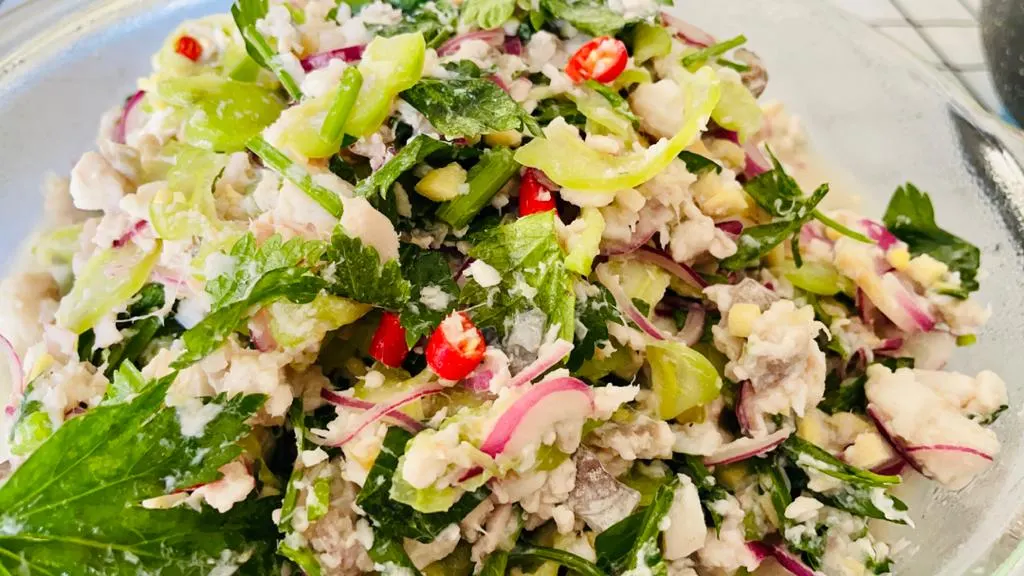
Bambangan works as an accompaniment rather than the whole meal. Rice, fish and sambal give its strong flavour a setting; Hinava and Tuhau condiment show other Sabahan ways of using sourness and aroma. Ask whether a restaurant’s bambangan is plain preserved fruit or a mixed sambal.
JKKN’s cultural mapping records tonsom at family gatherings and Kaamatan celebrations, as well as in market and packaged sales. The same ingredient can therefore connect an everyday table with a festival meal. Packaging does not remove the need to follow the producer’s storage instructions.