
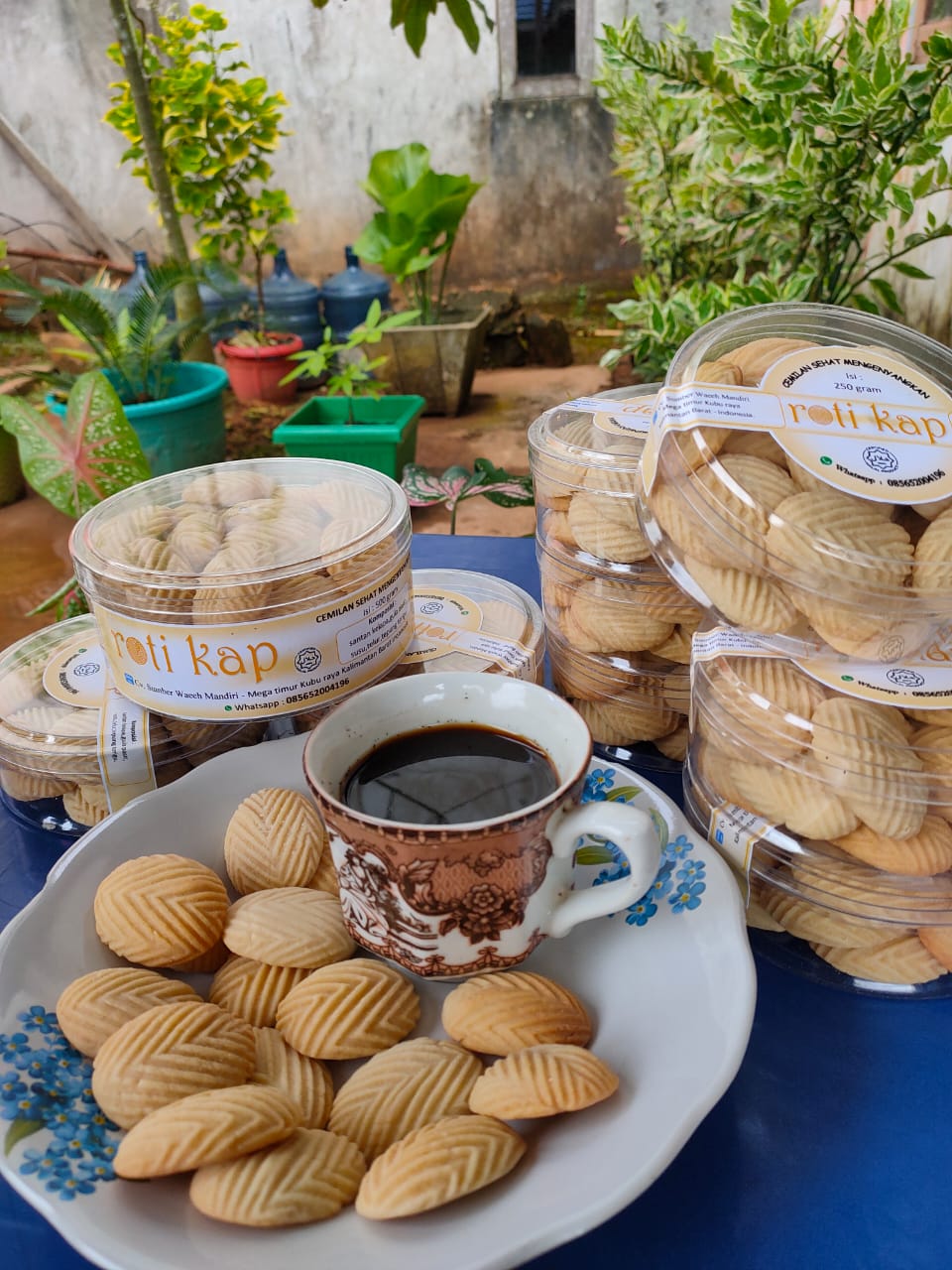
A bake with its own character
Coconut milk gives roti kap a distinctive aroma. Versions are sold plain or with pineapple filling, so ask which one you are buying before choosing a larger bag. The pleasure is in a small bite: notice the baked exterior, sweetness and coconut flavour without expecting the texture of a large Western bread roll. The name roti does not describe every detail of the finished snack.
Made in small businesses
Pontianak's municipal government documented a home producer of roti kap on Jalan Imam Bonjol in 2024. Her sales were by order rather than through shop distribution. That example helps explain why a traditional food can be well established yet not appear in every display cabinet. Ask a bakery or local host about a current producer, and respect private homes rather than arriving without an arrangement.
A companion to a drink
For a first tasting, order a small amount and pair it with a drink that suits your preference. A less sweet tea or coffee lets the bake's own sweetness remain noticeable. There is no need to turn it into a full meal or a long food tour. A short break between visits to the riverfront and city heritage sites is enough.
Before buying a bag
Recipes and fillings vary. Ask about wheat, eggs, milk ingredients and coconut when those matter to you. For a gift or onward journey, ask when the batch was made, how it is packed and how the maker recommends storing it. Do not infer a shelf life from a sealed bag or from another bakery's product.
Keep the names distinct
Local cake names can overlap, and similar online names may describe a different crisp or fried snack. Show the seller the roti kap you mean and ask about the preparation rather than choosing by name alone. This guide concerns the baked Pontianak snack. It does not claim that every food called kue kap has the same recipe or form.

