Conservation status
The conservation agency KSDAE calls this area Suaka Margasatwa Pulau Kaget in its 2022 function-evaluation report. Use wildlife sanctuary as the working classification rather than repeating older labels uncritically. A conservation designation describes the area's management purpose; it does not automatically establish ordinary tourism access. Check arrangements with the responsible conservation authority before planning a visit.
Proboscis monkeys
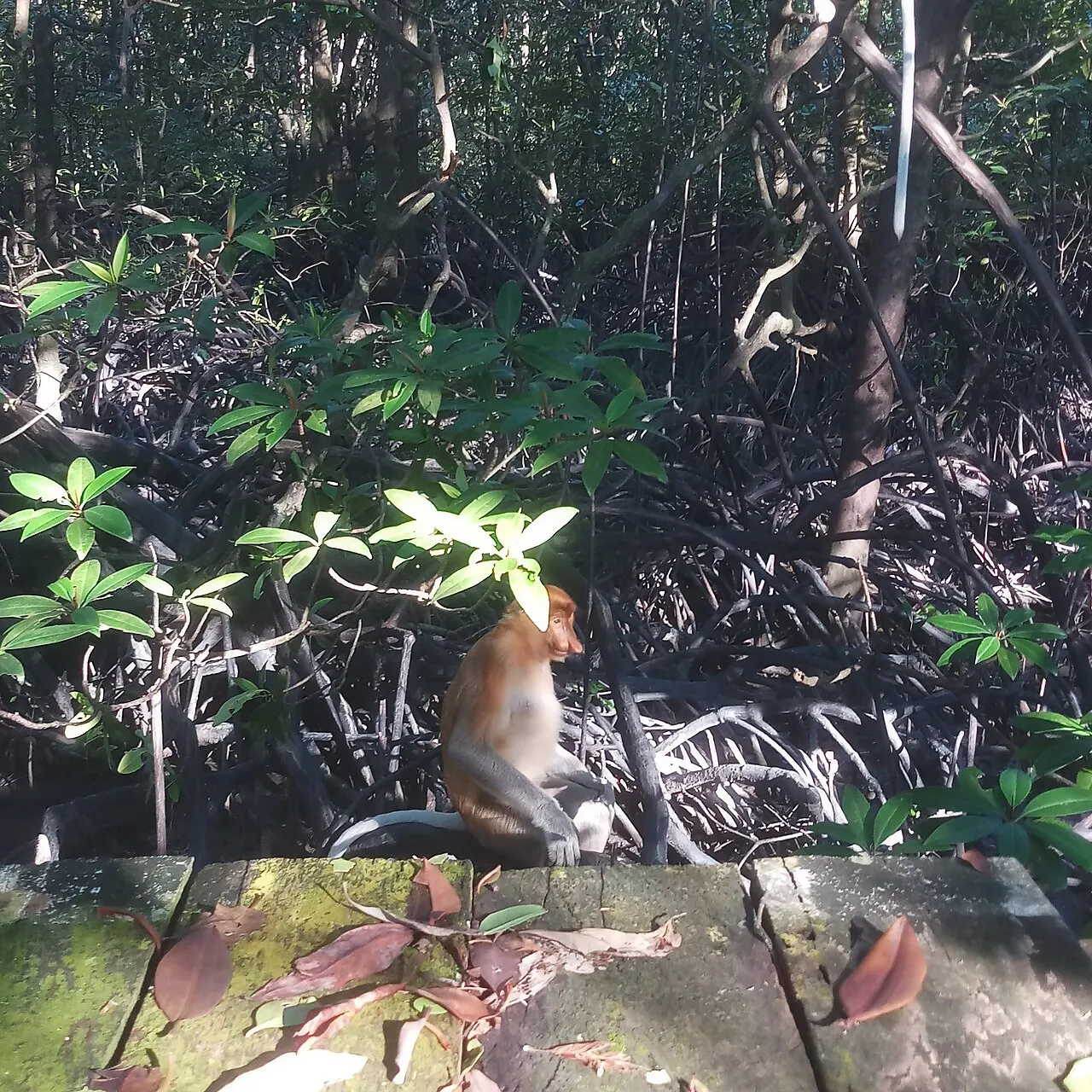
The same official report identifies Pulau Kaget as habitat for the proboscis monkey, Nasalis larvatus, known locally as bekantan. This is a supported relationship with a particular species, not a promise of sightings or a basis for adding other animals. Observe quietly if viewing is authorised, and avoid feeding or approaching animals for photographs.
Planning the visit
KSDAE's evaluation discusses the suitability of conservation-area functions and possible responses to degradation. That management context deserves attention rather than a simple scenic-island description. Do not confuse Pulau Kaget with the separate visitor sites Pulau Kembang or Pulau Bakut. Keep the reserve's area unpublished until a current official figure is verified and confirm whether any viewing route is permitted.
Access and reservations
Public visitor information remains limited. This guide has not verified an authorised tourist landing, bookable guided route or accommodation in the sanctuary. It therefore supplies no visit duration, boat departure or overnight suggestion. A commercial offer naming Pulau Kaget is not by itself evidence of permission to land or approach wildlife. Ask the responsible conservation authority what activity is allowed, where and under whose supervision.
Do not substitute Pulau Kembang or Pulau Bakut when checking that answer: they are different sites with different management contexts. Banjarmasin is a nearby regional city, not a confirmed sanctuary gateway. Its hotels and river-market journeys belong to a separate urban visitor programme. They can provide context for South Kalimantan's waterways without implying that the sanctuary is another stop on the same tour.
Reading the landscape
The supported animal relationship is Nasalis larvatus, a Borneo-endemic primate associated with wetland and coastal forest. Habitat condition matters more than the opportunity for a close photograph. The authority's function evaluation concerns how a degraded protected area should be managed; it is not evidence that restoration is complete. Exact animal resting or feeding locations are not published here.