Life in the ecosystem
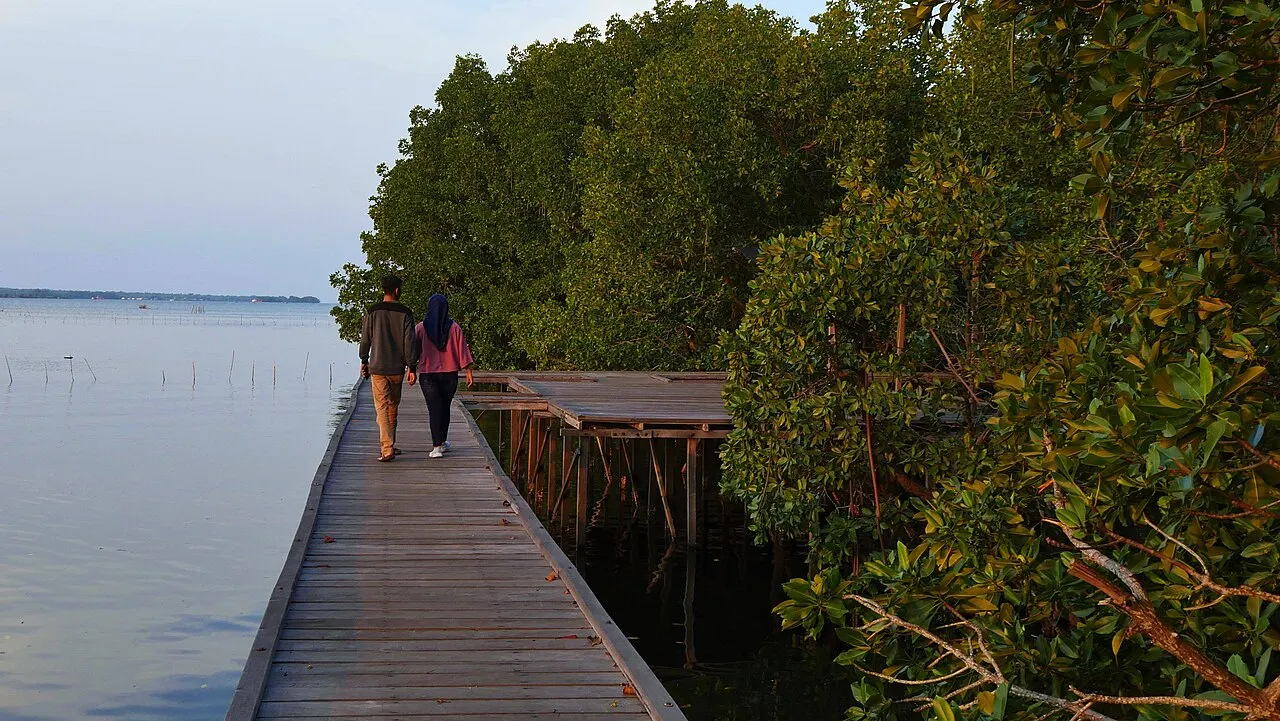
The roots and canopy add structure to tidal river margins. Breathing roots project above waterlogged soil, while the tree’s position near freshwater-influenced mangroves connects river conditions with forest habitat. This is different from an inland orchard tree sharing a fruit-like common name.
Sources & references · 1
NParks · Sonneratia caseolarisConnections with animals
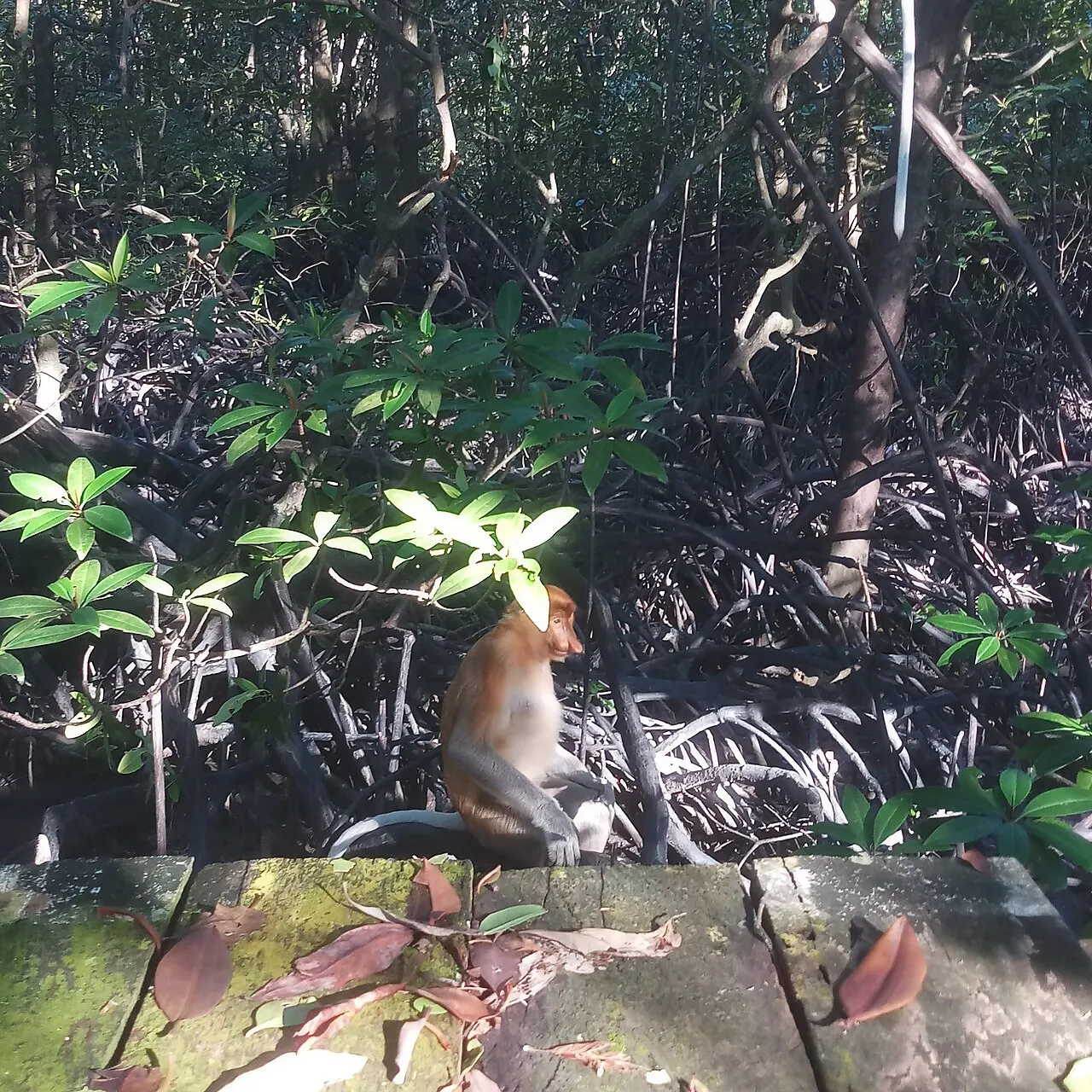
Berembang mangrove is recorded among the food trees of Proboscis monkey at Samboja Kuala, East Kalimantan. The reviewed record supports this exact plant–animal pair. It does not establish that every part is eaten or that feeding proportions are identical elsewhere on Borneo.
Sources & references · 1
Mammalian Species 47(926), 2015 · Nasalis larvatusAppearance & recognition
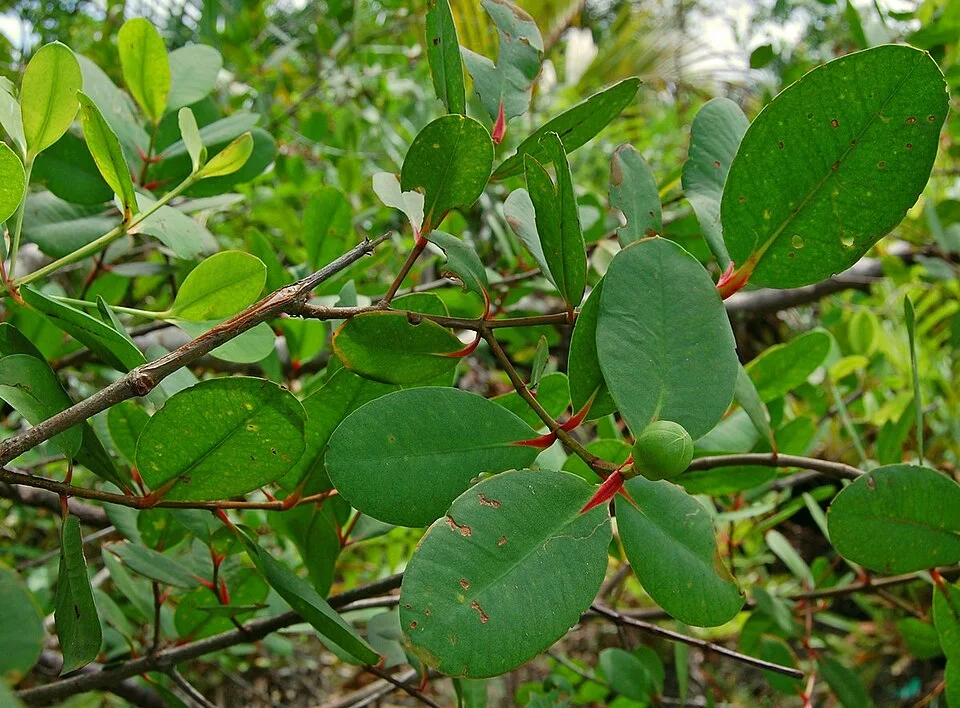
Sonneratia caseolaris has opposite leathery leaves and many upright breathing roots around the trunk. Its red-petalled flowers open towards dusk with a spray of pale stamens. The rounded fruit sits on persistent sepals, giving it a distinctive base. The flowers and leaves help separate it from other Sonneratia mangroves, whose common names overlap.
Sources & references · 1
NParks · Sonneratia caseolarisFlowers, fruits & reproduction
The nectar-rich flowers attract visiting bats, and floating seeds connect fruit production to moving water. Its canopy also feeds proboscis monkeys, whose leaf diet is part of the plant’s documented animal relationships. Berembang often occupies the muddier, freshwater-influenced upper parts of tidal rivers. Breathing roots allow gas exchange above oxygen-poor soil, so changes in water flow affect both tree growth and the habitat it provides.