A black body and contrasting bills
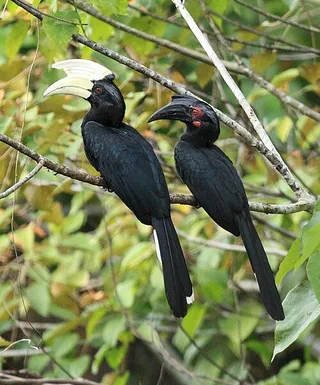
The body is black, including the belly; white appears at the outer tail tips. Many birds also show a pale eyebrow. The male has an ivory bill and a larger casque, while the female's bill is dark. These features help separate it from the pied hornbill when only part of the bird is visible through foliage.
Sources & references · 2
IUCN SSC Hornbill Specialist Group · Black Hornbill accountForest Department Sarawak · Black HornbillFeeding inside the canopy
Lowland rainforest, swamp forest and river floodplains provide feeding habitat. Large, oily fruits are important, alongside insects and other small animal prey. Borneo food records include fruits from several forest-tree genera rather than one indispensable plant. Birds often remain inside the canopy, where a harsh, braying call may be a stronger clue than a clear view. Fruiting trees are often visited at dawn. The powerful bill can split fruit husks and tear bark. Birds are usually encountered as pairs; larger gatherings are less typical and can include juveniles. Mature secondary forest can support the species alongside primary forest.
Sources & references · 2
IUCN SSC Hornbill Specialist Group · Black Hornbill accountForest Department Sarawak · Black HornbillKeeping old nest trees
Tree hollows are essential nesting resources. In Kapuas Hulu, West Kalimantan, a field study measured twelve cavities attributed to Black Hornbills, including cavities that had become unusable. Most entrances were slit-shaped on the main trunk. The species is globally Vulnerable. Keeping mature cavity trees alongside fruit-bearing forest protects resources that young regrowth cannot immediately replace.