Recognition
Living animals combine a dark-yellow to orange carapace with purple walking legs dotted in white. The arms of the claws are orange while the palm and fingers are white. Examined adults had a carapace roughly one and a half centimetres across. Long, slender walking legs help distinguish this forest crab from stockier stream crabs. The closely related Geosesarma sabanum can look very similar in colour; identification also depends on structural characters. A colourful Sabah crab cannot be named securely from colour alone.
Sources & references · 1
National University of Singapore / ZooKeys · Ng & Ng (2018): Freshwater crabs of Danum Valley Conservation AreaHabitat and Borneo range
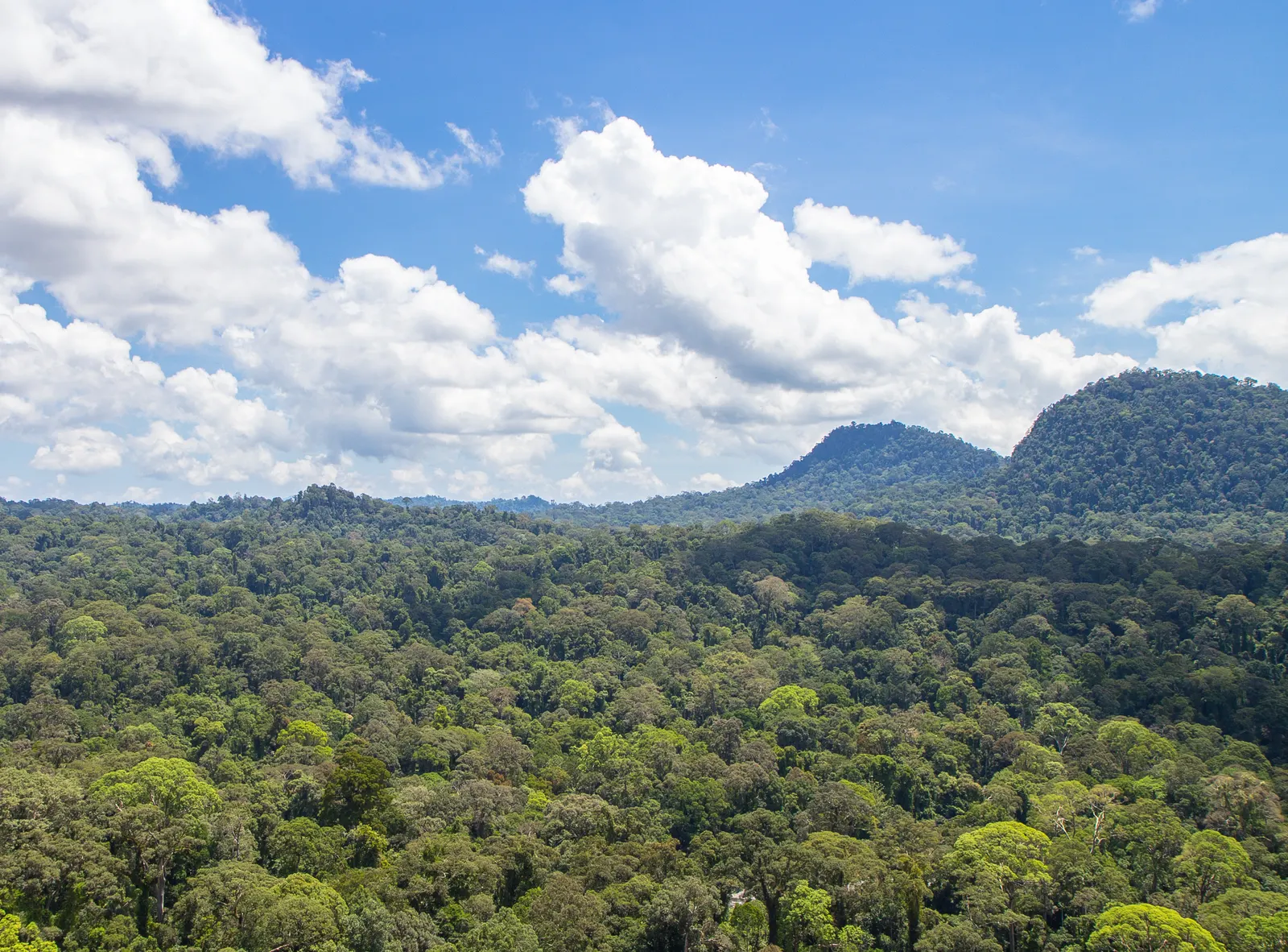
The confirmed locality is Danum Valley in Sabah. The first reference specimen was collected in a pitfall trap in primary forest near the field centre in 1996. An egg-bearing female found in 2017 came from a water-filled rotting log on a nature trail. These observations place the species in the moist forest floor and deadwood environment rather than permanently underwater in a river. Its local name reflects a documented place, but the published records do not establish how widely it occurs elsewhere on Borneo.
Sources & references · 2
National University of Singapore / ZooKeys · Ng & Ng (2018): Freshwater crabs of Danum Valley Conservation AreaMalaysia Biodiversity Information System · Geosesarma danumense: Malaysian biodiversity recordBehaviour and daily life
Crabs have been observed climbing small shrubs as well as using the forest floor. One photographed male sat on a log about thirty centimetres above ground at ten at night, roughly thirty metres from a river near the Danum field centre. This provides a concrete night-time observation, rather than a universal claim about activity throughout the year. Moist logs and low vegetation form a connected small-scale habitat. The available account does not identify a diet or a particular host plant for this species.
Sources & references · 1
National University of Singapore / ZooKeys · Ng & Ng (2018): Freshwater crabs of Danum Valley Conservation AreaReproduction
The observed female carried large, bright reddish-orange eggs. Their size led the authors to suggest direct development, in which young emerge as small crabs rather than entering a long free-swimming larval stage. This remains a reasoned interpretation of the eggs, not a complete observation of the life cycle. Brood size and a breeding season are not securely known. Keeping wet decaying wood in place helps retain the documented habitat; overturning logs to find the crab disturbs that environment.