Appearance & recognition
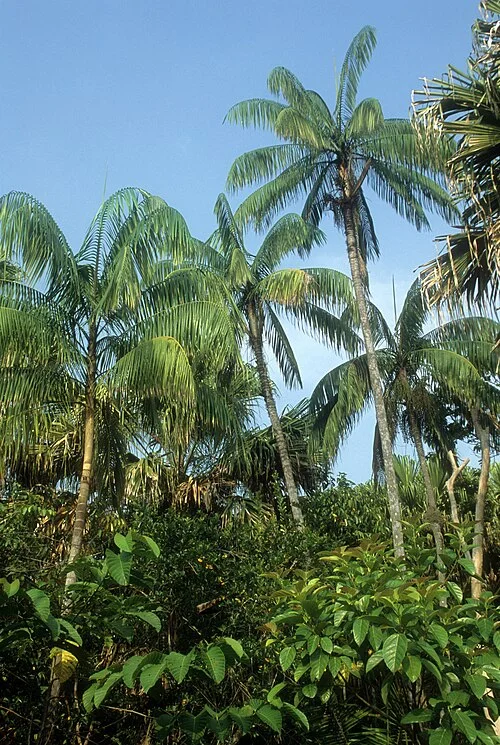
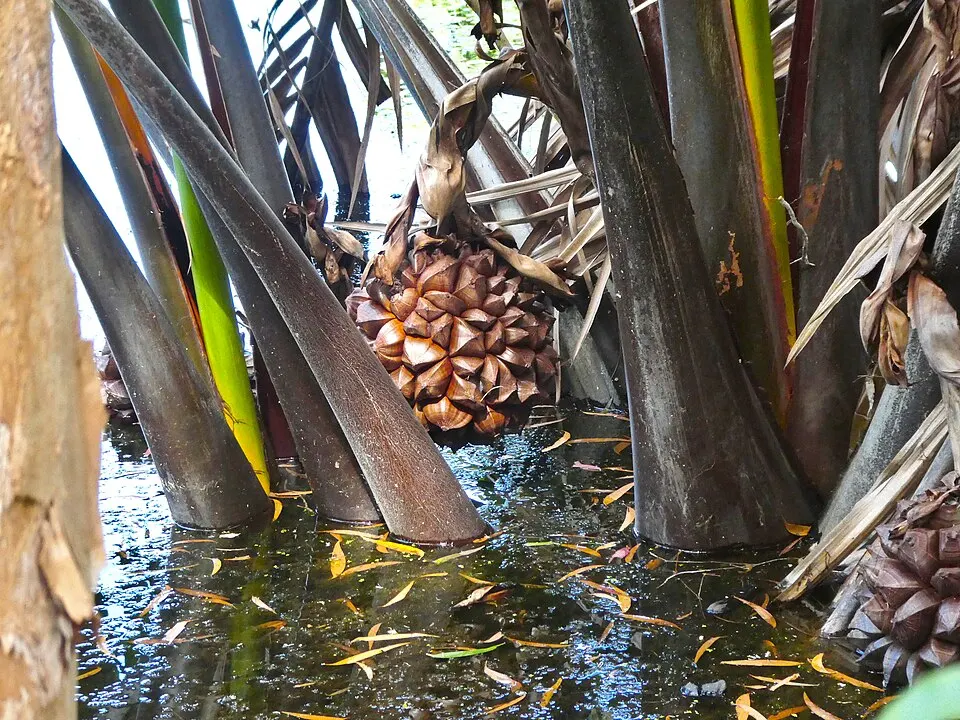
Nypa fruticans is a mangrove palm with long pinnate leaves and rounded clusters of woody fruits. The fruit cluster and leaves give more useful identity clues than a generic image of coastal palms. Its native range stretches beyond Borneo across tropical Asia toward the western Pacific.
Sources & references · 2
Singapore National Parks Board · Nypa fruticansRoyal Botanic Gardens Kew POWO · Nypa fruticansFlowers, fruits & reproduction
Male and female flowers occur on the same plant in separate structures. The resulting clustered fruits are a distinctive reproductive feature; a photograph of fruit does not establish a local harvesting season.
Sources & references · 1
Singapore National Parks Board · Nypa fruticansEdible parts, flavour & texture
Food uses concern particular parts: young seeds provide chewy attap chee, while flower-stalk sap can be processed into sugar or vinegar. They are different products, not evidence that an entire mangrove palm is edible.
Sources & references · 1
NParks · Nypa fruticansMaterials & other uses
Nipah connects tidal ecology with everyday materials. Its fronds are used for roof thatch and weaving; floating fruits help it disperse along waterways. Harvesting leaves and extracting sap are distinct practices with different effects on the palm.
Sources & references · 1
NParks · Nypa fruticansHow the plant grows
Unlike a coconut palm, Nypa fruticans has a largely underground creeping stem. Its long feather-like leaves rise from tidal mud, often giving a riverbank the appearance of a dense palm garden without visible tall trunks. The rounded female flower head develops into a ball of woody fruits. Individual fruits can float away with water, linking reproduction directly to estuary currents.
Sources & references · 1
NParks · Nypa fruticansRange & habitat
Brackish river mouths with freshwater influence are characteristic settings. Research in East Kalimantan’s Mahakam Delta documents sap use, tying a particular livelihood to a named estuarine landscape. Young seed tissue, tapped flower-stalk sap and leaves provide different products: chewy food, processed sugar or vinegar, and roofing or weaving materials. Those uses do not make an inland riverbank suitable habitat wherever the name Mahakam appears.