Appearance & recognition
The large fleshy flower emerges close to the forest floor. Species identification requires botanical detail and locality information; a photograph of an unidentified giant Rafflesia bloom cannot safely be labelled R. keithii.
Sources & references · 1
Universiti Malaysia Sabah / Peters and Ting · Protection of Rafflesia through the Appreciation of the Dusun’s Indigenous Knowledge; A Preliminary Case Study at Poring-SabahGrowth & ecology
This plant obtains its resources inside Tetrastigma host vines instead of producing ordinary green foliage. Flowers attract carrion flies through their appearance and odour, connecting reproduction with insects drawn to decomposing material.
Sources & references · 1
Biodiversity and Conservation / study authors · The role of an endangered vine parasite in promoting agritourism mediated conservation in Sabah, MalaysiaProtecting the plant and its habitat
Habitat loss threatens Rafflesia populations. Poring research highlights local knowledge and community participation in protection. Conserving host vines and preventing disturbance around buds connects flower protection with the care of its forest habitat.
Sources & references · 2
Universiti Malaysia Sabah / Peters and Ting · Protection of Rafflesia through the Appreciation of the Dusun’s Indigenous Knowledge; A Preliminary Case Study at Poring-SabahPlants, People, Planet / Malabrigo et al. · Most of the world’s largest flowers (genus Rafflesia) are now on the brink of extinctionHow the plant grows
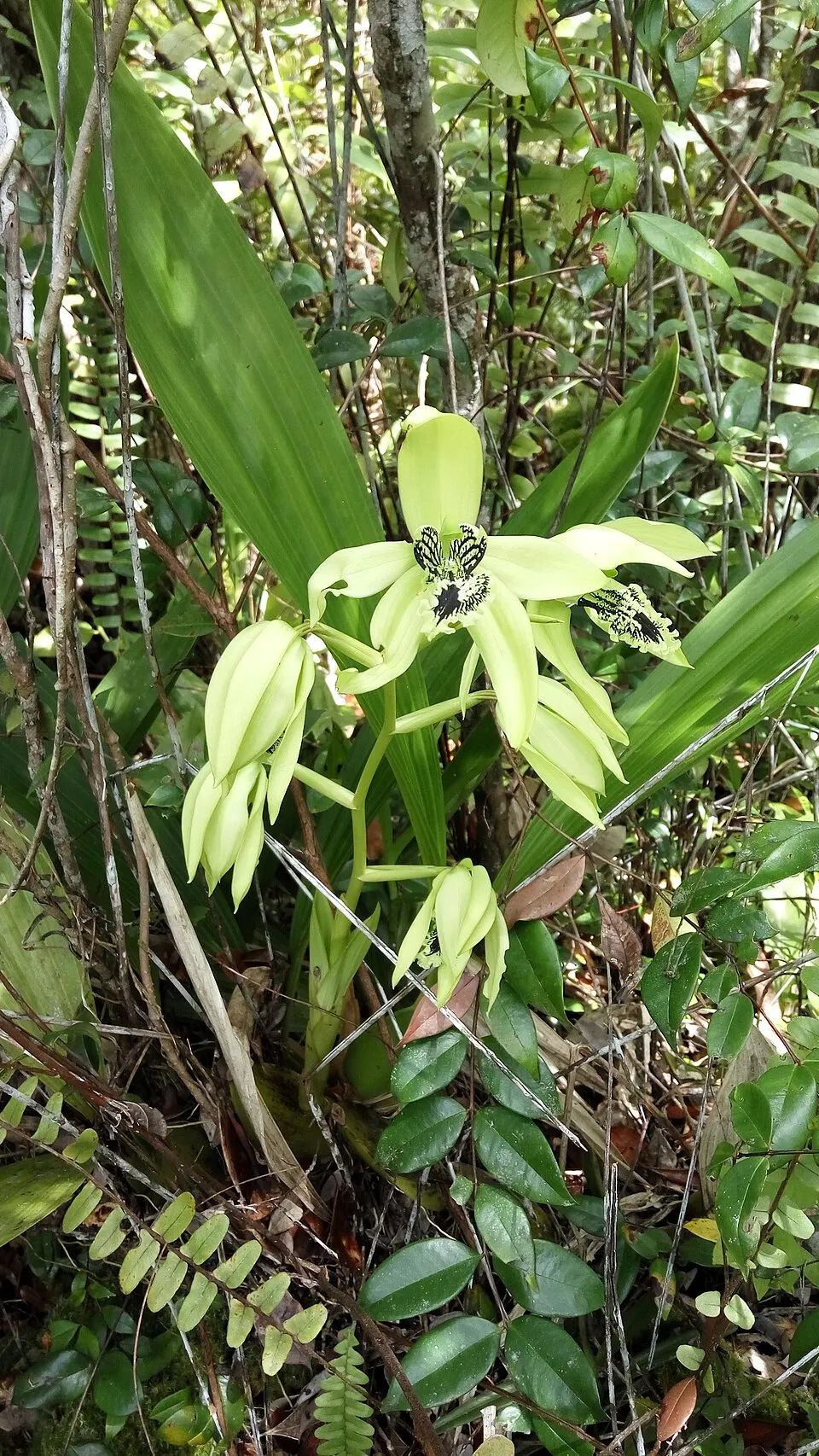
Most of the plant’s life is hidden inside a living Tetrastigma vine. It lacks the ordinary green leaves and stems that would let a forest plant make its own food, obtaining resources from its host instead. A bud eventually emerges and grows into the conspicuous fleshy flower. This is a parasitic plant, very different from the black orchid, which can use trees for support without feeding on them.
Sources & references · 2
Biodiversity and Conservation / study authors · The role of an endangered vine parasite in promoting agritourism mediated conservation in Sabah, MalaysiaUniversiti Malaysia Sabah / Peters and Ting · Protection of Rafflesia through the Appreciation of the Dusun’s Indigenous Knowledge; A Preliminary Case Study at Poring-SabahFlowers, fruits & reproduction
The flower’s carrion-like smell and appearance attract flies involved in pollination. Its brief visible phase depends on much longer development within the host, so a flowering site is more than the patch occupied by one bloom. Poring research in Sabah links protection with local knowledge and community participation. Keeping host vines, forest shade and undisturbed buds matters even when no open flower is visible.
Sources & references · 2
Biodiversity and Conservation / study authors · The role of an endangered vine parasite in promoting agritourism mediated conservation in Sabah, MalaysiaUniversiti Malaysia Sabah / Peters and Ting · Protection of Rafflesia through the Appreciation of the Dusun’s Indigenous Knowledge; A Preliminary Case Study at Poring-SabahEcological relationships
At Poring in Sabah, a plantain squirrel (Callosciurus notatus) was photographed eating a ripe Rafflesia keithii fruit. This documents a food relationship; successful seed dispersal by the squirrel was suggested, rather than demonstrated.