Recognition
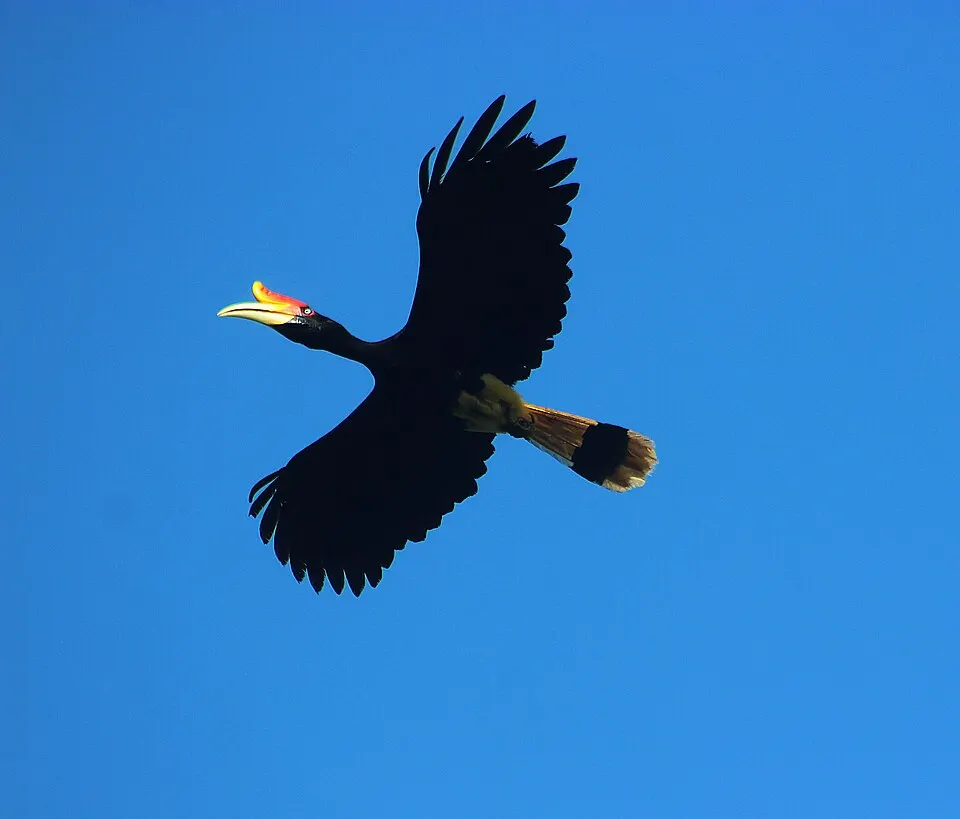
Buceros rhinoceros has a black body, pale lower plumage, a white tail crossed by a dark band and a prominent orange-yellow bill and casque. Its conspicuous bill does not make it unique to Borneo: the species has a wider regional range.
Sources & references · 1
University of Michigan Animal Diversity Web · Buceros rhinoceros species accountForest and water
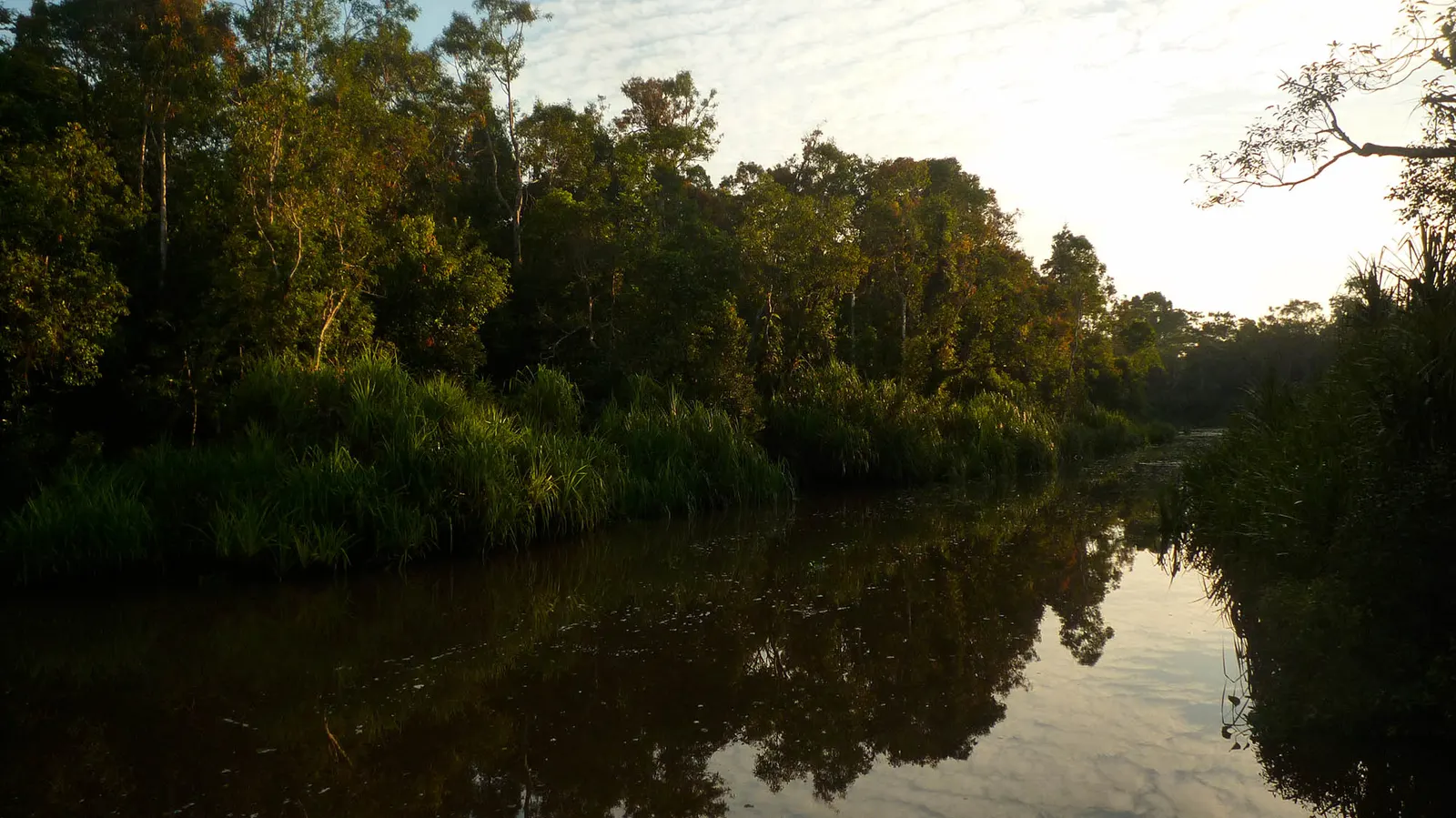
This forest bird uses large tree cavities for nesting and disperses seeds through its fruit diet. Keeping suitable mature trees is therefore part of its ecological context. The documented Kutai Barat survey supports a province relationship, not automatic occurrence in Kutai National Park.
Sources & references · 1
University of Michigan Animal Diversity Web · Buceros rhinoceros species accountFood and foraging
Fruit, including figs, forms much of its diet, supplemented by invertebrates and small vertebrates. These are species-level observations, not a measured food list for one visitor trail.
Sources & references · 1
University of Michigan Animal Diversity Web · Buceros rhinoceros species accountBreeding
The female seals herself into a nesting cavity while the male supplies food. Avoid approaching an active nest; observing the bird at a distance is different from inspecting its breeding site.
Sources & references · 1
University of Michigan Animal Diversity Web · Buceros rhinoceros species accountRange and local records
The selected sources document Buceros rhinoceros at the Kutai Barat survey area. These are place-specific published records, not current population estimates or evidence for every protected area in the province.
Sources & references · 1
Faculty of Forestry Universitas Mulawarman and Kutai Barat government · Feasibility study for forest park development in West KutaiConservation outlook
The cited global category is Vulnerable. A global assessment does not describe the condition of every local population, nor promise protection from habitat loss. Observe without disturbance and keep local evidence separate.
Sources & references · 1
BirdLife International · Threatened birds occur around the worldWhen forest loses its nesting rooms
Kinabatangan research identified a shortage of suitable cavities after timber extraction. Replacement trees offered small, short-lived holes. Artificial nests installed from 2013 were first used by rhinoceros hornbills three years later; two pairs produced five surviving chicks during 2017–2019. Nest restoration therefore requires patience and monitoring.