History between harbour and hillside
The Heritage Trail connects the old centre with places that explain Sandakan’s changing role. Choose a short section and leave room for a museum visit.

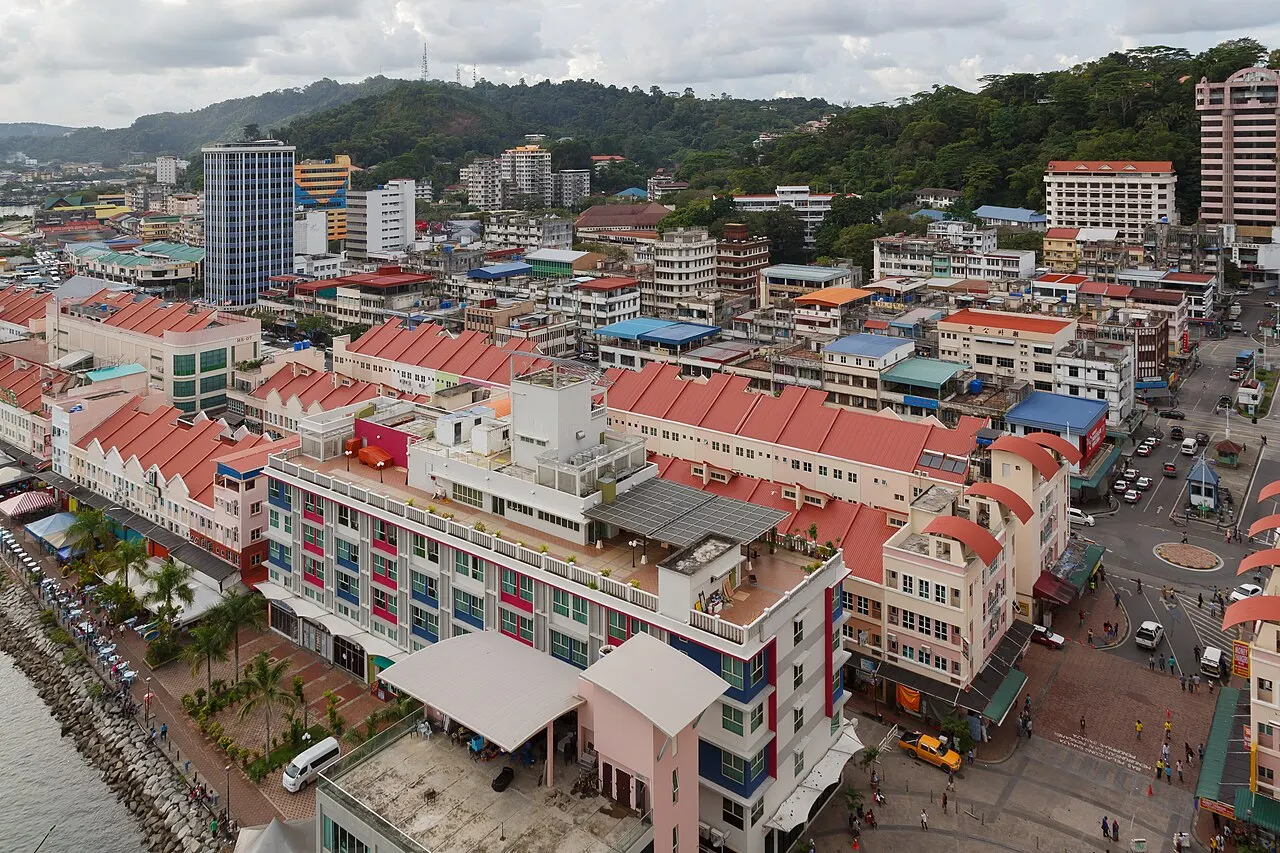
Sandakan is a working port with a compact old centre, hillside heritage and neighbourhoods built along the water. Walk its historical streets, give the memorial park time and meet the city through a market meal. Sepilok is an important excursion from Sandakan, but it is a separate journey rather than part of a downtown stroll.
2020 census: residents in DOSM-classified urban areas within Sandakan district, excluding the rural population. This is a statistical urban subtotal, not the whole district or a newly measured continuous built-up boundary.
The Heritage Trail connects the old centre with places that explain Sandakan’s changing role. Choose a short section and leave room for a museum visit.
Buli Sim Sim is a residential waterfront, not an open-air stage. Visit its public paths respectfully and enjoy a meal without turning private homes into attractions.
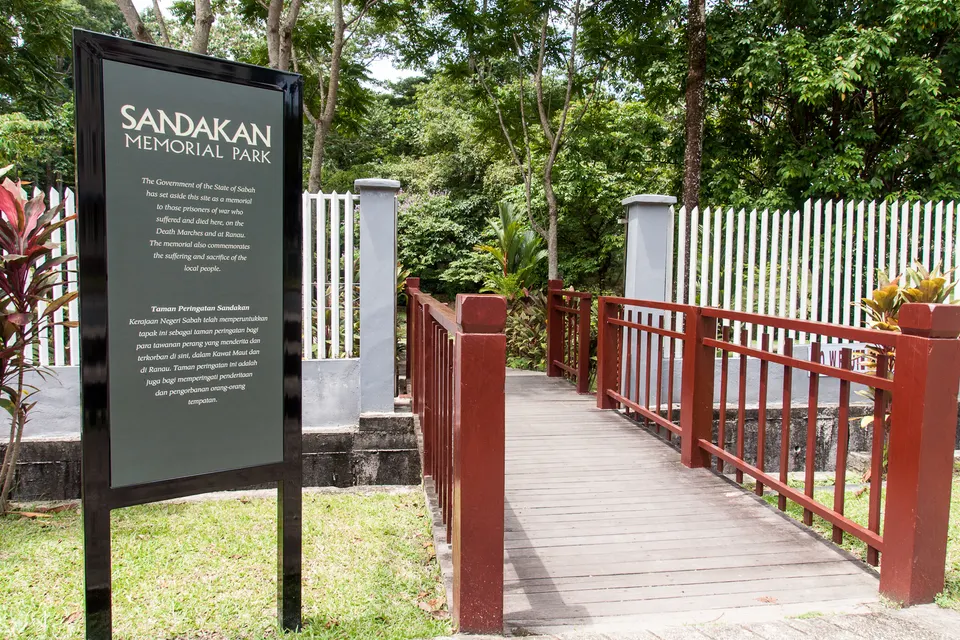
Sandakan Memorial Park asks for a slower, reflective visit. Read the interpretation and treat the site as a place of remembrance rather than a quick photo stop.
Explore Sandakan’s streets, memorials and hillside history on a town walk that gives the east-coast gateway a story beyond wildlife transfers.
Explore further
Agnes Keith House adds a domestic and literary perspective to Sandakan’s history. The museum is a useful counterpoint to a walk through the rebuilt town below.
Explore furtherPuu Jih Shih Temple combines a working Buddhist place of worship with a hillside setting above Sandakan. Visit for the architecture and coastal outlook while respecting its religious purpose.
Explore furtherSpend time at the former prisoner-of-war camp site to understand a difficult chapter of Sandakan’s history.
Explore furtherBuli Sim Sim brings Sandakan’s coastal life into view through houses, jetties and waterside food businesses. This is a lived-in neighbourhood, not a purpose-built visitor village.
Explore further
A larger hotel on Jalan Utara, just beyond the older waterfront centre.
Affiliate linkBekijk beschikbaarheid op Agoda
A Mile 4 hotel for visitors who prefer Sandakan’s newer urban corridor to the old waterfront.
Affiliate linkBekijk beschikbaarheid op Agoda
A central local hotel on Fourth Avenue, convenient for the older town’s streets and market.
Affiliate linkBekijk beschikbaarheid op Agoda
A budget option at Bandar Utama, Mile 6; a drive from the waterfront centre.
Affiliate linkBekijk beschikbaarheid op Agoda
A practical Prima Square stay among the shops and eateries of Mile 4.
Affiliate linkBekijk beschikbaarheid op Agoda
A simple town-centre address on Jalan Tiga.
Affiliate linkBekijk beschikbaarheid op Agoda
A budget base on Lebuh 4 in old Sandakan.
Affiliate linkBekijk beschikbaarheid op AgodaSandakan’s heritage is not a row of untouched old buildings. Wartime destruction and rebuilding are part of the city’s story. The Heritage Trail, Agnes Keith House and memorial interpretation offer different ways to understand that past. Between visits, the streets remain places of trade, food and ordinary work: a reminder that the city continued beyond the history displayed in museums.
Explore further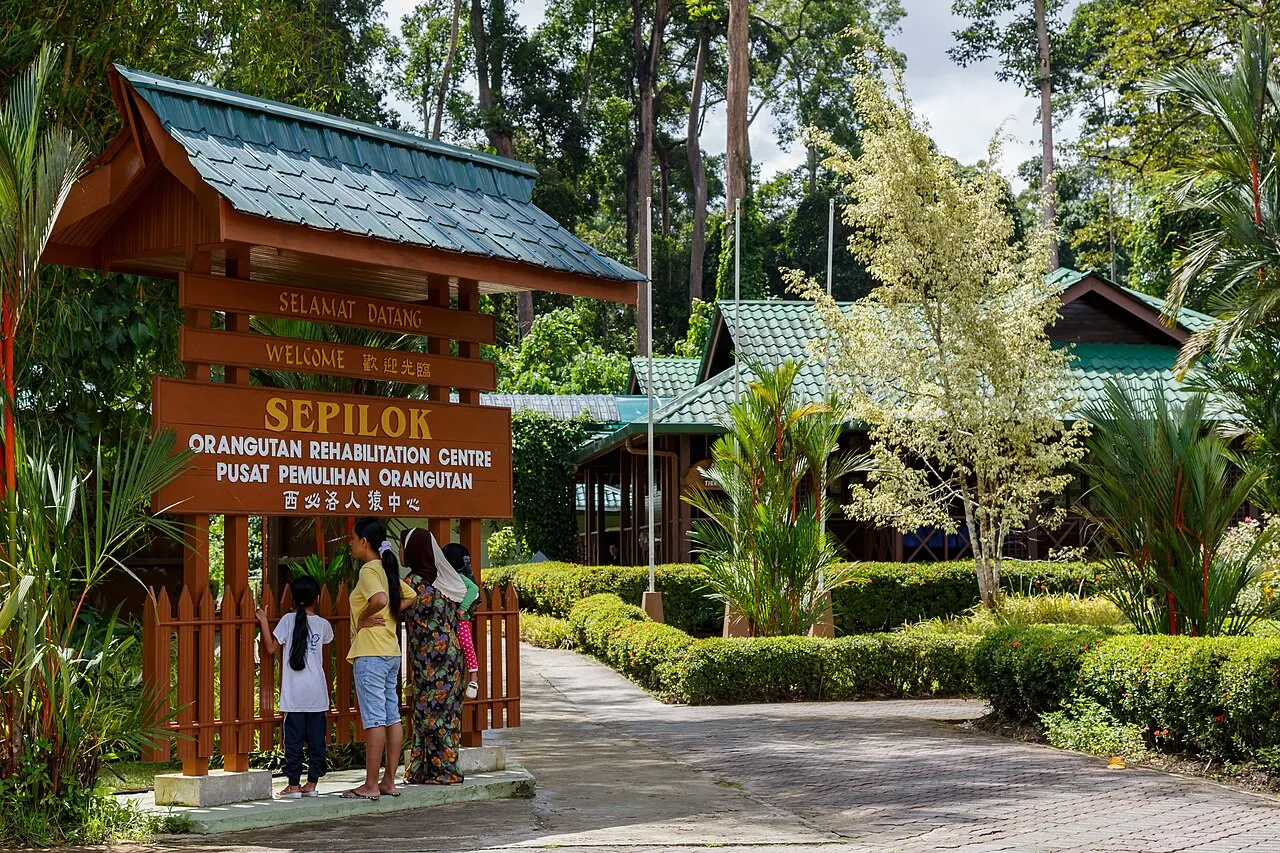
Sandakan is often introduced through wildlife, yet Sepilok is not the city centre. Its conservation sites deserve planned transport and enough time to follow their visitor arrangements. Keeping that excursion separate leaves space to understand Sandakan itself: a harbour, hillside neighbourhoods and homes above the water, rather than only a bed before a forest visit.
Explore furtherLocal dishes and everyday food traditions.
The UFO tart is one of Sandakan’s recognisable bakery specialities: a small cake with a raised topping that gives the snack its playful name.
Explore furtherNasi kuning is a familiar rice meal on Sabah’s east coast, including Tawau and Sandakan. The yellow rice is the starting point; accompaniments make each serving different.
Explore furtherSandakan’s harbour and coastal neighbourhoods give seafood an everyday place in the city’s cooking. A meal is a chance to understand the working waterfront as well as taste its…
Explore furtherArrive through Sandakan Airport and arrange a transfer to your actual hotel area.
Explore furtherWalk the old centre in short stages; use a vehicle for hilltop sites, the memorial park and the Mile 4–6 corridor.
Allow for heat and showers; keep a separate day for weather-sensitive excursions outside town.
Carry cash for small purchases and dress respectfully at temples and memorial sites.
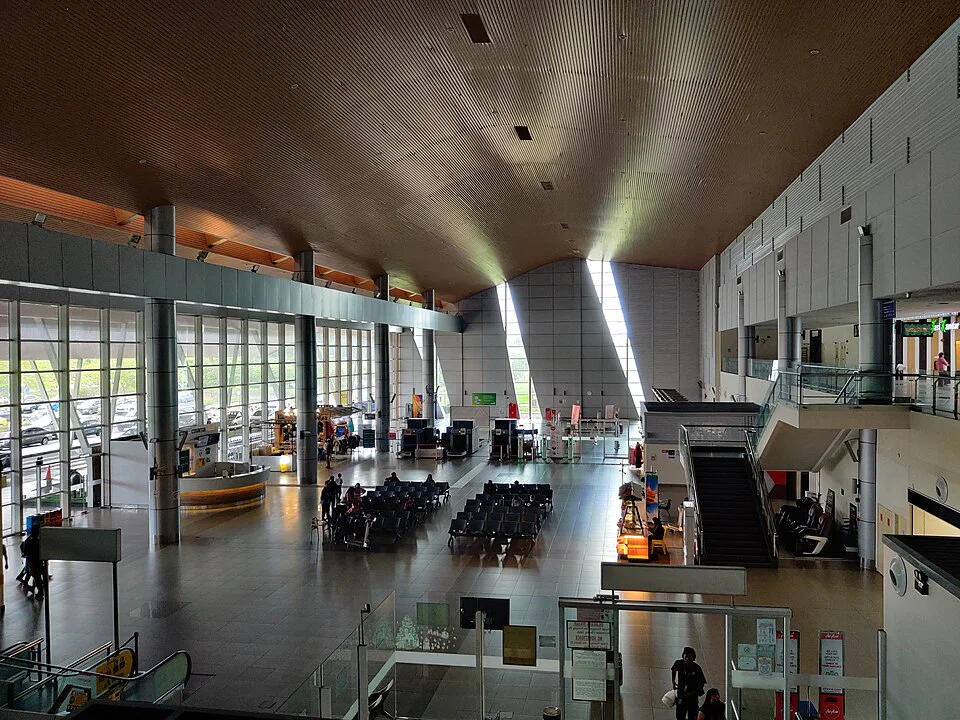
Sandakan lies on Sabah’s east coast. The old waterfront, hilltop heritage sites and the urban corridor along Jalan Utara form distinct visiting areas. Sandakan Airport serves the city; Sepilok lies farther inland and requires a separate journey. The population figure describes DOSM’s urban statistical areas within the district, not the entire district.
Begin with a short Heritage Trail walk. Visit Agnes Keith House after checking access, then return to the centre for a relaxed meal.
Give the memorial park an unhurried morning. Arrange separate transport to Puu Jih Shih Temple or Buli Sim Sim, rather than treating them as one continuous walk.
Reserve a separate day for Sepilok if it fits your interests. Confirm visitor arrangements and return transport; keep an alternative city programme if access or weather changes.
From a first idea to your own Borneo journey.
History, culture and the practical details that make a visit richer. Open a chapter to read the complete guide.
Sandakan is a working port with a compact old centre, hillside heritage and neighbourhoods built along the water. Walk its historical streets, give the memorial park time and meet the city through a market meal. Sepilok is an important excursion from Sandakan, but it is a separate journey rather than part of a downtown stroll.
Use the Heritage Trail as a framework rather than a race between markers. The old commercial streets, slopes and museum stops each tell a different part of Sandakan’s history. Agnes Keith House adds a domestic and literary perspective; the memorial park concerns a different, deeply serious wartime chapter. Give each its own context.
The city was damaged during the Second World War and rebuilt. What you see today therefore mixes surviving traces, reconstructions and modern everyday commerce. A guide can help explain those differences. Do not assume that every old-looking facade is an original historic building.
Plan short walking stages in the centre and a vehicle for distant or elevated stops. A pause for tea or a simple meal is part of seeing a working town, not wasted sightseeing time.
Sandakan’s coast includes a working harbour and residential waterfronts. Buli Sim Sim is valuable precisely because people live there: keep to public passages, make room for residents and ask before taking close photographs. The water view does not make every pier or boardwalk a visitor route.
Sepilok lies outside central Sandakan. It is a separate excursion with its own transport, opening arrangements and conservation rules. Choose the visitor sites that match your interests and allow time between them. Do not build a schedule around guaranteed animal sightings.
For any forest or coastal outing, check current access before travelling. Rain can alter paths and programmes. A city hotel and a Sepilok lodge are different geographical choices; select an address that suits the journey you actually intend to make.
Sandakan’s food is best approached through several small stops rather than one supposed definitive meal. Look for an UFO tart at a bakery, compare a nasi kuning breakfast with the other dishes being served, and leave time for a seafood meal. Recipes and accompaniments vary between businesses; the city does not have a single fixed menu.
Seafood restaurants along the waterfront can make the harbour setting part of the meal. Ask how fish and shellfish are priced, whether preparation is included and how large a portion will be. Check ingredients if you avoid shellfish, pork or other foods.
Markets and cafés are workplaces as well as visitor experiences. Avoid photographing people without permission, keep paths clear and buy something if you occupy a table. A brief conversation often explains more than another photograph.
Choose your base by neighbourhood. The older centre suits short walks to shops and the waterfront; Mile 4 and Mile 6 are separate urban areas along Jalan Utara. A cheaper room farther inland can mean more taxi journeys. Check the hotel’s actual address rather than relying on the word Sandakan alone.
Sandakan Airport requires a transfer into town. Allow a margin for traffic and keep your final day simple. Hilltop attractions, the memorial park and Sepilok should each have a return arrangement; do not assume a vehicle will be waiting when you finish.
Carry drinking water, rain protection and some small cash. Respect worship and remembrance at religious sites and memorials. Opening times, admission and guided visits can change, so confirm essential appointments directly before setting out.
Loading this map connects your browser to Google. Google receives your IP address and browser information and may use cookies under its own privacy policy. This choice applies only to this map until you leave or reload this page; it does not enable Analytics.
sabahtourism.com · sandakan heritage trail
www.borneoecotours.com · sandakan heritage
sabahtourism.com · agnes keith house
sabahtourism.com · puu jih shih temple
sabahtourism.com · what to eat
sabahtourism.com · food trails in sabah
Sandakan old town seen from Harbour Mall.CEphoto, Uwe Aranas · Wikimedia Commons · CC BY-SA 4.0 · Cropped · Original
Entrance to Sandakan Memorial Park, photographed in 2012.CEphoto, Uwe Aranas · Wikimedia Commons · CC BY-SA 3.0 · Cropped · Original
Agnes Keith House in Sandakan, photographed in 2012.CEphoto, Uwe Aranas · Wikimedia Commons · CC BY-SA 3.0 · Cropped · Original
The visitor centre at Sepilok Orangutan Rehabilitation Centre.CEphoto, Uwe Aranas · Wikimedia Commons · CC BY-SA 3.0 · Cropped · Original
The public terminal hall at Sandakan Airport, photographed in December 2023.Jahurz93 · Wikimedia Commons · CC BY 4.0 · Cropped · Original
Mount Kinabalu above the surrounding hills.Anton Zelenov · Wikimedia Commons · CC BY-SA 4.0 · Cropped · Original
Sandakan old town seen from Harbour Mall.CEphoto, Uwe Aranas · Wikimedia Commons · CC BY-SA 4.0 · Cropped · Original
Entrance to Sandakan Memorial Park, photographed in 2012.CEphoto, Uwe Aranas · Wikimedia Commons · CC BY-SA 3.0 · Cropped · Original
Kota Kinabalu city centre seen from the air.Jason Thien · Wikimedia Commons · CC BY 2.0 · Cropped · Original
The visitor centre at Sepilok Orangutan Rehabilitation Centre.CEphoto, Uwe Aranas · Wikimedia Commons · CC BY-SA 3.0 · Cropped · Original
The public terminal hall at Sandakan Airport, photographed in December 2023.Jahurz93 · Wikimedia Commons · CC BY 4.0 · Cropped · Original