What is Soto Banjar?
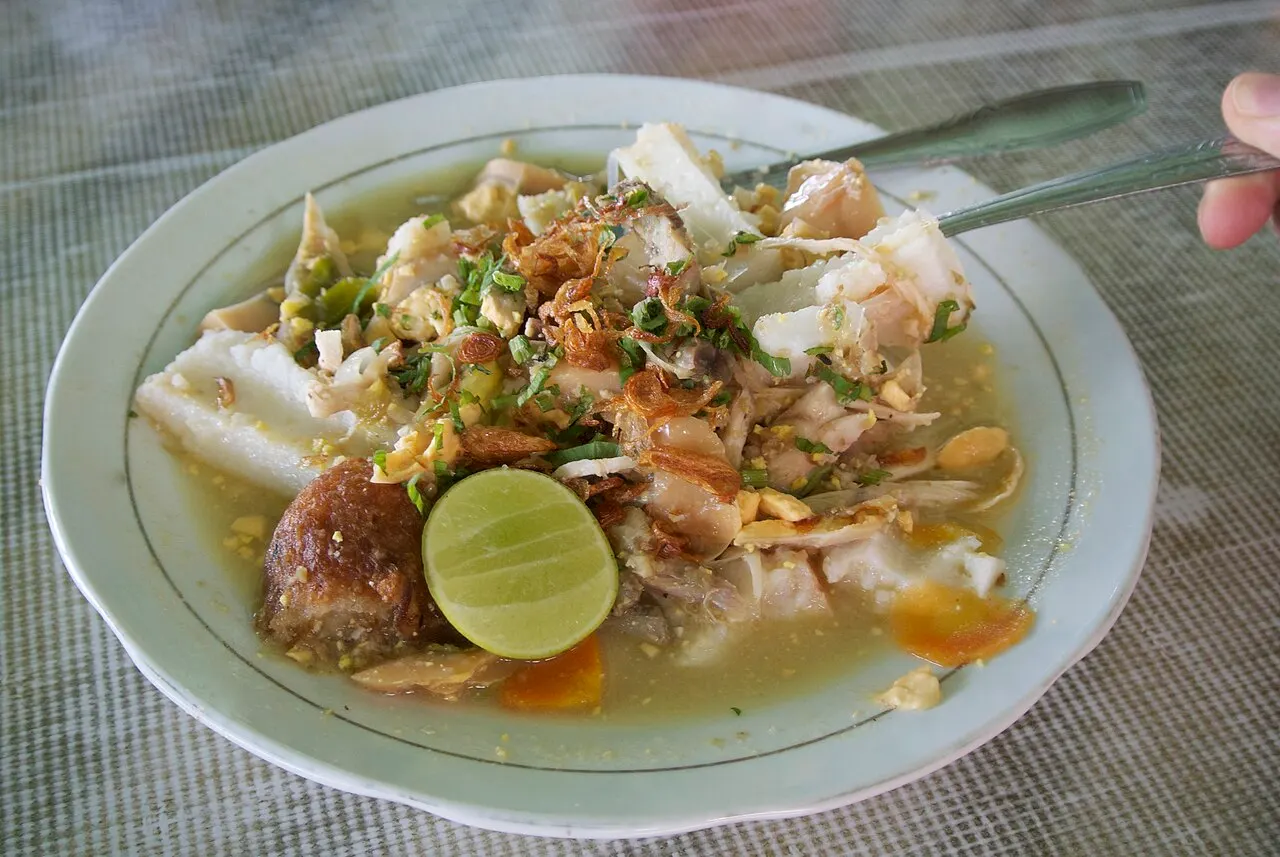
Soto is a wider Indonesian soup family; the Banjar name points to a regional chicken preparation rather than one national soup recipe. Broth carries shredded chicken and aromatic seasoning, with ketupat or lontong supplying a rice component. Egg and perkedel bring further substance.
Banjarmasin is an important setting for encountering it, within the broader Banjar food culture of South Kalimantan. A simple bowl can introduce the region’s use of warm spices without needing an elaborate tasting menu.
Flavour and texture
The interest lies in aromatic broth rather than strong chilli alone. Warm spices support the chicken, while the accompaniments make each mouthful different: soft rice, tender meat, egg and a potato-based perkedel. Recipes can differ in the body and clarity of the liquid.
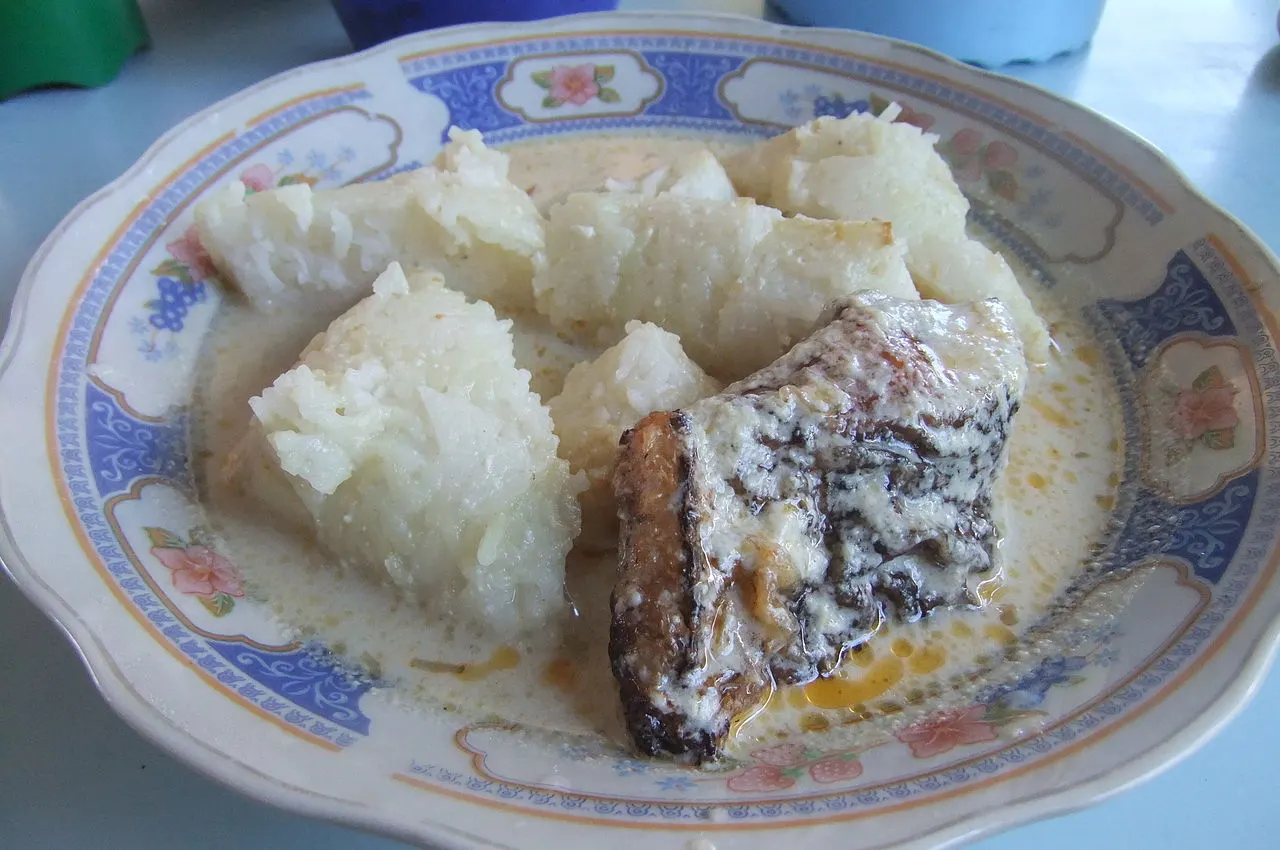
Taste the broth before adding condiments. That gives the kitchen’s balance a chance to show, then lets you choose more heat or sourness. Compare it with Ketupat Kandangan, where smoky fish and coconut sauce give ketupat a richer, different setting.
Traditional preparation
Preparing the chicken and building the broth are central stages. Aromatics season the liquid; the meat is arranged with rice portions and other accompaniments for serving. The recipe’s particular spice balance belongs to the cook rather than a universal fixed ratio.
Because the meal has several components, dietary questions should cover broth and garnish as well as the visible meat. Egg and potato accompaniments do not replace the chicken base, and a clear-looking broth is not automatically vegetarian.
Sources & references · 1
Universitas Mulawarman · Kuliner BorneoAt the table
Soto Banjar can be a complete meal, with the rice portion and accompaniments doing as much work as the soup. A stall or restaurant version is a good occasion to notice whether condiments arrive separately and how the host expects the bowl to be assembled.
The river towns and markets of South Kalimantan provide a wider setting for its food culture. Visiting a market explains ingredients and everyday trade; it should not be taken as proof that every market stall serves soto. Ask locally about the day’s food rather than relying on an old opening-time claim.