
River trading and livelihoods
At Lok Baintan, the river is a place of work. Jukung boats carry produce and foods on the Martapura, and a visitor's boat joins a space already used for trading. The setting is in Sungai Tabuk, Banjar regency, outside Banjarmasin. That distinction makes a small but useful difference: the city can be the starting point, while the market remains part of another community's place. Arrive with an operator who understands local traffic and let trading continue around the visit.
Sources & references · 1
Meratus Geopark management · Meratus western route guideAn attentive visit
A guide can turn a colourful view into a more grounded encounter by explaining what is being sold and which words people use. Ask before making portraits and avoid asking a trader to stop work for the camera. Buying something practical can be a simple way to participate, but a market visit need not become a shopping checklist. Notice the skill involved in bringing a boat alongside another boat and in working with limited space. These are everyday abilities, not a performance arranged for every visitor.
Sources & references · 2
Meratus Geopark management · Meratus western route guideMinistry of Education · Banjar language record
Food and identity
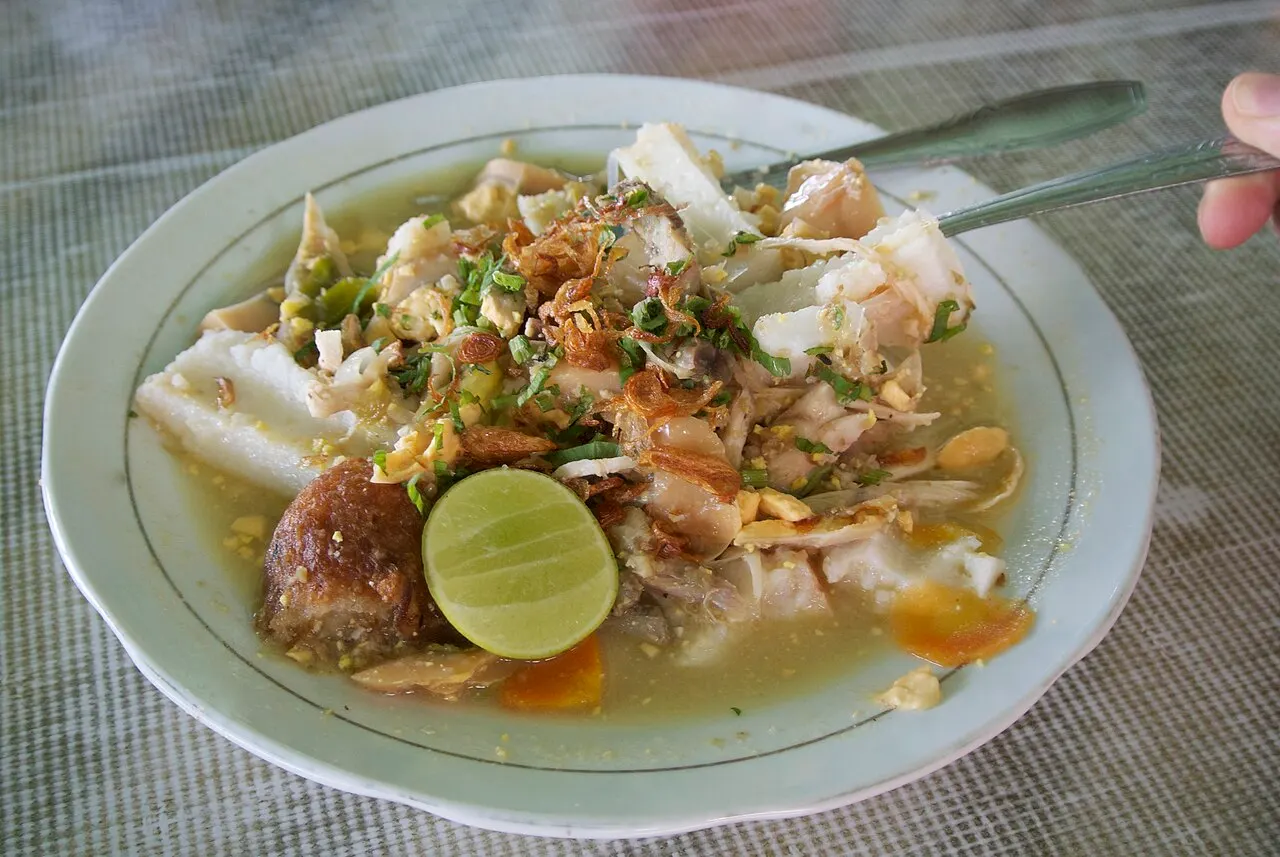
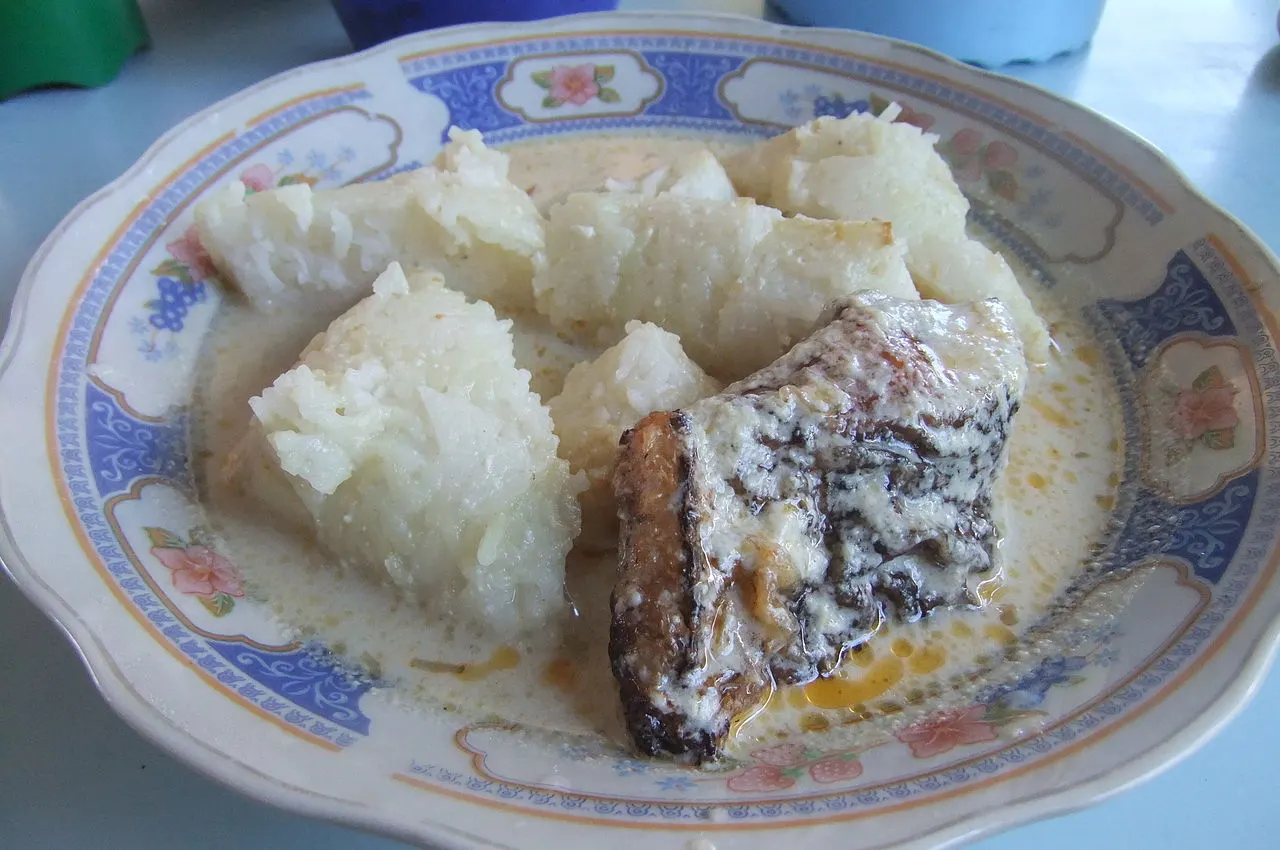
Continue the journey through food without treating all regional dishes as the same. Soto Banjar is a chicken soup with rice cake and accompaniments such as egg and potato fritter. Ketupat Kandangan centres on rice cake, haruan fish and coconut broth, with the fish grilled or smoked before cooking in the sauce. Their different ingredients make two distinct introductions to the provincial kitchen. Ask cooks about their own preparation and allow variation between stalls; a recipe is also the work of the person serving it.
Understanding the context
Kandangan gives Ketupat Kandangan a precise place connection on the road towards Loksado. Sasirangan adds a craft connection to a city visit, through basting, binding and dyed cloth associated with Banjar heritage. Together these stops can create a coherent journey without inventing one story for every resident of South Kalimantan. Keep the market's administrative location, the dish's regional association and the maker's name attached to what you share. Such details help a journey remain about living places rather than a set of anonymous souvenirs.